
Sahrawi Music: The Rhythms and Evolution of Western Sahara
The musical landscape of the Western Sahara is a vibrant tapestry that blends deep-rooted traditional sounds with modern influences. Reflecting the region's complex history, Sahrawi music shares significant characteristics with the musical traditions of southern Morocco and Mauritania, while carefully preserving elements of its pre-colonial heritage.
The Evolution of Sahrawi Instrumentation
At the heart of Sahrawi music is the tbal, a basic percussion instrument that provides the rhythmic foundation for many compositions. Historically, the Tidinit—a traditional string instrument—served as the primary melodic voice. However, in recent decades, the electric guitar has largely replaced the Tidinit, bringing a contemporary edge to the traditional melodies.
The performers of this music often come from diverse backgrounds. Some are members of tribes who led nomadic lives prior to the Western Sahara War against Morocco, which took place between 1975 and 1991. A notable example of this heritage is found in the family of the renowned singer Mariem Hassan.
Key Facts
- Core Instruments: The tbal (percussion) and the Tidinit (traditional string instrument), though the latter is now frequently replaced by the electric guitar.
- Regional Influence: Strong musical ties to Mauritania and southern Morocco.
- Historical Context: Many musicians originate from nomadic tribes affected by the 1975–1991 Western Sahara War.
- Global Reach: Sahrawi music has been distributed internationally via labels in Spain, the US, Germany, and France.
The Journey to Global Recognition
The transition of Sahrawi music from local tradition to international recording began in 1982. The band Shahid El Uali recorded the first Sahrawi music album, titled Polisario vencerá, live in Barcelona.
By 1998, the Spanish label Nubenegra began marketing Sahrawi music in Germany and the United States, starting with a three-disc box set called Sahrauis: The Music of the Western Sahara. This compilation introduced global audiences to key artists such as guitarist Nayim Alal, the group Leyoad, and singers Aziza Brahim and Mariem Hassan.
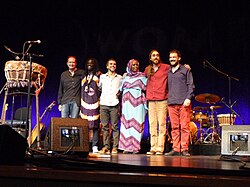
Other international labels soon followed. In 2000, the American label Rounder Records released Starry Nights in Western Sahara. Nubenegra continued its support of the scene by editing the 2003 album Nar (Fire) by Nayim Alal.
Prominent Artists and Discographies
Mariem Hassan stands as one of the most prolific figures in Sahrawi music. Following a 2002 collaboration album with Leyoad, she released her first solo effort, Deseos (Wishes), in 2005. This was followed by Shouka (Thorn) in 2009 and her final work, El Aaiun egdat (El Aaiun on fire), in 2012.
Other significant contributions include the band Group Doueh, based in Dakhla, who released Guitar Music from Western Sahara via the American label Sublime Frequencies in 2007, and later Treeg Salaam (Streets of Peace) in 2009. Additionally, the group Tiris released Sandtracks in 2007 through the British label Sandblast Records.
Aziza Brahim has also made a mark on the international stage. She released her first EP, Mi Canto (My Singing), with the French label Reaktion in 2008, and later released the LP Mabruk with her band Gulili Mankoo in June 2012.
Summary of Key Sahrawi Releases
| Year | Artist/Band | Album Title | Label/Origin |
|---|---|---|---|
| 1982 | Shahid El Uali | Polisario vencerá | Live in Barcelona |
| 1998 | Various Artists | Sahrauis: The Music of the Western Sahara | Nubenegra |
| 2005 | Mariem Hassan | Deseos | Nubenegra |
| 2007 | Group Doueh | Guitar Music from Western Sahara | Sublime Frequencies |
| 2012 | Aziza Brahim & Gulili Mankoo | Mabruk | International |
The influence of Sahrawi music continues to expand as some musicians have settled in Dakar, where they collaborate and perform with musicians from across West Africa.
Frequently Asked Questions
What are the primary instruments used in Sahrawi music?
The basic percussion instrument is the tbal. While the Tidinit was the traditional string instrument, it has largely been replaced by the electric guitar in modern performances.
Who recorded the first Sahrawi music album?
The band Shahid El Uali recorded the first album, titled Polisario vencerá, live in Barcelona in 1982.
Which labels helped bring Sahrawi music to a global audience?
Key labels include Nubenegra (Spain), Rounder Records (USA), Sublime Frequencies (USA), Sandblast Records (UK), and Reaktion (France).
Who is Mariem Hassan?
Mariem Hassan was a prominent Sahrawi singer from a nomadic background who released several influential albums, including Deseos, Shouka, and El Aaiun egdat.
How has the Western Sahara War influenced the musicians?
The war between 1975 and 1991 affected many performers, including those from nomadic tribes, shaping the cultural and personal histories of artists like Mariem Hassan.