
Satellaview: The Ambitious Satellite Experiment of Nintendo and St.GIGA
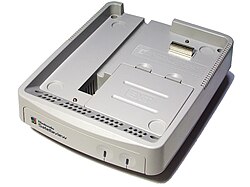
In the mid-1990s, Nintendo ventured into the frontier of digital broadcasting with the Satellaview, a unique peripheral for the Super Famicom. This ambitious project was born from a partnership with St.GIGA, a pioneer in satellite radio, aiming to blend high-quality audio broadcasts with interactive gaming content. While it never reached global markets, the Satellaview remains a fascinating chapter in the evolution of digital distribution.
The Origins: St.GIGA and the Digital Frontier
Founded in early 1990 in Akasaka, Tokyo, St.GIGA was a subsidiary of the satellite television company WOWOW Inc. It earned the distinction of being the world's first digital satellite radio station. Under the guidance of Hiroshi Yokoi, the station became famous for its "Tide of Sound" broadcasts—immersive, high-quality digital recordings of nature sounds narrated by a mysterious figure known as the "Voice."
St.GIGA initially found success through its innovative approach to ambient music, releasing albums featuring its own compositions and works from foreign artists like Deep Forest and Hearts of Space. However, the Japanese Recession of the early 1990s led to a decline in consumer spending on satellite systems and ambient music. To prevent the company's collapse, Nintendo purchased a 19.5% stake in St.GIGA in May 1994 to assist in its restructuring.
Developing the Satellaview
Following the acquisition, Nintendo began developing the Satellaview peripheral. This project was influenced by the earlier Family Computer Network System developed for the Famicom. According to lead designer Masayuki Uemura, the lessons learned from that network system were instrumental in creating the Satellaview.
The development occurred alongside other major projects, including the Nintendo 64 and the Virtual Boy. To prepare the audience, St.GIGA introduced the "Super Famicom Hour," a programming block dedicated to news and gameplay tips for upcoming Nintendo titles. The business model was a collaborative effort: St.GIGA provided the satellite infrastructure and hosted music and "Tide of Sound" broadcasts, while Nintendo and third-party developers created the gaming content.
Nintendo positioned the service as a broad entertainment platform, emphasizing that the St.GIGA broadcasts were primarily intended for adults, with video games occupying only a small portion of the total airtime.
Launch and Market Reception
Officially announced on December 21, 1994, the Satellaview was priced at ¥14,000 (approximately US$150, or $330 when adjusted for 2025 inflation). The hardware was designed by Nintendo Research & Development 2, the same team responsible for the Super Famicom. Despite a period of instability caused by the failure of the Virtual Boy and slowing Super Famicom software sales, Nintendo president Hiroshi Yamauchi remained optimistic, projecting annual sales of 2 million units.
The service launched on April 1, 1995, with the peripheral following on April 23. In a departure from standard retail practices, the Satellaview was sold exclusively via mail order. Major third-party developers, including SquareSoft, Konami, Capcom, Taito, and Seta, announced plans to support the platform.
Challenges and Decline
The Satellaview remained a Japan-exclusive product. Industry analysts attributed this to the high costs of digital satellite broadcasting and a perceived lack of interest among American consumers. Early operations were further hampered by technical constraints and legal disputes regarding the broadcasting of game-related services.
In June 1996, Nintendo teased a potential partnership with Microsoft to bring a similar service to Windows by combining St.GIGA's broadcasts with dial-up internet, but the project never materialized. By March 1997, the service had reached a peak of 116,378 active users.
The partnership began to crumble by mid-1998. St.GIGA, burdened by ¥8.8 billion in debt, rejected a debt-management plan proposed by Nintendo and failed to secure a government digital satellite broadcasting license. Consequently, Nintendo ceased production of new content in March 1999 and cancelled plans for a new BS-4 satellite. While St.GIGA continued to broadcast reruns and game-centric content, the user base plummeted by nearly 60% to roughly 46,000 subscribers.
The Satellaview was officially discontinued on June 30, 2000. A year later, St.GIGA declared bankruptcy and merged with WireBee, Inc.
Key Facts
- Developer: Nintendo Research & Development 2.
- Launch Date: April 1995 (Japan only).
- Price: ¥14,000 (approx. $150 USD at launch).
- Distribution: Sold exclusively via mail order.
- Peak Users: 116,378 active users in March 1997.
- End of Service: June 30, 2000.
| Entity/Product | Role/Nature | Key Contribution |
|---|---|---|
| St.GIGA | Satellite Radio Station | Provided broadcasting infrastructure and "Tide of Sound" content. |
| Satellaview | Super Famicom Peripheral | Enabled downloading of games and audio via satellite. |
| Nintendo | Hardware/Software Developer | Designed the peripheral and provided gaming content. |
| Super Famicom Hour | Programming Block | Offered gameplay tips and news for Nintendo games. |
Frequently Asked Questions
Why was the Satellaview only released in Japan?
The lack of an international release was attributed to the high costs associated with digital satellite broadcasting and a belief that the service would not appeal to consumers in the United States.
What was the "Tide of Sound"?
The "Tide of Sound" were high-quality digital recordings of nature sounds accompanied by a spoken word narrator known as the "Voice," broadcast by St.GIGA.
How was the Satellaview purchased?
Unlike most Nintendo products, the Satellaview was not sold in retail stores; it was available exclusively through mail order.
What led to the eventual shutdown of the service?
The service ended due to a combination of St.GIGA's severe financial debt (¥8.8 billion), a failure to obtain a necessary government broadcasting license, and a dwindling subscriber base.
Did other companies develop games for the Satellaview?
Yes, several third-party developers including Capcom, Taito, Konami, Seta, and SquareSoft announced plans to produce content for the system.