
Seals and Sigillography: The History of Authentication and Impression
A seal is a specialized device used to create an impression in media such as wax, clay, or paper. While we often use the verb "to seal" today to describe closing a package securely, the original purpose of a seal was to authenticate a document or prevent unauthorized interference with a container. To open a sealed package, the seal had to be broken, providing immediate evidence of tampering.
The technical study of these objects is known as sigillography or sphragistics. This field examines both the device used to make the mark and the resulting impression itself.

The Mechanics of Sealing
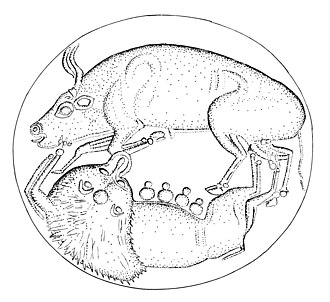
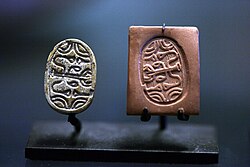
To understand how seals work, it is necessary to distinguish between the tool and the result. The device used to create the mark is called the seal matrix or die, while the resulting mark is the seal impression.
Types of Impressions
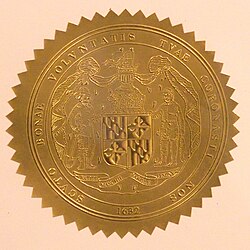
- Dry Seal: An impression created purely through pressure on paper, resulting in a relief without the use of ink.
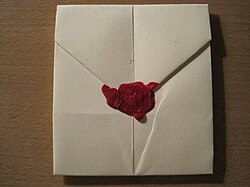
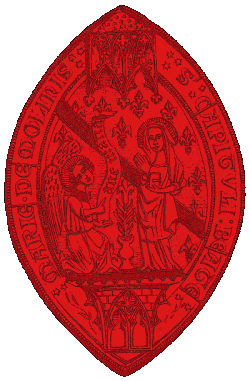
- Wet Seal: An impression made using ink or a liquefied medium (such as melted wax) in a color that contrasts with the paper.
Intaglio and Relief
Most traditional dry seals utilize intaglio, where the design is carved below the flat surface of the matrix. This ensures that the resulting impression is in relief (raised). Because of this process, the impression is a mirror image of the matrix—a critical detail when the seal includes text. Conversely, if a matrix is carved in relief (known as a cameo), it produces an intaglio impression.
Key Facts
- Sigillography: The formal scientific study of seals.
- Authentication: The primary historical purpose of seals was to verify identity and document validity.
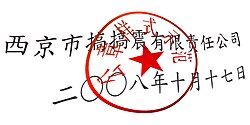
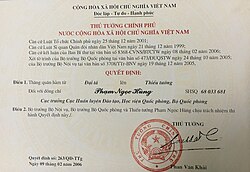
- East Asian "Chops": In China, Korea, Japan, and Vietnam, seals are still used today as legal substitutes for handwritten signatures.
- The Ring of the Fisherman: The papal signet ring is traditionally destroyed upon the death of a Pope to prevent misuse.
- Intaglio: A carving technique where the image is incised into the surface, creating a raised image when pressed into wax or clay.
Regional Traditions and Evolution
![During the early Byzantine period these rings were used for sealing personal documents and validating wills and testaments. 6th century, silver.[8] The Walters Art Museum.](/images/90/1f/901f0d5d3181bcf875e6929ef00d8879bcc87d8e6278414bcf988593673b5229.jpg)
Ancient Near East, Greece, and Rome
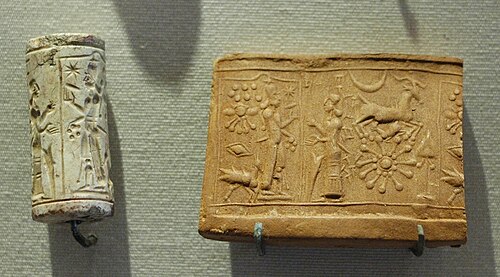
From the 3rd millennium BC through the Middle Ages, the Aegean islands and mainland Greece produced diverse seals. Early Minoan seals were crafted from ivory and soft stone, while the Middle Minoan period introduced hard stones requiring rotary carving. By the Late Bronze Age, lens-shaped seals and seal rings became prominent. These evolved into pictorial engraved gems, which became highly prized luxury items. Pliny the Elder noted that King Mithridates VI of Pontus was a major collector of these gems before they were taken as booty by Pompey the Great.
East Asian Traditions
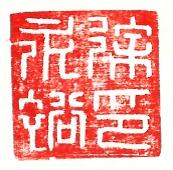
Known as yinzhang in China, injang in Korea, inshō in Japan, and ấn triện in Vietnam, seals have served as written identification since the Qin dynasty (221 BC). While Han dynasty seals used soft clay, the Tang dynasty transitioned to a red ink made from cinnabar. These seals, colloquially called "chops," remain vital for authenticating official documents and financial transactions today. Notably, these seals are the technological predecessors to block printing.
The Western Tradition
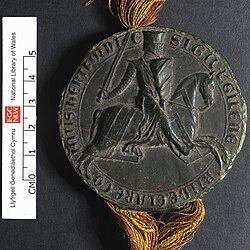
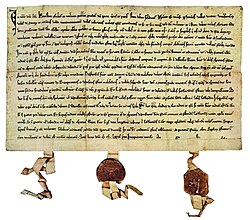
By the end of the 10th century, wax seals were standard in Western royal chanceries. In England, the practice trickled down the social hierarchy: starting with monarchs and bishops, moving to knights by the late 12th century, and reaching ordinary freemen by the mid-13th century. Corporate bodies, such as monasteries and municipalities, also adopted seals to validate official acts.
Specialized Uses and Rituals
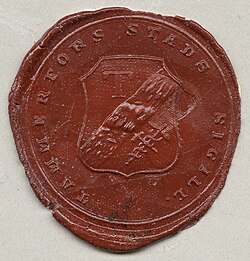
Ecclesiastical and Professional Seals
The Church adopted sealing early; St. Augustine is known to have used one, and by the 9th century, it was customary for bishops to seal their letters. In modern times, professional seals (often rubber stamps) are still used by architects and professional engineers to certify technical documents.

The Ritual of Destruction
Because a seal represented legal authority, it was imperative to destroy the old seal when power transitioned. This was often a public ceremony. For example, upon the death of Bishop Robert of Holy Island in 1283, his seal was publicly broken. Similarly, the Cardinal Camerlengo destroys the Ring of the Fisherman upon the death of a Pope. In 1688, King James II of England allegedly threw the Great Seal of the Realm into the River Thames to halt the machinery of government during the Glorious Revolution.
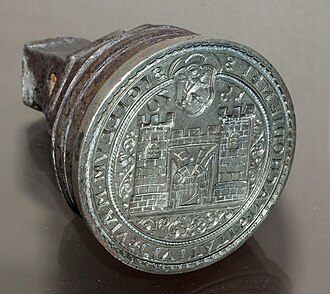
Signet Rings
Signet rings date back to ancient Egypt, as referenced in the Book of Genesis regarding the Pharaoh. While they were initially reserved for nobility, they became accessible to lower classes by the 13th century. After a dip in popularity during the 17th century, they saw a resurgence in the 18th and 19th centuries across all social classes.
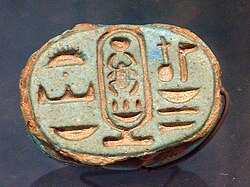
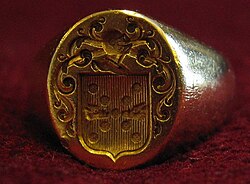
Summary of Seal Types and Media
| Region/Era | Common Media | Primary Purpose | Key Characteristic |
|---|---|---|---|
| Ancient Greece/Rome | Hard stone, Ivory, Gems | Luxury, Identification | Lens-shaped, Cameos |
| East Asia | Bronze, Cinnabar ink | Legal Authentication | Substitute for signatures |
| Medieval Europe | Wax, Silver, Gold | Document Validation | Pendent or signet styles |
| Modern Professional | Rubber, Embossing dies | Certification | Dry seals/stamps |
Frequently Asked Questions
![Two-sided pendent seals from Inchaffray Abbey in Scotland, late 13th century, now in the British Museum.[18]](/images/df/1a/df1a6dde027c43e8163ac3df807f5fb5bfe43a81a256de36fb6cf26ea201c183.jpg)
What is the difference between a seal matrix and a seal impression?
The seal matrix (or die) is the physical tool used to create the mark, while the seal impression is the actual mark left behind in the wax, clay, or paper.
Why are East Asian seals still used today?
In many East Asian cultures, seals (chops) are legally recognized as a form of written identification and are often used instead of, or in addition to, handwritten signatures for official and financial documents.
What happens to a seal when a leader dies?
Historically, seals were destroyed to prevent the fraudulent use of authority. This was often a formal ceremony, such as the breaking of a bishop's seal or the destruction of the papal Ring of the Fisherman.
How does a dry seal differ from a wax seal?
A dry seal creates a raised relief on paper using only pressure, whereas a wax seal uses a liquefied medium (like wax) and often ink to create a colorful, three-dimensional mark.
What is the relationship between seals and printing?
East Asian seals are considered the predecessors to block printing, as they utilized the same basic principle of transferring an image from a carved surface to a medium.