
Shelter Island History: From Indigenous Roots to Summer Retreat
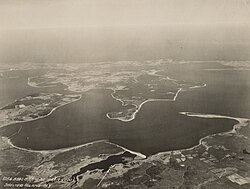
Shelter Island, a serene gem in Suffolk County, New York, possesses a rich tapestry of history that spans centuries. From its origins as a sanctuary for indigenous peoples to its evolution into a prestigious summer destination, the island has been shaped by colonial ambition, agricultural industry, and a commitment to nature preservation.
Indigenous Origins and Early European Claims
Long before European arrival, the island was inhabited by indigenous peoples related to those north of the Long Island Sound. At the time of first contact, it was occupied by the Manhanset tribe, an Algonquian-speaking people linked to the Pequot of New England. The Manhanset named the land Manhansack-aha-quash-awamock, which translates literally to "Island sheltered by islands."
European claims to the land began in 1620 with a Plymouth Company land grant from James I of England. By 1636, Charles I granted the island and all of Long Island to William Alexander, the 1st Earl of Stirling. Alexander appointed James Farret as his agent to colonize the region, granting Farret 12,000 acres for his personal use. Farret selected Shelter Island and Robin's Island, subsequently selling them to Stephen Goodyear, a founder of the New Haven Colony.
The Sylvester Era and the Plantation Economy
In 1651, Goodyear sold the island to a group of Barbados sugar merchants for 1,600 pounds of sugar. Among them was Nathaniel Sylvester (1610–1680), who became the island's first white settler. A native of Rotterdam with deep connections in the Netherlands and Barbados, Sylvester formalized the purchase on March 23, 1652, through an agreement with Youghco (also known as Poggatticut), the sachem of the Manhanset tribe.
Sylvester established a provisioning plantation designed to support the Caribbean trade. The estate raised livestock and food crops, shipping preserved meats in casks to Barbados. This operation was a node in the Triangle Trade—the complex exchange of goods and people between Africa, England, and the American colonies. The labor force was multicultural, consisting of English indentured servants and enslaved Africans and American Indians. The legacy of this era remains visible today at the Negro Burying Ground on the North Peninsula, where an estimated 200 Black people are interred.
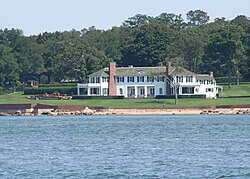
The Sylvester family also provided refuge to persecuted Quakers. While the original estate spanned thousands of acres, the surviving Sylvester Manor, built in 1733 by a grandson of Nathaniel, remains a focal point of the island's history.
Colonial Growth and the American Revolution
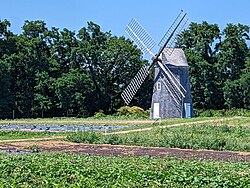
Following Nathaniel Sylvester's death in 1680, the island was divided between his sons, Giles and Nathaniel II. This led to the emergence of new landowners, including William Nicoll, who purchased the area now known as the Mashomack Nature Preserve in 1695, and George Havens, who bought 1,000 acres in 1698. By the early 18th century, approximately 20 families resided on the island, and the Town of Shelter Island was officially established in 1730.
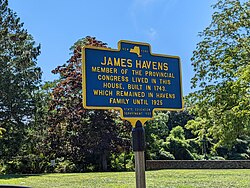
The island played various roles during the colonial and revolutionary periods. James Nicoll Havens served as the first town supervisor, and his descendant, Jonathan Nicoll Havens, was a member of the First Continental Congress in 1774. During the American Revolution, the British utilized Hay Beach to ship hay. Later, the island's shipbuilding industry flourished; the schooner Paragon, built at Lord’s Shipyard, famously ran a British blockade during the Napoleonic Wars in 1804.
The Rise of Shelter Island Heights
In 1871, a group of Brooklyn businessmen transformed the Frederick Chase estate into a summer resort for camp meetings—religious gatherings hosted by the Shelter Island Grove and Camp Meeting Association of the Methodist Episcopal Church. Robert Morris Copeland designed the district, including the Union Chapel (built in 1875), which is now on the National Register of Historic Places.
The Heights became a planned community featuring classic American architectural styles, including Queen Anne, Colonial Revival, and Stick-Eastlake. By 1890, the district was architecturally defined, and it was officially listed as a Historic District in 1993.
![Post Office, Shelter Island, N.Y.[13]](/images/ff/2a/ff2acd73e6ff2ffc3b823b84237cbcb5738510ac3f368dd64b94a0dbe7d9a6d1.png)
20th Century Development and Preservation
The early 1900s saw the arrival of wealthy industrialists. Francis Marion Smith, the "Borax King," established a massive estate called Presdeleau, where he introduced California deer that still roam the island today. Similarly, advertising pioneer Artemas Ward built a grand estate in the Shorewood section, featuring formal Italian gardens.
While the mid-century saw a decline in commercial farming—ending with a lima bean cooperative in the 1950s—the island transitioned toward year-round residency and conservation. A pivotal moment occurred in January 1980, when the Nature Conservancy purchased 2,000 acres of the former Nicoll and Otto Kahn property to create the Mashomack Preserve, funded in part by the island's own residents.
Key Facts
- Original Name: Manhansack-aha-quash-awamock ("Island sheltered by islands").
- First White Settler: Nathaniel Sylvester, who purchased the land in 1652.
- Economic Base: Originally a provisioning plantation for Barbados; later a fishing and summer resort hub.
- Architectural Heritage: Shelter Island Heights is a designated Historic District known for Stick-Eastlake and Queen Anne styles.
- Conservation: The Mashomack Preserve was established in 1980 to protect 2,000 acres of land.
| Era | Key Figures/Groups | Primary Activity |
|---|---|---|
| Pre-Colonial | Manhanset Tribe | Indigenous settlement |
| 17th-18th Century | Sylvester Family | Plantation farming & Triangle Trade |
| Late 18th-19th Century | Nicoll & Havens Families | Town governance & shipbuilding |
| Late 19th Century | Methodist Episcopal Church | Camp meetings & resort development |
| 20th Century | Nature Conservancy | Land preservation & residential growth |
Frequently Asked Questions
Who were the original inhabitants of Shelter Island?
The island was originally inhabited by the Manhanset tribe, an Algonquian-speaking people related to the Pequot of New England.
What was the purpose of the Sylvester estate?
The Sylvester estate operated as a large provisioning plantation that raised food crops and livestock to be sent as supplies to Barbados.
What is the significance of Shelter Island Heights?
Established in 1871, it served as a summer resort for Methodist camp meetings and is now a recognized Historical District known for its well-preserved late 19th-century architecture.
How was the Mashomack Preserve created?
In 1980, the Nature Conservancy purchased 2,000 acres of land—formerly owned by the Nicoll family and Otto Kahn—with half of the funds raised by the island's residents to ensure its permanent preservation.
What was the "Borax King's" contribution to the island?
Francis Marion Smith built a massive 30-room estate called Presdeleau and introduced deer from California, whose descendants still inhabit parts of the island.