
Sir John Ommanney: A Distinguished Career in the Royal Navy
The history of the Royal Navy is defined by officers whose steady leadership and strategic command spanned decades of global conflict and diplomatic tension. Among these figures was Sir John Ommanney, a seasoned naval officer whose career progressed from the late 18th century through the mid-19th century, witnessing the evolution of maritime warfare.
Early Career and Rapid Promotion
Ommanney entered the Royal Navy in 1786, beginning a journey that would see him rise through the ranks during a period of intense naval activity. By 1796, he was promoted to the rank of Commander. During this tenure, he was given command of a brig—a two-masted sailing vessel—which he used to arrest a fleet of Swedish merchant ships in the North Sea.
His professional ascent continued in 1800 when he was promoted to Post Captain, a rank that effectively guaranteed further promotion based on seniority. In this capacity, he held command over several notable vessels, including HMS Hussar, HMS Robust, and HMS Barfleur.
Major Engagements and Command
In 1825, Ommanney took command of HMS Albion. This appointment led him to one of the most significant naval engagements of the era: the Battle of Navarino in 1827. This conflict was a pivotal moment in the Greek War of Independence, where an allied fleet decimated the Ottoman-Egyptian navy.
Following his success at sea, Ommanney transitioned into high-level strategic leadership. In 1837, he was appointed as the Commander-in-Chief in Lisbon, overseeing British naval interests in Portugal.
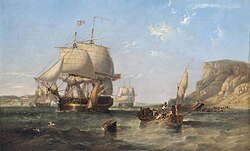
The Oriental Crisis and Final Appointments
By 1840, Ommanney was appointed Second-in-Command of the Mediterranean Fleet. This role was critical during the Oriental Crisis, a period of diplomatic and military tension involving the Ottoman Empire and European powers over the rule of Egypt.
The culmination of his career came in 1851, when he was appointed Commander-in-Chief, Plymouth, one of the most prestigious shore commands in the British Isles. Sir John Ommanney remained in service until his death on July 8, 1855.
Key Facts
- Entry into Service: Joined the Royal Navy in 1786.
- Key Conflict: Participated in the Battle of Navarino (1827) aboard HMS Albion.
- Major Commands: Served as Commander-in-Chief in Lisbon (1837) and Plymouth (1851).
- Strategic Role: Second-in-Command of the Mediterranean Fleet during the Oriental Crisis (1840).
- Death: Passed away on July 8, 1855.
| Year | Rank or Appointment | Notable Vessel or Location |
|---|---|---|
| 1786 | Joined Royal Navy | N/A |
| 1796 | Commander | Brig (North Sea) |
| 1800 | Post Captain | HMS Hussar, Robust, Barfleur |
| 1825 | Captain | HMS Albion |
| 1837 | Commander-in-Chief | Lisbon |
| 1840 | Second-in-Command | Mediterranean Fleet |
| 1851 | Commander-in-Chief | Plymouth |
Frequently Asked Questions
When did Sir John Ommanney join the Royal Navy?
Sir John Ommanney began his naval career in 1786.
Which major battle did Ommanney participate in?
He took part in the Battle of Navarino in 1827 while in command of HMS Albion.
What was Ommanney's role during the Oriental Crisis?
During the Oriental Crisis of 1840, he served as the Second-in-Command of the Mediterranean Fleet.
Which ships did Ommanney command as a Post Captain?
As a Post Captain, he commanded HMS Hussar, HMS Robust, and HMS Barfleur.
What was the final major command of his career?
His final major appointment was as the Commander-in-Chief, Plymouth, in 1851.