
Somali-Indian Trade Relations Through History
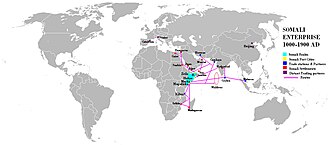
The Somali people possess a storied tradition of maritime enterprise, serving as a critical bridge between the East and West for millennia. Strategically positioned along the coast of the Indian Ocean, Somali merchants leveraged their geography to build vast commercial networks that connected the African continent with the empires of Asia and Europe.
One of the most significant aspects of this history was the ability of Somali traders to navigate the complex geopolitical landscapes of antiquity. While the Roman Empire sought to control the Red Sea and Mediterranean commerce—even establishing a naval presence at Aden to curb piracy—Somali and Arab merchants formed strategic agreements to protect their lucrative interests. By barring certain ships from the free port cities of the Arabian Peninsula, they maintained a competitive edge in the high-value trade routes of the era.
Despite Roman interference in other regions, the port cities of the Somali peninsula remained open and free, making them an ideal destination for Indian merchants.
The Secret of the Cinnamon Trade
For centuries, the trade of cinnamon served as a cornerstone of Somali commercial wealth. Indian merchants transported vast quantities of cinnamon from Indonesia and Sri Lanka to Somalia and Arabia. In a sophisticated move of commercial collusion, Somali and Arab traders kept the true origin of the spice a secret from their Greek and Roman buyers.
The Romans and Greeks were led to believe that the Somali peninsula was the actual source of the cinnamon. By controlling the supply chain and masking the origin, Somali merchants were able to export this highly valued product to Europe, the Near East, and North Africa at significantly inflated prices, generating immense revenue through ancient sea and land routes.
The Golden Age of Somali City-States
During the era of the Ajurans (a powerful Somali dynasty), the region experienced a commercial zenith. The sultanates and republics of Mogadishu, Merca, Barawa, and Hobyo flourished as global hubs of trade. Their ports saw a constant flow of ships from diverse origins, including Persia, Egypt, Portugal, Arabia, India, Venetia, and as far east as China.
Trade with the Kingdom of Cambaya
In the 16th century, the chronicler Duarte Barbosa documented the vibrancy of these markets. He noted that numerous ships from the Kingdom of Cambaya (located in modern-day India) sailed to Mogadishu. These vessels arrived laden with spices and cloth, which were exchanged for ivory, wax, and gold. Barbosa further described coastal markets overflowing with barley, wheat, meat, fruit, and horses, contributing to the enormous wealth of the local merchant class.
Diverse Commercial Partnerships
The trade network extended beyond the state level to include various ethnic and religious merchant groups. Jewish merchants from Hormuz traded Indian fruits and textiles for wood and grain. By the 15th century, formal trading relations were established with the Indian Malacca Sultanate, focusing on the exchange of porcelain, ambergris, and cloth.
Furthermore, Hindu merchants from Surat utilized the ports of Barawa and Merca as safe havens. By operating in these Somali ports, they could bypass the interference of the Omanis and the blockades imposed by the Portuguese, ensuring their trade continued without disruption.
Key Facts
- Strategic Secrecy: Somali and Arab merchants hid the Southeast Asian origin of cinnamon from Romans and Greeks to maintain high prices.
- Global Reach: Somali ports traded with entities as distant as China and Venetia during the Ajuran period.
- Key Exports: Primary Somali exports included gold, ivory, wax, grain, and wood.
- Key Imports: Major imports from India and Asia included textiles, spices, porcelain, and ambergris.
- Safe Havens: Hindu merchants from Surat used Somali ports to evade Portuguese and Omani interference.
| Origin/Partner | Goods Exported to Somalia | Goods Exported from Somalia |
|---|---|---|
| India (Cambaya/Surat) | Cloth, Spices, Textiles, Fruit | Gold, Ivory, Wax, Grain, Wood |
| Sri Lanka & Indonesia | Cinnamon | (Re-exported to Europe/North Africa) |
| Malacca Sultanate | Porcelain, Cloth, Ambergris | Local Commodities |
| Hormuz (Jewish Merchants) | Indian Textiles, Fruit | Grain, Wood |
Modern Context
While the ancient maritime empires have transitioned, the human connection between the two regions persists. Following the outbreak of the Somali Civil War in 1991, a small number of Somalis sought asylum in India. This expatriate community now constitutes the majority of the Somali immigrant population currently residing in India.
Frequently Asked Questions
Why did the Romans believe cinnamon came from Somalia?
Somali and Arab merchants intentionally kept the true source of cinnamon (Sri Lanka and Indonesia) a secret, leading the Romans and Greeks to believe the Somali peninsula was the origin so that the traders could control the price and supply.
Which Somali cities were most prominent in ancient trade?
The most prominent port cities included Mogadishu, Merca, Barawa, and Hobyo, particularly during the Age of the Ajurans.
What role did the Kingdom of Cambaya play?
The Kingdom of Cambaya, located in modern-day India, sent numerous ships to Mogadishu to trade cloth and spices for gold, ivory, and wax.
How did Hindu merchants from Surat benefit from Somali ports?
They used the ports of Merca and Barawa to conduct their trade safely, as these locations were outside the jurisdiction of the Portuguese blockade and Omani interference.
What is the current state of the Somali community in India?
The current Somali community in India consists primarily of a small group of expatriates who sought asylum following the start of the Somali Civil War in 1991.