
St George: The History of England's Patron Saint
The figure of St George is inextricably linked with English national identity. While today he is recognized globally as the patron saint of England, his rise to this position was a gradual process that spanned centuries, evolving from early liturgical mentions to a symbol of military valor and national unity.
Early Medieval Origins
The earliest evidence of St George's presence in England dates back to the 8th century, documented by the Venerable Bede (who died in 735). By the 9th century, his feast day appeared in the Durham Collectar, a liturgical work. Historical records also suggest that the will of Alfred the Great referenced the saint in connection with the church of Fordington in Dorset.
By the 10th century, several churches were dedicated to St George, including those in Southwark, Doncaster, Thetford, and Fordington. During the Crusades, St George gained widespread popularity as a warrior saint. However, during the High Middle Ages, he did not yet hold a unique identity as England's patron; instead, the English people were more closely associated with Edmund the Martyr and Edward the Confessor.
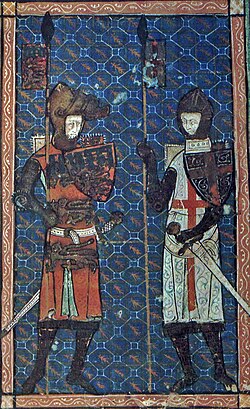
The Rise to Patronage and the Order of the Garter
The turning point for St George's status occurred in 1348. King Edward III granted the saint a special position as the patron of the Order of the Garter, an elite order of knighthood, in gratitude for his perceived intervention at the Battle of Crécy.
Following this elevation, the banner of St George began to appear with increasing frequency alongside the Royal Banner, eventually becoming a permanent part of the Royal Standard. This association was further solidified by the construction of St George's Chapel at Windsor Castle by Henry VII and Edward IV. The badge of the Order of the Garter depicts the iconic image of Saint George on horseback slaying a dragon.
During the Hundred Years' War (1337–1453), the chronicler Froissart noted that English soldiers frequently used "St George" as a battle cry, with some carrying his pennon into combat.
Liturgical Evolution and the Tudor Period
For much of the Middle Ages, St George's feast day was treated like any other saint's day on the calendar. While some historians previously believed the Synod of Oxford in 1222 elevated the day, original manuscripts do not support this. It was not until 1415 (Province of Canterbury) and 1421 (Province of York) that St George's Day was officially designated as a "double major feast," though he remained secondary to Saints Edward and Edmund for some time.
During the English Reformation, St George's status remained remarkably stable. While the state abolished almost all religious flags and saints' banners, the banner of St George was preserved. In 1545, the St George's Cross was first recorded as an English maritime flag. By 1606, this cross was combined with the Scottish St Andrew's Cross to create the Union Jack.
Exploration and Cultural Legacy
The Cross of St George accompanied English explorers across the globe. It was flown by John Cabot during his 1497 voyage to Newfoundland, and later by Sir Walter Raleigh and Sir Francis Drake. In 1620, the Mayflower flew the cross on its foremast as the Pilgrim Fathers arrived in Massachusetts.
In literature, William Shakespeare immortalized the saint in Henry V, where the King invokes the cry "God for Harry, England, and Saint George!" before the Battle of Agincourt. This mirrored the beliefs of many soldiers at the actual battle who claimed to see the saint fighting alongside them.
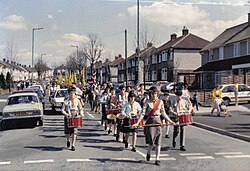
By the late 18th century, celebrations of St George's Day had declined following the union of England and Scotland. However, the Royal Society of St George was established in 1894 to promote English culture and the saint's legacy. Additionally, Robert Baden-Powell selected St George as the patron saint of the Scout movement, a tradition that continues today through parades and services held near the feast day.
Key Facts
- First Mention: Documented by the Venerable Bede (d. 735).
- Patronage: Became patron of the Order of the Garter in 1348 under Edward III.
- Maritime Use: First used as an English maritime flag in 1545.
- The Union Jack: Formed in 1606 by combining the crosses of St George and St Andrew.
- Scouting: Chosen as the patron saint of the Scout movement by Robert Baden-Powell.
| Period/Date | Event/Development | Significance |
|---|---|---|
| 8th Century | Mention by Venerable Bede | Earliest documented mention in England |
| 1348 | Patron of Order of the Garter | Shift toward national patronage |
| 1415/1421 | Double Major Feast status | Liturgical elevation in Canterbury and York |
| 1545 | Maritime Flag adoption | Official use of the Cross at sea |
| 1606 | Creation of Union Jack | Integration with Scottish heraldry |
| 1894 | Royal Society of St George | Modern revival of English cultural promotion |
Frequently Asked Questions
When did St George become the patron saint of England?
While he was known earlier, his prominence grew significantly in 1348 when Edward III named him the patron saint of the Order of the Garter following the Battle of Crécy.
What is the significance of the St George's Cross in the Union Jack?
The St George's Cross represents England. In 1606, it was combined with the St Andrew's Cross of Scotland to form the Union Jack.
How is St George's Day celebrated by the Scouts?
Because Robert Baden-Powell chose St George as the movement's patron, many Scout districts hold parades and religious services on the Sunday closest to St George's Day.
Was St George always the primary saint of England?
No. Until the 14th century, the saints most closely associated with England were Edward the Confessor and Edmund the Martyr.
What are some traditional customs associated with St George's Day?
A traditional custom involves wearing a red rose in the lapel, although this practice is no longer widely common.