
Stereophonics: The Complete History of the Welsh Rock Icons
From the quiet village of Cwmaman in Wales to the world's biggest stadiums, Stereophonics have carved out a lasting legacy in the landscape of British rock. Defined by the distinctive vocals of Kelly Jones and a commitment to songwriting, the band has evolved through various lineups and musical eras to become one of the UK's most consistent chart-topping acts.
Key Facts
- Origin: Cwmaman, Wales.
- Founding Members: Kelly Jones and Stuart Cable.
- Breakthrough Album: Word Gets Around (1997).
- Chart Success: Eight number-one albums in the UK.
- Notable Achievement: First artists signed to the V2 record label.
- Key Members: Kelly Jones (Vocals/Guitar), Richard Jones (Bass), and various drummers including Stuart Cable, Javier Weyler, and Jamie Morrison.
Formation and the Early Years (1986–1991)
The roots of the band trace back to 1986 in Cwmaman, where neighbors Kelly Jones and Stuart Cable began jamming in Jones' father's garage. Their early iterations included a demo recorded under the name Zephyr, featuring Nicholas Geake, Paul Rosser, and Chris Davies. However, internal friction led to a split; Jones formed an R&B group called Silent Runner, while Cable joined the glam-rock band King Catwalk.
The duo reunited a few years later after a chance encounter at a bus stop. This second start saw the addition of Mark Everett on bass, though he was soon replaced by Richard Jones, whose playing impressed Cable. After several brief attempts to recruit a lead guitarist—including Simon Collier, another Richard Jones, and Glenn Hyde—the group decided to move forward as a lean three-piece act.
The Rise of Stereophonics (1992–1996)
In 1992, the trio began performing in working men's clubs under the name Tragic Love Company, a nod to their influences: The Tragically Hip, Mother Love Bone, and Bad Company. After catching the attention of producers Marshall Bird and Steve Bush, they recorded a demo for "A Thousand Trees."
The band's identity shifted when promoter Wayne Coleman insisted they change their name before performing. Inspired by a "Falcon Stereophonic" gramophone, they became the Stereophonics. Their trajectory accelerated in May 1996 when they signed with the newly formed V2 Records, dropping the "the" to become simply Stereophonics.
Ascent to Global Fame (1997–2000)
The band's debut studio album, Word Gets Around, was released in August 1997, peaking at number six on the UK Albums chart. This era established them as a force in the industry, earning them a BRIT Award for Best New Group in 1998.
Their second album, Performance and Cocktails (1999), catapulted them to the top, entering the charts at number one and achieving platinum status within three weeks. This period was marked by massive live events, including a performance for 50,000 people at Morfa Stadium in Swansea and a landmark show at Cardiff Castle.
Mainstream Dominance and Lineup Changes (2001–2010)
The early 2000s saw the release of Just Enough Education to Perform (2001) and You Gotta Go There to Come Back (2003). However, 2003 brought a significant turning point when original drummer Stuart Cable was dismissed due to a perceived lack of commitment. He was replaced by Javier Weyler, following a brief stint by Steve Gorman of the Black Crowes.
The band reached a new peak with the 2005 album Language. Sex. Violence. Other?, which produced their first UK number-one single, "Dakota." They continued to evolve with Pull the Pin (2007) and Keep Calm and Carry On (2009), the latter named after a poster found in a Richmond pub.
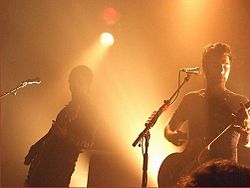
Tragedy struck in June 2010 when original drummer Stuart Cable passed away in Aberdare. Following this loss and the end of their Universal contract, the band took a hiatus to rethink their creative process.
Modern Era and Continued Evolution (2011–2024)
The band returned with new drummer Jamie Morrison in 2012. This era produced a string of successful albums, including Graffiti on the Train (2013), Keep the Village Alive (2015), and Scream Above the Sounds (2017), the latter marking their move to the Parlophone label.
Recent years have seen the release of Kind (2019) and Oochya! (2021), both of which became number-one albums. Despite facing public criticism for performing two shows in Cardiff in March 2020 during the early stages of the COVID-19 pandemic—an event later scrutinized by the UK COVID-19 Inquiry—the band has remained a staple of the live circuit, including a massive 2022 broadcast from the Principality Stadium with Sir Tom Jones.
Looking Ahead: 2025 and Beyond
Stereophonics continue to expand their discography. In January 2025, they announced their 13th studio album, Make 'Em Laugh, Make 'Em Cry, Make 'Em Wait, scheduled for release on April 25, accompanied by the "Stadium Anthems Summer '25" world tour.
| Album Title | Release Year | Key Achievement/Note |
|---|---|---|
| Word Gets Around | 1997 | Debut album; reached UK #6 |
| Performance and Cocktails | 1999 | First #1 album; went platinum |
| Language. Sex. Violence. Other? | 2005 | Featured first #1 single ("Dakota") |
| Pull the Pin | 2007 | Reached #1 on UK official chart |
| Oochya! | 2021 | Eighth number-one album |
| Make 'Em Laugh, Make 'Em Cry, Make 'Em Wait | 2025 | 13th studio album |
Frequently Asked Questions
How did the band get the name Stereophonics?
The name was suggested by Stuart Cable after he saw the manufacturer's name "Falcon Stereophonic" on a gramophone. This change was requested by promoter Wayne Coleman, who disliked their previous name, Tragic Love Company.
Who are the current members of Stereophonics?
The core of the band consists of Kelly Jones on vocals and guitar and Richard Jones on bass. Jamie Morrison has served as the drummer since 2012.
What was the band's first number-one single?
Their first number-one hit in the UK singles charts was "Dakota," released as part of the 2005 album Language. Sex. Violence. Other?
Why did Stuart Cable leave the band in 2003?
Stuart Cable was dismissed due to a reported lack of commitment, which included missing several rehearsals and concerts while focusing on his TV show, "Cable TV."
Which record label did Stereophonics first sign with?
Stereophonics were the first artists signed to the newly formed V2 Records in May 1996.