
Stride Game Engine: Evolution from Paradox to Stride
The journey of the Stride game engine is a story of rebranding, community growth, and technical evolution. Originally conceived under different names, the engine has transitioned from a proprietary tool to a community-driven, open-source project integrated with the .NET ecosystem.
The Early Years: Paradox and Xenko
Before it was known as Stride, the engine was first named Paradox. It was later renamed Xenko, a name derived from the Japanese word zenko, which translates to perfection and light. The engine made its first public appearance with the release of Alpha 1.0 in September 2014, quickly moving to an open-source model on GitHub by October of the same year.
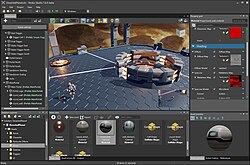
Development accelerated in early 2015. In March, the team announced a scene editor and a physically based rendering (PBR) material editor—a method of shading and rendering that provides a more accurate representation of how light interacts with surfaces. These tools were officially released in April 2015.
Growth and Corporate Partnerships
By February 2017, Xenko moved beyond its beta phase with the release of version 1.8x. This period marked a significant increase in visibility, particularly through a partnership with Microsoft. On March 1, 2017, Microsoft included Xenko in the Xbox Creators Program, providing "out of the box" support for the Universal Windows Platform (UWP), which allows apps to run across various Windows-powered devices.
During this era, Silicon Studio played a pivotal role in the engine's distribution. In April 2017, they launched Xenko 2.0 under a commercial proprietary license, followed by the launch of Xenko 3.0 in August 2018. However, by late 2018, Silicon Studio announced it would end its direct support for the engine, transitioning the project to a community-supported model.
Transition to Stride and the .NET Foundation
The shift toward a fully community-led project culminated in April 2020. The developers sought to have the engine join the .NET Foundation, a non-profit organization that supports the development of the .NET ecosystem. Because the name "Xenko" was the legal property of Silicon Studio, the engine was renamed Stride to facilitate this transition.
Following the rebranding, the engine entered a period of steady version updates, ensuring stability and new features for its user base.
Key Facts
- Original Names: Started as Paradox, then Xenko, and finally Stride.
- Open Source: Became open-source on GitHub in October 2014.
- Microsoft Integration: Featured in the Xbox Creators Program with UWP support.
- Governance: Renamed to Stride in 2020 to enable membership in the .NET Foundation.
- Latest Version: Stride 4.3 was released in November 2025.
Version History Summary
| Date | Version/Event | Key Milestone |
|---|---|---|
| September 2014 | Alpha 1.0 | First public release |
| February 2017 | 1.8x | Exit from beta |
| April 2017 | Xenko 2.0 | Commercial proprietary license launch |
| August 2018 | Xenko 3.0 | Shift to community-supported model |
| November 2019 | Xenko 3.1 | Version update |
| April 2020 | Stride | Official rebranding |
| February 2021 | Stride 4.0 | Major version release |
| July 2022 | Stride 4.1 | Version update |
| February 2024 | Stride 4.2 | Version update |
| November 2025 | Stride 4.3 | Version update |
Frequently Asked Questions
Why was Xenko renamed to Stride?
The engine was renamed to Stride in April 2020 so that it could join the .NET Foundation. This was necessary because the name Xenko was owned by Silicon Studio.
What does the name Xenko mean?
Xenko is derived from the Japanese word "zenko," which means light and perfection.
When did the engine become open-source?
The engine went open-source on GitHub in October 2014, shortly after its first public Alpha release.
What is the relationship between Stride and Microsoft?
In 2017, Microsoft included Xenko (now Stride) in the Xbox Creators Program, providing it with native, "out of the box" support for the Universal Windows Platform (UWP).
Who managed the commercial version of the engine?
Silicon Studio managed the commercial proprietary licenses for Xenko 2.0 and 3.0 before moving the engine to a community-supported model in 2018.