
Sudanese Literature: The Evolution of a Hybrid Cultural Identity
Sudanese literature is defined by a profound connection between language, art, and social reality. Unlike some Western perspectives that view art as a separate entity, Sudanese writers often embrace a holistic approach, believing that art exists primarily in the service of humanity. This literary tradition is deeply rooted in a respect for the spoken word and a complex history of cultural intersection.
While Sudanese Arabic literature is firmly linked to the broader history of Arabic letters, it possesses a distinct character. This uniqueness is often found in the use of local idioms—the "idiom of the land"—which distinguishes the national voice from other Arabic-speaking regions. Historically, poetry has remained the preferred literary form among the Sudanese people.
Key Facts
- Hybrid Identity: Much of Sudanese literature explores the tension and harmony between African roots and Arabic cultural influences.
- The Jungle and Desert School: A 1960s literary movement representing the rainforests of the South ("jungle") and the northern plains ("desert").
- Pioneering Media: Al-Ra'id (The Pioneer), founded in 1914, and Al Fajr (The Dawn), founded in 1934, were critical in fostering modern poetry and short stories.
- Global Recognition: Tayeb Salih's Season of Migration to the North is one of the most influential Arabic novels of the 20th century.
- Social Realism: Contemporary works frequently address marginalization, dictatorship, and the struggles of the urban poor.
The Foundations of Modern Writing
The transition to modern written literature was catalyzed by the emergence of newspapers and educational institutions in the early 20th century. Jaridat al-Sudan, a biweekly paper established in 1903, provided an early platform in both Arabic and English. However, Al-Ra'id (The Pioneer), launched in 1914 in Khartoum, had a more significant impact on the literary landscape. Its first editor, Abdul Raheem Glailati, used the platform for nationalist poetry, though his criticism of living conditions led to his deportation to Cairo by British authorities in 1917.
The establishment of non-religious schools and institutions like Gordon Memorial College in Khartoum further expanded the intellectual horizon. While Arabic remained the primary language of education, the introduction of English schooling granted Sudanese intellectuals access to Western literature and global non-fiction, blending diverse intellectual traditions.
The Rise of the Short Story and Novel
The short story emerged as a dominant genre in the 1920s, heavily influenced by Egyptian newspaper styles. The first Sudanese novel is widely considered to be Tājouj (1948), a romantic tale by Osman Muhammad Hashim. Following Sudan's independence in 1956, these forms evolved to tackle political instability and the search for a cohesive national identity.
Exploring the Hybrid Cultural Identity
A recurring theme in Sudanese writing is the "hybrid identity"—the intersection of African and Arab heritage. This was formalized by the Jungle and Desert School (madrasat al-ghāba wa-l-ṣaḥrā’) in the 1960s, which included writers such as Al-Nur Osman Abkar and Mohammed Abdul-Hayy. This school sought to reflect the geographical and cultural duality of the nation.
Modern authors continue this exploration. For instance, Jamal Mohammad Ibrahim describes the "typical Sudanese" as a blend of African physical traits and Arabic loquacity. Others, like Muhammad al-Fayturi, use poetry to address race, class, and colonialism from the perspective of an African living among Arabs. However, critics like Xavier Luffin note that this richness is often tempered by the depiction of racism and civil war.
Social Realism and Political Critique
Sudanese literature has frequently served as a mirror to the country's political turmoil. Many writers, influenced by studies in Europe and Egypt, adopted social realism to highlight class conflicts. Since the 1990s, there has been a shift toward focusing on marginalized characters—such as the shammasa (street boys) or displaced rural populations—who often act as rebels against moral and political authorities.
Dictatorship and the failure of democracy are also central themes. Ahmad al-Malik utilizes elements of magical realism—a style blending realistic narrative with surreal elements—to bypass censorship while critiquing despotic rule. Similarly, Khālid ‘Uways's Waṭan khalf al-quḍbān (A Nation behind Bars) uses the experiences of imprisoned women to illustrate how regimes oppress both Muslims and non-Muslims, Arabs and Africans alike.
The struggle for expression is evidenced by the history of the Sudanese Writers Union. Founded in 1985, it was dissolved by the military government of Omar al-Bashir in 1989, revived in 2006, and closed again in 2015 before a court ruling allowed it to resume activities in 2016.
Prominent Figures in Sudanese Literature
The landscape of Sudanese writing is populated by diverse voices, from exiled novelists to award-winning poets.
| Author | Key Work/Contribution | Primary Themes |
|---|---|---|
| Tayeb Salih | Season of Migration to the North | Coming of age, East-West contrast, estrangement |
| Ibrahim Ishaq | Various novels set in Darfur | Darfur culture, African history |
| Bushra Elfadil | "The Story of the Girl Whose Birds Flew Away" | Caine Prize winner, contemporary fiction |
| Hammour Ziada | The Longing of the Dervish | Historical and social fiction |
| Abdelaziz Baraka Sakin | The Messiah of Darfur | Civil war, prison conditions, marginalization |
| Malkat al-Dar Mohamed | Al-Faragh al-'arid | Working women's lives, early feminism |
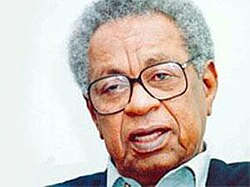
Tayeb Salih remains perhaps the most internationally recognized figure; his work is translated into over twenty languages and explores the concept of ghurba (estrangement) in relation to the West. Other contemporary voices include Amir Taj al-Sir, whose work has been shortlisted for the International Prize for Arabic Fiction, and Reem Gaafar, the first Sudanese novelist to win the South African Island Prize for a Debut Novel from Africa (2023).
Female writers have also carved out significant space. From the early feminist perspectives of Buthaina Khidir Mekki to the flash fiction of Fatima al-Sanoussi and the contemporary prose of Sabah Sanhouri, women's writing in Sudan often challenges stereotypes regarding education and the impact of war.
Frequently Asked Questions
What is the "Jungle and Desert School"?
It was a group of Sudanese writers in the 1960s who sought to express the country's hybrid identity. The "jungle" represented the rainforests of Southern Sudan, while the "desert" represented the North, symbolizing the blend of African and Arabic influences.
Who is the most famous Sudanese writer?
Tayeb Salih is widely regarded as the most notable Sudanese writer of the 20th century, particularly for his novel Season of Migration to the North, which is celebrated across the Arabic-speaking world and internationally.
How has political censorship affected Sudanese literature?
Censorship has led to the banning of books, the dissolution of the Sudanese Writers Union, and the prohibition of informal book markets like Mafroosh. Some authors have used magical realism or written from exile to avoid government suppression.
What are the common themes in contemporary Sudanese novels?
Common themes include the struggle for cultural identity, the effects of civil war and displacement, the hardships of marginalized people in urban slums, and the contrast between traditional society and globalized Western influence.
Which literary genres are most prominent in Sudan?
Poetry is historically the preferred form, but the short story and the novel have become highly prominent since the early 20th century, often used to explore social and political issues.