
Sunderland Bridge: History and Construction
The Sunderland Bridge stands as a testament to resilience and engineering, serving as a vital crossing that has weathered both natural disasters and the passage of time. Its history is marked by a dramatic loss and a subsequent rebirth that reflects the architectural shifts of the 20th century.
The Legacy of the 1936 Flood
Before the current structure existed, the site was occupied by at least one previous bridge. This earlier version was a metal through-truss bridge—a design where the bridge deck is located at the bottom of the truss structure, with the supporting framework extending above the traffic.
This original bridge met a catastrophic end during the Flood of 1936. In a remarkable sequence of events, the floating Montague City Covered Bridge was swept away by the floodwaters, colliding with and destroying the metal through-truss bridge.
Construction and Modernization
Following the destruction of the previous crossing, the current Sunderland Bridge was completed in 1937. Unlike its predecessor, this version was built as a deck truss bridge, a design where the supporting truss structure is located entirely beneath the bridge deck.
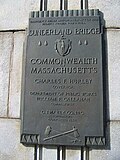
To ensure the continued safety and stability of the crossing, a comprehensive reconstruction of the bridge was carried out and completed in 1994. While the structural integrity was preserved, the project sparked local debate regarding the bridge's aesthetics. Specifically, the replacement of the original art deco railings—a style characterized by geometric shapes and streamlined ornamentation—with modern alternatives proved to be a controversial decision.
Key Facts
- Current Design: Deck truss bridge.
- Completion Date: 1937.
- Major Reconstruction: Completed in 1994.
- Previous Structure: A metal through-truss bridge.
- Cause of Destruction: The Flood of 1936, involving the floating Montague City Covered Bridge.
| Era/Event | Bridge Type/Action | Key Detail |
|---|---|---|
| Pre-1936 | Metal Through-Truss | Destroyed by floating covered bridge |
| 1937 | Deck Truss | Current bridge completed |
| 1994 | Reconstruction | Modern railings replaced art deco style |
Frequently Asked Questions
What happened to the original bridge at this location?
The original metal through-truss bridge was destroyed during the Flood of 1936 when it was struck by the floating Montague City Covered Bridge.
When was the current Sunderland Bridge built?
The current deck truss bridge was completed in 1937.
What is the difference between a through-truss and a deck truss bridge?
In a through-truss bridge, the traffic travels through the supporting structure, which extends above the deck. In a deck truss bridge, the supporting structure is located entirely beneath the roadway.
Why was the 1994 reconstruction controversial?
The controversy centered on the removal of the original art deco railings, which were replaced with modern versions.
When was the most recent major work performed on the bridge?
The bridge underwent a full reconstruction that was completed in 1994.