
Suriname Colonisation: From European Outposts to Independence
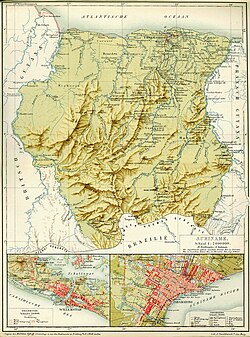
The history of Suriname is a complex narrative of European competition, the brutal realities of the plantation economy, and the resilient spirit of those who fought for freedom. Located on the "Wild Coast" of South America, this region became a focal point for global powers seeking to exploit fertile lands and valuable resources.
Before the establishment of permanent colonies, the region saw intermittent visits from Spanish explorers and Dutch traders. By 1613, a Dutch trading post existed near the village of Parmurbo on the Suriname River, though the Spanish seized another Dutch post on the Corantijn River that same year. Early attempts at settlement were fraught with difficulty; for instance, an English venture led by Captain Marshall in 1630 focused on tobacco cultivation but ultimately failed financially. Shortly after, around 1640, the French established a brief outpost near the mouth of the Suriname River.
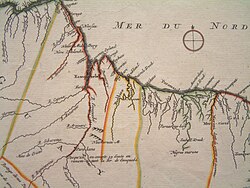
The English Era and the Rise of Plantations
Significant colonisation began in 1650 when Lord Willoughby, the governor of Barbados, funded a settlement venture. He equipped a 20-gun ship and two support vessels to establish a colony, which was managed by Major Anthony Rowse. By 1652, Willoughby personally fortified the settlement, creating Fort Willoughby near the mouth of the Suriname River using the remains of the French outpost.
The colony grew to encompass approximately 30,000 acres (120 km²). By 1663, the economy relied on roughly 50 plantations. The workforce consisted of native Indians and 3,000 African slaves, while the settler population of about 1,000 whites included Brazilian Jews, who were drawn to the region by the religious freedom granted by the English administration.
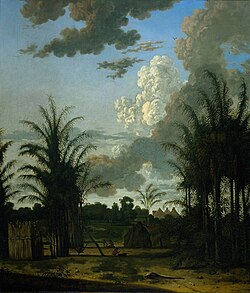
Dutch Conquest and the Society of Suriname
The English hold on the region ended on February 26, 1667, when seven Dutch ships from Zeeland, led by Abraham Crijnssen, invaded. Fort Willoughby fell after a three-hour battle and was renamed Fort Zeelandia. This transition was formalised through a series of diplomatic agreements:
- Treaty of Breda (1667): The Dutch retained Suriname, while the English kept New Netherland (modern-day New York).
- Treaty of Westminster (1674): Officially confirmed the Dutch possession of the colony.
To manage the colony's defence and profitability, the Society of Suriname was established in 1683. This entity was a partnership between the city of Amsterdam, the Van Aerssen van Sommelsdijck family, and the Dutch West India Company (WIC). The Society operated until 1795, when such trade models were no longer deemed acceptable.
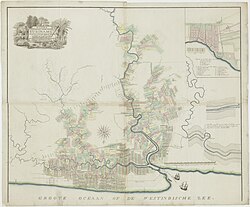
Slavery, Resistance, and the Maroon Communities
The Dutch plantation economy focused on the export of sugar, coffee, cocoa, and cotton to Amsterdam. Because the native population was limited, the Dutch relied heavily on the Atlantic slave trade. By 1713, 13,000 African slaves worked across 200 plantations under horrific conditions.
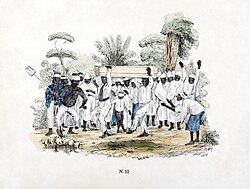
In response to this brutality, many enslaved people escaped into the jungle, becoming Maroons (also known as Djukas or Bakabusi Nengre). These communities, led by figures such as Johannes Alabi, Boni, Joli-coeur, and Kapitein Broos, launched attacks on plantations to liberate enslaved women and acquire essential goods. Eventually, three Maroon groups signed peace treaties that recognised them as free people and provided them with yearly tributes.
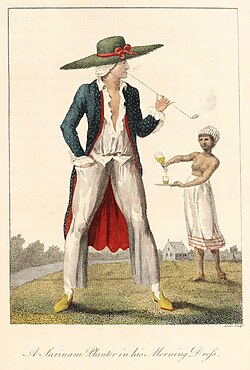
Emancipation and the Shift in Labour
Suriname's political status shifted during the Napoleonic era; it was occupied by the British in 1799 and returned to the Dutch in 1816. While the British had abolished slavery during their brief rule, the Dutch did not officially abolish it until 1863.
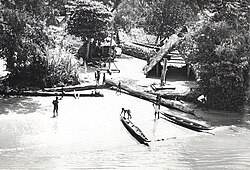
Emancipation was not immediate. Freed slaves were forced into a ten-year transition period of obligatory paid work, meaning they were not fully released from plantation labour until 1873. Furthermore, the Dutch government compensated slave owners with 300 Dutch guilders (approximately €3,500 in 2021) per slave. Following 1873, many freedmen left the plantations for the capital, Paramaribo.
To replace the lost workforce, the Dutch imported labourers from other colonies:
- Chinese workers from the Dutch East Indies.
- Indian labourers (Indo-Surinamese) between 1873 and 1916.
- Javanese labourers from Indonesia after 1916.
The 20th Century: Natural Resources and Geopolitics
In the 1900s, the economic focus shifted toward mining rubber, gold, and bauxite (the ore used to produce aluminium). The American company Alcoa claimed large areas of bauxite-rich land. However, this led to legal conflicts, as peace treaties with the Maroon people had previously granted them title to these lands, challenging the government's right to grant mining claims.
During World War II, the strategic importance of bauxite became a matter of global security. On November 23, 1941, the United States stationed troops in Suriname to protect the mines under an agreement with the Dutch government-in-exile.
Key Facts
- First European presence: Spanish and Dutch traders in the early 17th century.
- Major transition: The Treaty of Breda (1667) swapped New Netherland for Suriname.
- Plantation crops: Primarily sugar, coffee, cocoa, and cotton.
- Maroons: Escaped slaves who established autonomous communities in the jungle.
- Abolition: Slavery ended in 1863, but full freedom from plantation contracts arrived in 1873.
- Labour migration: Post-emancipation workers were brought from China, India, and Java.
- Strategic resource: Bauxite mining attracted US military presence in 1941.
| Period/Year | Dominant Power | Key Event/Characteristic |
|---|---|---|
| 1630s-1667 | English | Establishment of Fort Willoughby and early plantations. |
| 1667-1799 | Dutch | Capture of Fort Zeelandia; rise of the Society of Suriname. |
| 1799-1816 | British | Interim occupation during the Napoleonic Wars. |
| 1816-1900s | Dutch | Abolition of slavery (1863) and import of Asian labour. |
| 1941 | Dutch/USA | US troop deployment to protect bauxite mines. |
Frequently Asked Questions
Why did the Dutch and English swap colonies in 1667?
Under the Treaty of Breda, the Dutch kept Suriname and the English kept New Netherland (modern-day New York) to maintain the status quo following the Dutch invasion of Suriname.
Who were the Maroons of Suriname?
Maroons were enslaved Africans who escaped the plantations and formed independent communities in the interior jungle, eventually signing peace treaties for their recognition as free people.
When was slavery officially abolished in Suriname?
The Dutch abolished slavery in 1863, though freed slaves were required to work on plantations under contract for another ten years until 1873.
How did the population of Suriname become so diverse?
Following the end of slavery, the Dutch imported contract labourers from the Dutch East Indies (Chinese and Javanese) and India to maintain the plantation economy.
What is bauxite and why was it important?
Bauxite is the primary ore used to create aluminium. Its abundance in Suriname led to significant economic exploitation and the stationing of US troops in 1941 to protect the mines.