
Surrey History: From Ancient Tribes to Modern Expansion
The history of Surrey is a narrative of shifting borders, strategic importance, and industrial evolution. From its early days as a disputed frontier between Anglo-Saxon kingdoms to its role as a cradle for radical political thought and modern aviation, Surrey has consistently influenced the broader trajectory of English history.
Ancient British and Roman Periods
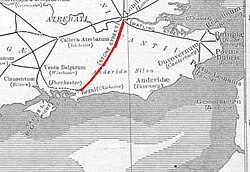
Before the arrival of the Romans, the region now known as Surrey was primarily inhabited by the Atrebates, a tribe centered at Calleva Atrebatum (modern-day Silchester in Hampshire). However, the eastern reaches of the area may have been controlled by the Cantiaci of Kent. Roman records indicate that the Atrebates maintained control over the southern bank of the Thames, navigating a complex relationship with the powerful Catuvellauni tribe located on the north bank.
The Formation of Surrey
By the 7th century, Surrey had become a volatile frontier zone, contested by the kingdoms of Kent, Essex, Sussex, Wessex, and Mercia. This period of instability saw the region fluctuate under different rules. For instance, the founding of Chertsey Abbey in 666 under King Ecgberht of Kent suggests Kentish dominance, while later land grants in 673–675 indicate the influence of Wulfhere of Mercia via a local sub-king, Frithuwald.
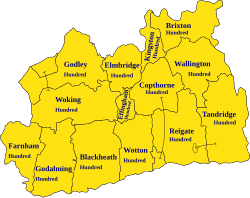
Eventually, the region was absorbed by Wessex in 825 following King Egbert's victory at the Battle of Ellandun. From this point forward, Surrey was incorporated as a shire under the West Saxon kings, who would eventually unify all of England.
The West Saxon and English Shire
Surrey played a critical role in defending England against Viking incursions. In 851, King Æthelwulf led a West Saxon army to slaughter a massive Danish force at the Battle of Aclea. Later, in 892, the future King Edward the Elder defeated another large Danish army at Farnham.
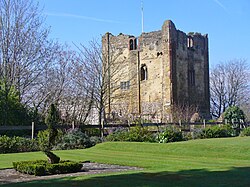
The region also served as a site of royal legitimacy; Kingston became a preferred location for the coronations of 10th-century monarchs, including Æthelstan (924) and Æthelred the Unready (978). However, the 11th century brought turmoil, including the blinding and death of Prince Alfred in Guildford in 1036 and the eventual Norman Conquest of 1066.
Later Medieval Developments
Following the Norman Conquest, the title of Earl of Surrey was established in 1088, granted to William de Warenne. The earldom eventually passed to the Fitzalan family and finally to the Howard family in 1483, who hold the title to this day.
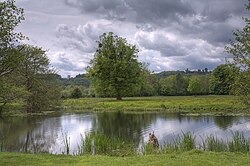
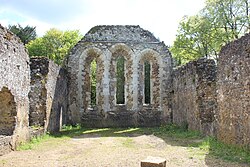
Surrey is perhaps most famous for Runnymede, where King John sealed the Magna Carta in June 1215, a pivotal document in the development of constitutional law. The region also became a center for monastic life, notably with the founding of Waverley Abbey in 1128, the first Cistercian monastery in England.
Early Modern Surrey: Industry and Unrest
The early modern period saw Surrey transition through various industries. While the cloth industry declined, the Weald became a hub for iron production. Later, the Tillingbourne valley adapted old mills for the manufacture of paper and gunpowder, with Surrey becoming a primary gunpowder producer for England in the mid-17th century.
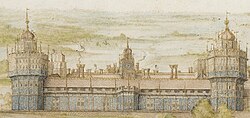
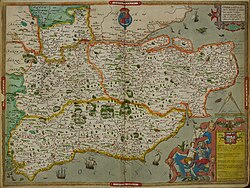
The English Civil War (1642–1646) saw Surrey largely secured by Parliamentarian gentry. However, the region became a hotbed for radicalism. The Levellers drafted their first manifesto, The Case of the Armie Truly Stated, in Guildford, and later held the Putney Debates with Oliver Cromwell. Simultaneously, the Diggers, led by Gerrard Winstanley, attempted to establish egalitarian communal settlements at St. George's Hill and Cobham.
Modern History and Urban Expansion
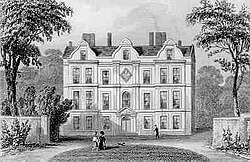
In the 18th and 19th centuries, Surrey was characterized by royal residences like Kew Palace and the political dominance of the Onslow family. However, the most significant change was the rapid expansion of London. Between 1800 and 1900, the city grew from Vauxhall to Putney and Streatham, leading to the creation of the County of London in 1889 and Greater London in 1965, which significantly contracted Surrey's boundaries.
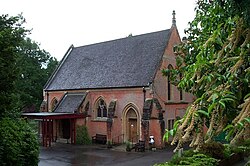
The county also pioneered several "firsts": Brookwood Cemetery became the world's largest burial ground, Woking hosted Britain's first crematorium (1878) and first mosque (1889), and Godalming became the first town globally to provide a public electricity supply in 1881.
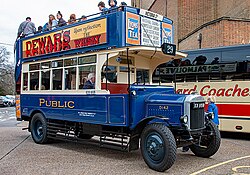
Industrialization shifted toward aviation and transport. Dennis Brothers in Guildford became world-renowned for fire engines and buses, while the Sopwith Aviation Company and Hawker Siddeley established the region as an aircraft manufacturing hub. Croydon Airport served as London's primary airport from 1920 until 1959, before being superseded by Heathrow.
Key Facts
- Ancient Roots: Originally occupied by the Atrebates tribe.
- Political Milestone: The Magna Carta was sealed at Runnymede in 1215.
- Religious Firsts: Waverley Abbey (1128) was England's first Cistercian monastery.
- Radicalism: Birthplace of the Levellers' manifesto and the Diggers' communal experiments.
- Innovation: Godalming was the first town in the world with public electricity (1881).
- Aviation: Home to early aircraft pioneers like Sopwith and Hawker.
| Period | Dominant Influence/Event | Key Outcome |
|---|---|---|
| Ancient/Roman | Atrebates Tribe | Control of southern Thames bank |
| Anglo-Saxon | Wessex (from 825) | Establishment as a West Saxon shire |
| Medieval | Magna Carta (1215) | Foundations of constitutional law |
| Early Modern | Levellers & Diggers | Radical political and social manifestos |
| Modern | London Expansion | Boundary shifts and urban integration |
Frequently Asked Questions
Which tribe originally occupied Surrey?
The area was primarily occupied by the Atrebates tribe, though the eastern parts may have been held by the Cantiaci.
What is the significance of Runnymede in Surrey?
Runnymede is the site where King John sealed the Magna Carta in June 1215, a landmark event in the history of human rights and law.
Who were the Levellers and Diggers?
The Levellers were a radical political movement that advocated for popular sovereignty and constitutional change. The Diggers were an egalitarian group that attempted to establish common ownership of land through communal settlements.
How did the growth of London affect Surrey?
The rapid expansion of London led to the creation of the County of London in 1889 and Greater London in 1965, which resulted in several of Surrey's north-eastern areas being detached from the county.
What industrial innovations occurred in Surrey?
Surrey was a leader in gunpowder and paper production in the 17th century, the first town with public electricity (Godalming), and a major center for early aircraft manufacturing (Sopwith and Hawker).