
Tekhelet and the Search for the Hillazon
For centuries, scholars and theologians have sought to identify the hillazon, the mysterious sea creature described in rabbinic texts as the sole source of tekhelet, a specific blue dye used for biblical garments. While the Bible itself does not name the animal, ancient traditions provide a set of biological and geographical clues that have led researchers to various candidates in the marine world.
The quest to rediscover this dye is not merely academic; it involves a complex intersection of zoology, chemistry, and religious law. The primary challenge lies in finding a creature that matches the textual descriptions while producing a color that is chemically and visually consistent with ancient records.
Key Facts
- The Hillazon: A sea creature found between Tyre and Haifa, described as having a hard shell and a fish-like form.
- Chemical Profile: Tekhelet is described as being visually indistinguishable from indigo.
- Primary Candidate: Hexaplex trunculus (a murex snail) is the leading scientific candidate due to its ability to produce natural indigo.
- Durability: The dye must be permanent and resistant to fading.
- Geographic Evidence: Ancient Phoenician dye workshops have been discovered near Haifa, containing murex shell remains.
The Case for Hexaplex trunculus
The Hexaplex trunculus, a species of sea snail, is widely considered the most likely identity of the hillazon. One of the strongest arguments is chemical: the dye produced by H. trunculus has the exact same chemical composition as indigo, mirroring the rabbinic claim that only God can distinguish between the two.
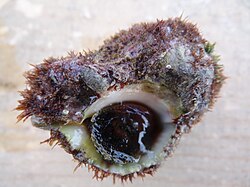
Archaeological evidence further supports this theory. In Tell es-Samak near Haifa, researchers discovered a biblical-era purple dye workshop used by the Phoenicians. This site contained textile equipment and vast piles of murex shells, suggesting large-scale dyeing operations in the exact region where the hillazon was said to reside.
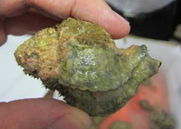
Furthermore, the biological behavior of H. trunculus aligns with several textual clues. The creature often burrows into the sand, matching the description of "treasures hidden in the sand" found in Deuteronomy 33:19. Additionally, the dye is highly durable and can only be removed from wool using bleach, satisfying the requirement that the color must not fade.
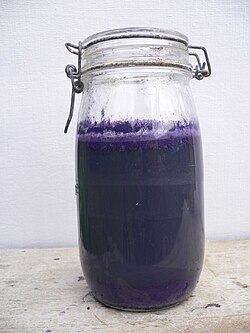
The extraction process also provides a match. Rabbinic sources state that the hillazon should ideally be kept alive during extraction to prevent the dye from degrading. Modern science confirms that an enzyme necessary for dye production in the snail decays rapidly after death.
Linguistic and Historical Links
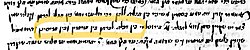
Linguistically, the word hillazon is cognate to the Arabic halazūn, meaning snail. Historical texts from Raavyah and Yair Bacharach refer to purpura (the Latin term for murex dyes), and Greek translations of the midrash use porphoros, the Greek name for Murex trunculus. Both Aristotle and Pliny documented the use of these snails for producing blue and purple dyes.


Addressing the Counter-Arguments
Despite the evidence, some scholars point to discrepancies between H. trunculus and the rabbinic descriptions. One major point of contention is the "70-year cycle" mentioned in the Talmud, a phenomenon not observed in the modern life cycle of the murex snail. Supporters argue this may refer to a rare event, a lost miraculous occurrence, or a misunderstanding of the snail's actual seasonal burrowing cycles.
Another critique involves the description of the hillazon as a "fish." While H. trunculus is a gastropod, proponents note that in ancient Hebrew, the term dagim (fish) was often used broadly to include various aquatic creatures, including shellfish.
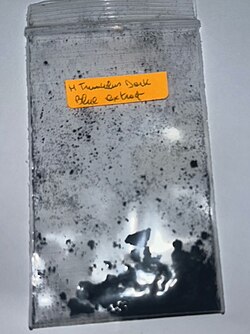
Regarding the claim that the hillazon's blood is "black as ink," some argue this does not fit the snail. However, Aristotle categorized marine snail secretions into black and red pigments, and a black precipitate can indeed be derived from H. trunculus and refined into dye.
Alternative Candidates
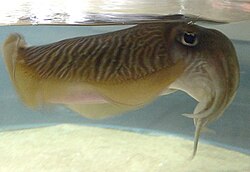
Sepia officinalis (Common Cuttlefish)
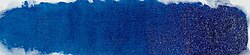
In 1887, Grand Rabbi Gershon Henoch Leiner proposed the common cuttlefish as the source. However, chemical analysis later revealed that the resulting blue was actually "Prussian blue," a synthetic dye. The cuttlefish provided only the organic material for the reaction, rather than the pigment itself.
Janthina
The genus Janthina has also been suggested. While blue dye can be obtained from these snails, they are typically found far out at sea rather than along the coast, and there is little evidence that ancient dyers utilized them.
Summary of Candidate Species
| Candidate | Pros | Cons | Verdict |
|---|---|---|---|
| Hexaplex trunculus | Produces natural indigo; found in Tyre-Haifa region; durable dye. | No 70-year cycle; not biologically a "fish." | Most likely candidate. |
| Sepia officinalis | Proposed by Radziner Rebbe. | Produces synthetic Prussian blue, not natural pigment. | Rejected. |
| Janthina | Produces blue pigment. | Deep-sea habitat; rarely used in antiquity. | Unlikely. |
Frequently Asked Questions
What is the difference between tekhelet and indigo?
Chemically, the color-producing compound in Hexaplex trunculus is identical to indigo. While they appear the same to the human eye, some researchers suggest that secondary compounds in the snail dye may allow for a practical chemical test to distinguish them.
Why is the hillazon described as a fish?
While the hillazon is widely believed to be a snail, ancient Hebrew terminology often used the word for "fish" (dagim) to describe a wide variety of sea creatures, including mollusks and shellfish.
How is the blue color produced from Hexaplex trunculus?
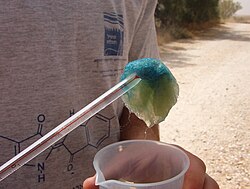
The most common modern method involves exposing the dye to sunlight. Other methods include heating the solution via boiling or adding a strong reactant to achieve the blue hue.
Why was the cuttlefish rejected as the source?
Analysis showed that the blue dye produced from cuttlefish was actually Prussian blue, a synthetic pigment. The animal served only as an organic base for the chemical reaction, meaning the blue color did not originate from the animal itself.