
Tell No One Documentary: Reactions and Aftermath in Poland
The release of the documentary Tell No One, directed by Tomasz Sekielski, sparked an immediate and intense wave of discussion across Polish media, social networking sites, and international platforms. By exposing systemic issues regarding the handling of clerical abuse, the film forced a public reckoning among religious leaders, legal authorities, and the Polish public.
Key Facts
- High-Level Response: Primate Wojciech Polak and Archbishop Stanisław Gądecki both expressed deep emotion and sadness upon viewing the film.
- Legal Action: The National Public Prosecutor's Office in Poland established a dedicated team of prosecutors to analyze the cases presented in the documentary.
- Clerical Consequences: Priest Paweł Kania was removed from the clerical state, and priest Jan A. faces potential expulsion from the priesthood.
- Public Recognition: Press Club Polska awarded Marek and Tomasz Sekielski a special prize for their work on the documentary.
Ecclesiastical Reactions
The response from the Catholic hierarchy in Poland was varied, ranging from contrition to outright denial. Primate Wojciech Polak stated in an interview with Radio ZET that he did not view the film as an attack on the Church. Similarly, Archbishop Stanisław Gądecki thanked the director, noting the sadness with which he watched the footage.
However, other figures reacted with hostility. Archbishop Sławoj Leszek Głódź, identified by the filmmakers as one of the hierarchs who concealed abuse cases, initially dismissed the film as "baloney" in an interview with Fakty TVN, though he apologized for the comment three days later. Cardinal Kazimierz Nycz also offered an apology, admitting it was a mistake to decline participation in the documentary.
In stark contrast, Tadeusz Rydzyk condemned the film as a calculated attempt to destroy the Church. He claimed the victims' tragedies were being exploited by a "pedophilia industry" and suggested the film was driven by hatred, comparing it to movements of antisemitism and fascism.
Institutional and Legal Consequences
The documentary led to several concrete actions regarding specific priests and monuments. The Marian Order confirmed that all reported cases involving Eugeniusz Makulski were forwarded to the Holy See (the central government of the Catholic Church in Rome), and Makulski was banned from pastoral activities.
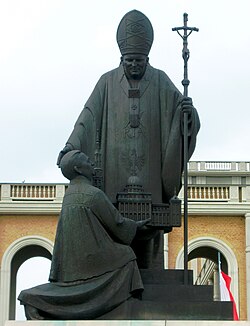
In May 2019, a monument in Licheń featuring Pope John Paul II and Eugeniusz Makulski was covered with a white cloth. By June, the monument was removed entirely, although discussions continued regarding the potential return of the Pope's statue once Makulski's image was gone.
Further disciplinary actions were reported by various dioceses. The curia in Bydgoszcz announced that priest Paweł Kania was removed from the clerical state. In Kielce, the curia addressed the case of priest Jan A., who molested a seven-year-old girl; while they noted that the case had expired under both state and church law, documentation was sent to the Holy See, and Jan A. remains threatened with expulsion from the priesthood.
Additionally, priest Dariusz Olejniczak, who appeared in the film, requested that Pope Francis move him to a secular state following a breach of a court ban.
Summary of Case Outcomes
| Entity/Person | Action Taken / Reaction | Status/Outcome |
|---|---|---|
| National Public Prosecutor's Office | Formed a specialized team | Analyzing documentary cases |
| Paweł Kania | Removed from clerical state | No longer a priest |
| Eugeniusz Makulski | Banned from pastoral activity | Monument removed in Licheń |
| Jan A. (Kielce) | Case sent to Holy See | Threatened with expulsion |
| Marek & Tomasz Sekielski | Awarded by Press Club Polska | Special prize for documentary |
Frequently Asked Questions
How did the Polish government respond to the documentary?
The National Public Prosecutor's Office in Poland responded by establishing a team of prosecutors specifically tasked with analyzing the abuse cases presented in the film.
What happened to the monument in Licheń?
The monument depicting Pope John Paul II and Eugeniusz Makulski was covered in white cloth in May 2019 and subsequently removed in June 2019.
Did all church leaders agree with the film's findings?
No. While Primate Wojciech Polak and Archbishop Stanisław Gądecki expressed sadness and emotion, Tadeusz Rydzyk viewed the film as a fight intended to destroy the Church.
What is the status of priest Jan A. from the Kielce diocese?
Jan A. is a retired presbyter who faces potential expulsion from the priesthood, although the diocesan curia noted that the case has expired under both state and church law.
Who recognized the work of the filmmakers?
Press Club Polska awarded Marek and Tomasz Sekielski a special prize for their courage and effort in documenting the phenomenon of pedophilia among priests.