
The Arukh: A Monument of Medieval Jewish Lexicography
The Arukh stands as one of the most significant intellectual achievements of the Middle Ages, serving as a comprehensive lexicon of the Talmud and other rabbinic literature. Compiled at a pivotal moment when Jewish scholarship was shifting from Babylonia and North Africa to Europe, it acted as a vital bridge, preserving ancient traditions and linguistic treasures that might otherwise have been lost to time.
More than just a dictionary, the Arukh is a window into the cultural and intellectual life of 11th-century Italian Jews. By blending a vast array of linguistic sources with traditional scholarship, its author created a tool that became indispensable for generations of biblical commentators, legalists, and grammarians.
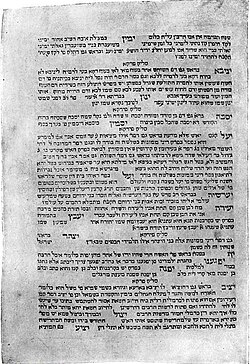
Key Facts
- Purpose: A comprehensive lexicon designed to explain difficult terms in the Talmud and rabbinic texts.
- Cultural Origin: The primary literary production of Italian Jews during the 11th century.
- Linguistic Scope: Includes Aramaic, Arabic, Persian, Medieval Greek, Latin, Old Slavonic, and Italian.
- Historical Impact: Alongside Rashi's commentary and Alfasi's code, it helped spread rabbinic study across Europe.
- Modern Standard: The definitive scientific version is the Arukh Hashalem, published by Alexander Kohut between 1878 and 1892.
Sources and Intellectual Foundations
The author of the Arukh drew from an immense variety of sources, many of which are now lost. He relied heavily on oral and written transmissions from R. Maẓliaḥ and R. Moses ha-Darshan, with the former providing a critical link to Eastern learning through his studies under Hai Gaon.
The influence of Hai Gaon is pervasive throughout the work, particularly in the philologic material derived from his commentary on the mishna in order Tohorot. Other significant contributions came from the writings of Chananel ben Chushiel and Nissim ben Jacob of Kairouan. In fact, the references to Chananel were so frequent that some scholars, such as Rabbeinu Tam, believed the Arukh was based entirely on Chananel's commentaries.
Additionally, the author frequently quoted Gershom ben Judah, though modern scholarship suggests he was not a direct disciple of Judah.
Methodology and Linguistic Scope
The Arukh is remarkable for its philologic spirit of inquiry. Even before the formal science of linguistics existed, the author collated various readings (variæ lectiones) and used a keen literary sense to avoid common etymological errors.
Multilingualism and Etymology
The work is staggeringly polyglot. It features non-Jewish Aramaic dialects alongside Arabic, Persian, Medieval Greek, Latin, and Old Slavonic. The author's familiarity with Italian is evident, as he used the vernacular to explain natural history and foreign customs.
However, scholars generally believe that much of this linguistic diversity was inherited from the author's sources rather than his own mastery. This is evidenced by the fact that the same language, such as Arabic, often appears under three different names, suggesting the author may not have realized they were synonyms.
Grammatical Approach
In terms of Hebrew grammar, the author diverged from the triliteral root principle (the theory that Hebrew roots consist of three letters) established by Judah ben David Hayyuj. Instead, following the trend of many French and German rabbis of the time, he accepted roots consisting of only one or two letters.
Historical Importance and Influence
The Arukh is a critical cultural monument. It provides the only surviving literary evidence of the intellectual state of Italian Jews in the 11th century. It also reveals an early spark of skepticism; for instance, the author noted that the sources and grounds for amulets and conjuring were unknown.
The work gained rapid popularity. It is believed that Rashi may have utilized it in his second edition of commentaries via Kalonymos ben Sabbatai. By the generation following Rashi, it was in general use among the tosafists (scholars who provided critical additions to Rashi's commentary) and other legal and grammatical authors.
Editions and Preservation
The first printed edition likely dates to 1477, followed by a superior edition by Daniel Bomberg in Venice in 1531. Over time, the text suffered from numerous errors and mutilations during copying. These were largely corrected in the scientific edition produced by Alexander Kohut, which was based on seven manuscripts and early printed versions.
Supplements and Related Works
The Arukh's dominance in rabbinic lexicography led to a proliferation of supplements and compendia. For centuries, nearly every rabbinic lexicon was grounded in its framework.
| Work / Author | Century | Key Characteristic |
|---|---|---|
| Agur (Samuel ben Jacob ibn Jam'i) | 12th | The first supplement; small in significance. |
| Al-Murshid al-Kafi (Tanhum of Jerusalem) | 13th | Corrected and replaced the rare Arukh. |
| Iqqere ha-Talmud (Abraham Zacuto) | 16th | Supplement (only a fragment survives). |
| Meturgeman / Tishbi (Elia Levita) | 16th | Differentiated between Targumic and Talmudic words. |
| Musaf he-'Arukh (Benjamin Musaphia) | 17th | Focused on Greek and Latin derivatives. |
| Keter Kehunnah (David Cohen de Lara) | 17th | Polyglot purpose; published up to the letter "yod". |
| Arukh Hashalem (Alexander Kohut) | 19th | Vastly expanded version using modern philology. |
Frequently Asked Questions
What is the Arukh?
The Arukh is a comprehensive medieval lexicon of the Talmud and rabbinic literature, serving as a dictionary that explains difficult terms and provides etymologies.
Who was the primary influence on the Arukh's author?
While the author used many sources, he was heavily influenced by Hai Gaon, as well as Chananel ben Chushiel and Nissim ben Jacob of Kairouan.
Which languages are found in the Arukh?
The lexicon includes a wide array of languages, including Aramaic, Arabic, Persian, Medieval Greek, Latin, Old Slavonic, and Italian.
How did the Arukh differ from Spanish grammatical rules?
Unlike Spanish grammarians who followed the triliteral root principle, the author of the Arukh believed that Hebrew roots could consist of one or two letters.
What is the Arukh Hashalem?
The Arukh Hashalem is a modern, vastly expanded version of the original lexicon published by Alexander Kohut between 1878 and 1892, incorporating findings from modern philology.