
The Duke of Edinburgh's International Award: Global Reach and National Adaptations
The Duke of Edinburgh's International Award is a globally recognized framework for non-formal education—learning that takes place outside a traditional classroom setting. By encouraging young people to challenge themselves through skill development, physical activity, and community service, the program fosters personal growth and leadership on a massive scale.
Today, sponsoring organizations affiliated with the Duke of Edinburgh's International Award Association operate in 144 nations. This global network is distributed across the Americas (29 nations), Africa (36), Asia-Pacific (32), and Europe, the Mediterranean, and Arab countries (47). While the core philosophy remains consistent, the prestige and administration of the awards vary; in some countries, they are linked to the head of state, while in others, they are managed by private youth charities.
Key Facts
- Global Presence: Active in 144 nations across four major geographic regions.
- Standard Structure: Most programs utilize three progressive levels: Bronze, Silver, and Gold.
- Diverse Implementation: Programs range from state-sponsored awards to private charity-led initiatives.
- Broad Accessibility: Implemented in schools, universities, indigenous communities, and detention centers.
Major National Implementations
Australia
Established in 1959 through the initiative of Sir Adrian Curlewis, the Award is a cornerstone of non-formal education in Australia. Over 775,000 young Australians have completed the program, with approximately 45,000 active participants and 60,000 volunteers annually. The program is available in over 1,200 locations, including remote areas and refugee support programs. As of 2025, the Australian Army Cadets provide a pathway to complete the award, increasing affordability and access.
Canada and the United States
Canada held its first ceremony in 1964, with roughly 500,000 recipients over 57 years. In 2013, the Royal Bank of Canada provided a $1 million grant to boost program awareness. In the United States, the program is managed by The Duke of Edinburgh's International Award USA in Chicago. Participation in the U.S. is relatively low compared to the eligible population, with about 7,000 of 47 million eligible youth (ages 14-24) participating annually.
Ireland
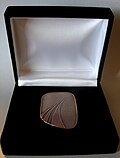
In Ireland, the program is known as Gaisce – The President's Award. Established in 1985 under the patronage of the President of Ireland, it joined the International Awards Association in 1988. The program's visibility grew significantly during the presidency of Mary Robinson.
Asia-Pacific Region
- Hong Kong: Known as the "Hong Kong Award for Young People" since 1961, it involves roughly 53,000 participants across 600 units.
- India: The "International Award for Young People" was introduced in 1962. Managed by the Award Programme Foundation since 1989, it is implemented by 154 local institutions.
- Singapore: Launched in 1992, the program is titled the "National Youth Achievement Award."
- Korea: Established in 2008 and supported by the Ministry of Gender Equality and Family, the program requires participants to be between 14 and 25.
- Malaysia: Launched in 2000 as "Anugerah Remaja Perdana, RAKAN MUDA," with Gold awards presented by the Minister of Youth and Sport.
Africa and the Middle East
- South Africa: The "President's Award for Youth Empowerment" (formerly the Gold Shield Award) focuses on providing youth-at-risk with positive alternatives to social challenges.
- Ghana: Known as the Head of State Award since 1967, it has seen 750,000 participants by 2021.
- Israel: The "Israel Youth Award" emphasizes multiculturalism and inclusion, welcoming youth of all backgrounds (Jews, Arabs, Druze, and Christians).
- Eswatini and Lesotho: These nations feature royal-named awards, such as the Prince Makhosini Award and the Prince Mohato Award.
Europe
- Portugal: The "Prémio Infante D. Henrique," established in 1988, focuses on community service, personal talents, sports, and expeditions.
- Romania: Introduced in 1991, the program became a National Award Authority in 2013 under the patronage of Margareta, Custodian of the Romanian Crown.
- Netherlands: Known as "The International Award for Young People," it is recognized by the ministry of education as a substitute for community service in secondary schools.
Global Program Summary
| Country | Local Award Name | Key Feature/Detail |
|---|---|---|
| Ireland | Gaisce – The President's Award | Patronage of the President of Ireland |
| South Africa | President's Award for Youth Empowerment | Focus on youth-at-risk |
| New Zealand | Duke of Edinburgh's Hillary Award | Named after Sir Edmund Hillary |
| Ghana | Head of State Award | 750,000 participants by 2021 |
| Portugal | Prémio Infante D. Henrique | Includes residential projects for ages 16+ |
Frequently Asked Questions
What are the typical levels of the award?
Most participating nations use a three-tier system consisting of Bronze, Silver, and Gold awards, which increase in complexity and time commitment.
Who is eligible to participate in the program?
Eligibility varies by country, but generally targets youth between the ages of 14 and 24 or 25. For example, in Korea, the Bronze award starts at 14, Silver at 15, and Gold at 16.
Is the award always connected to a head of state?
No. While some countries like Ireland and Ghana link the award to their head of state, in many other nations, the awards are issued by private youth charities.
What activities are typically required for the award?
While specific requirements vary, programs generally focus on community service, personal talents/skills, physical recreation/sports, and adventurous journeys or expeditions.
How is the award implemented in Australia?
In Australia, it is a widely recognized framework for non-formal education available in over 1,200 locations, including schools, universities, and indigenous communities, and is now accessible through the Australian Army Cadets.