
The Great Gatsby Cover Art: Symbolism and Controversy
The visual identity of F. Scott Fitzgerald's masterpiece, The Great Gatsby, is as debated as the novel's themes of wealth and disillusionment. The iconic cover art was the result of a peculiar collaboration between Fitzgerald and artist Francis Cugat. Rather than illustrating a specific scene from the text, Cugat created a symbolic representation based on the title and a few conversations with the author, having read only a portion of the manuscript.
This abstract approach transformed the cover into a piece of art that invites multiple interpretations, blending the physical setting of the story with the emotional state of its characters.
Key Facts
- Artist: The cover was created by Francis Cugat.
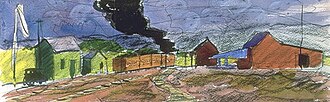
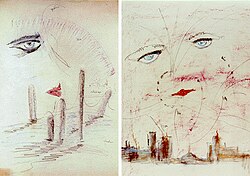
- Evolution: The background was originally a barren landscape but was changed to New York City at Fitzgerald's request.
- Hemingway's View: Ernest Hemingway famously disliked the cover, describing it as "garish" and resembling "bad science fiction."
- Preservation: An original sketch was rescued from a publishing house bin by George Schieffelin and is now held at the Princeton University Library.
The Debate: Billboard or Portrait?
Critics and readers have long argued over what the celestial eyes on the cover actually represent. There are two primary theories: the literal interpretation of a plot element and the symbolic interpretation of a character.
The Eyes of Doctor T. J. Eckleburg
One prominent theory suggests the cover depicts the faded billboard of Doctor T. J. Eckleburg. In the novel's second chapter, this billboard overlooks the Valley of the Ashes—a desolate industrial wasteland near the garage of George Wilson. The billboard, likely an abandoned advertisement for an ophthalmologist in Queens, New York, features gigantic blue eyes behind enormous yellow spectacles that "brood on over the solemn dumping ground."
The visual parallels are striking: the towering eyes resting on a nonexistent nose mirror Cugat's composition, with the city of New York appearing in the lower section of the artwork.
The Portrait of Daisy Buchanan
An alternative hypothesis posits that the image is a symbolic portrait of Daisy Buchanan. As the object of Jay Gatsby's obsession, Daisy is described as having a "sad and lovely" face with "bright eyes and a bright passionate mouth." Proponents of this theory point to the feminine quality of the lips, eyebrows, and the sorrowful, almost tearful expression of the eyes.
This theory aligns with the novel's setting in New York City and the recurring motif of disembodied faces floating against the city's blinding signs.
Critical Reception and Historical Context
Not everyone was enamored with Cugat's vision. Ernest Hemingway, a close friend of Fitzgerald who met him in Paris in 1925, expressed his distaste in his posthumous memoirs, A Moveable Feast (1964). Hemingway recalled being embarrassed by the "violence, bad taste and slippery look" of the dust jacket, though Fitzgerald defended the design by explaining its connection to the Long Island billboard.
The timeline of the cover's creation adds another layer of mystery. Correspondence between Fitzgerald and his editor, Maxwell Perkins, reveals that the cover was commissioned before the novel was fully delivered. While Perkins had read part of the book, the extent to which Cugat's artistic choices were influenced by the final text remains a subject of literary discussion.
Summary of Cover Art Interpretations
| Theory | Visual Evidence | Narrative Connection | Emotional Tone |
|---|---|---|---|
| The Billboard | Gigantic eyes, nonexistent nose, NYC skyline | Doctor T. J. Eckleburg in the Valley of Ashes | Judgmental, desolate, haunting |
| Daisy Buchanan | Feminine lips and eyebrows, tearful eyes | The "sad and lovely" face of Gatsby's love | Melancholy, longing, fragile |
Frequently Asked Questions
Who painted the original cover of The Great Gatsby?
The cover was painted by artist Francis Cugat, who worked with F. Scott Fitzgerald to create a symbolic rather than literal representation of the story.
Why did Ernest Hemingway dislike the cover?
Hemingway found the cover to be garish and lacking in taste, comparing its aesthetic to that of a low-quality science fiction novel.
What is the Valley of Ashes?
The Valley of Ashes is a barren, desolate area located between West Egg and New York City, serving as a symbol of industrial decay and social abandonment.
Where is the original sketch of the cover located today?
The sketch is kept in the Graphic Arts Collection at the Princeton University Library, after being saved from a waste bin by George Schieffelin.
Did the cover change during the design process?
Yes. The original background was more arid and barren, reflecting the Valley of Ashes, but it was later adapted to depict New York City at the suggestion of Fitzgerald.