
The Parson's Handbook and the Evolution of Anglican Liturgy
In the landscape of ecclesiastical history, few texts have shaped the visual and ritual experience of the Church of England as profoundly as The Parson's Handbook. First published in 1899 by Percy Dearmer, this seminal work provided a blueprint for worship that sought to balance traditional obedience with a renewed sense of Catholic identity within the Anglican Communion.
The Vision of Percy Dearmer
At the time of the book's inception, Percy Dearmer served as an assistant priest at the Berkeley Chapel in Mayfair. He wrote during a period of significant transition following the 19th-century Oxford Movement, a theological revival that propelled the "high church" wing of the Church of England into a position of confident leadership.
By the turn of the century, many clergy struggled to reconcile the strict requirements of the Book of Common Prayer with a growing desire for more Catholic forms of ritual and ceremony. While some adopted the rituals of the Tridentine Mass (the standardized Roman Rite of the time), Dearmer and his colleagues in the Alcuin Club rejected this "Italianate" approach. Instead, they advocated for a revived English Catholicism rooted in pre-Reformation traditions, specifically the Sarum Use—the liturgical customs of Salisbury Cathedral. This distinct approach became known as the English Use or Anglican Use.
A Guide to Proper English Worship
The Parson's Handbook was conceived as "brotherly advice" to fellow churchmen, offering guidance on how to conduct worship that was both fitting and historically authentic. Dearmer's prose is noted for its strength and subtle wit, often disparaging customs he viewed as misguided or merely quaint.
While Dearmer's directions were initially viewed as high church, the widespread adoption of the handbook eventually turned his recommendations into the normative standard. His influence extended far beyond England, impacting various branches of the Anglican Communion open to the development of Catholic ritual.
Publication History and Legacy
The handbook's enduring relevance is evidenced by its long publication history. First released by Grant Richards in 1899, it was later picked up by Oxford University Press in 1907. The work continued to evolve through multiple iterations, with the twelfth edition appearing in 1932, shortly before Dearmer's death.
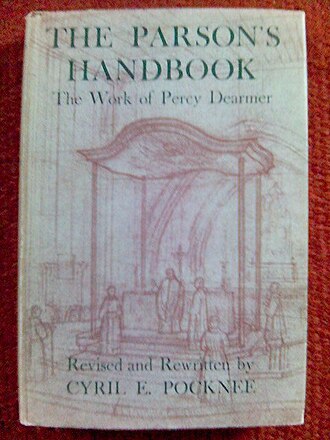
The final 13th edition, published in 1965, represented a significant update. This version was extensively revised and rewritten by Cyril Pocknee, a former pupil of Dearmer, ensuring the text remained applicable to a new generation of clergy.
| Edition/Milestone | Year | Publisher/Key Contributor |
|---|---|---|
| First Edition | 1899 | Grant Richards |
| First OUP Edition | 1907 | Oxford University Press |
| Twelfth Edition | 1932 | Percy Dearmer |
| Thirteenth Edition | 1965 | Cyril Pocknee (Revision) |
Key Facts
- Author: Percy Dearmer, an assistant priest at Berkeley Chapel.
- Core Objective: To establish an "English Use" of liturgy based on pre-Reformation Sarum Use rather than Roman Tridentine forms.
- Influence: Transformed high church preferences into normative standards across the Anglican Communion.
- Final Revision: The 13th edition (1965) was rewritten by Dearmer's pupil, Cyril Pocknee.
Frequently Asked Questions
What is the primary purpose of The Parson's Handbook?
The book serves as a guide for clergy on the correct and fitting way to conduct English worship, emphasizing a return to pre-Reformation ritual and the Sarum Use.
How does the "English Use" differ from the "Italianate" forms?
While Italianate forms relied on the Tridentine Mass of the Roman Catholic Church, the English Use (or Anglican Use) sought a distinct identity rooted in the historical liturgical practices of England.
Who was Cyril Pocknee?
Cyril Pocknee was a former pupil of Percy Dearmer who extensively revised and rewrote the final 13th edition of the handbook in 1965.
Which movement influenced the context of this book?
The 19th-century Oxford Movement provided the theological backdrop, bringing high church leadership to the mainstream of the Church of England and sparking the desire for more Catholic ceremonial forms.
Was the book's influence limited to England?
No, the handbook became influential throughout the portions of the Anglican Communion that were open to developing a more Catholic ritual.