
The Woodlands Cemetery: A History of Philadelphia's Rural Retreat
In the early 19th century, the landscape of West Philadelphia began to shift from vast private estates to fashionable suburban developments. Following the death of the estate's owner, Hamilton, in 1813, much of the original Woodlands land was sold for residential and institutional use. However, a significant portion of this historic landscape was preserved through a unique vision of death and nature.
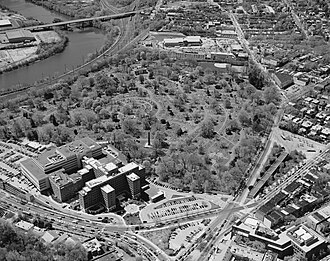
In 1840, the Woodlands Cemetery Company of Philadelphia purchased the remaining 92 acres (37 ha) of the estate. This purchase included the central mansion, the carriage house, greenhouses, hot houses, and an extensive collection of plantings. The founders recognized that the site's isolation, its variety of exotic trees, and its commanding views of the Schuylkill River made it a perfect location for a rural cemetery—a landscaped burial ground designed to be a park-like space for the living as well as a resting place for the dead.
Growth and Prestige
To establish the cemetery's prominence and attract new patrons, the trustees followed a strategy similar to that of their northern rival, Laurel Hill Cemetery: the interment of high-profile figures. In 1845, the remains of Commodore David Porter were moved from the Philadelphia Naval Asylum cemetery to The Woodlands.
This move proved successful. By the middle of the 19th century, The Woodlands had become a thriving destination, serving as the final resting place for many of Philadelphia's most influential citizens, including renowned artists, writers, medical professionals, industrialists, and veterans.
Infrastructure and Urban Change
As Philadelphia grew, the boundaries of the cemetery were impacted by the rise of industrial transportation. In 1853, a portion of the land along the river was sold to the West Chester and Philadelphia Railroad. This initial sale paved the way for further expansion by other rail companies, most notably the Pennsylvania Railroad.
The impact of this development is still visible today. Eight railroad tracks now traverse land that was once part of the Woodlands estate, supporting a variety of services including Amtrak passenger trains, Conrail freight, and the SEPTA Airport and Media commuter lines.
Military Significance
During the American Civil War, The Woodlands played a role in the United States National Cemetery System. The cemetery leased a specific lot to accommodate soldiers who had passed away in nearby hospitals. This arrangement lasted until 1885, when the soldiers' remains were reinterred at the Philadelphia National Cemetery.
Key Facts
- Established: 1840 by The Woodlands Cemetery Company of Philadelphia.
- Original Size: 92 acres (37 ha) including the mansion and greenhouses.
- Notable Interment: Commodore David Porter (reburied in 1845).
- Transportation Impact: Land sold in 1853 to the West Chester and Philadelphia Railroad.
- Civil War Role: Provided leased lots for soldiers until 1885.
| Period/Date | Event/Development | Impact |
|---|---|---|
| 1813 | Death of Hamilton | Estate began being sold for development. |
| 1840 | Cemetery Company Purchase | Preserved 92 acres as a rural cemetery. |
| 1845 | Interment of David Porter | Increased the cemetery's prestige and growth. |
| 1853 | Railroad Land Sale | Led to the creation of current rail corridors. |
| 1885 | Soldier Reinterment | Civil War remains moved to Philadelphia National Cemetery. |
Frequently Asked Questions
Why was The Woodlands chosen as a cemetery site?
The founders chose the site because of its isolated location, its collection of exotic trees, and its scenic views of the Schuylkill River, which aligned with the ideals of the rural cemetery movement.
Who was the first celebrity buried at The Woodlands?
Commodore David Porter was the first major celebrity interred there; his remains were moved to the cemetery in 1845 to help spur early growth.
How did the railroad affect the cemetery's land?
Starting with a sale in 1853 to the West Chester and Philadelphia Railroad, the land along the river was gradually converted to rail use. Today, eight tracks serve Amtrak, Conrail, and SEPTA.
Did The Woodlands serve as a military cemetery?
Yes, during the American Civil War, it was part of the U.S. National Cemetery System via a leased lot for soldiers from nearby hospitals, though these remains were moved in 1885.
What original structures were included in the 1840 purchase?
The purchase included the mansion, the carriage house, greenhouses, hot houses, and extensive plantings.