
Tom Mix: The Rise and Fall of a Western Cinema Legend
Long before the modern era of cinematic blockbusters, Tom Mix redefined the image of the American cowboy. Transitioning from a real-life cattle wrangler to a global superstar, Mix blended authentic rodeo skills with high-energy showmanship, creating a blueprint for the action-oriented Westerns that would captivate millions of viewers.
The Early Years: From Selig Polyscope to Stardom
Tom Mix began his journey in the film industry as a supporting actor for the Selig Polyscope Company. His debut came on October 21, 1909, in the short film The Cowboy Millionaire. However, it was his appearance in the 1910 documentary Ranch Life in the Great Southwest—filmed in Dewey, Oklahoma—that catapulted him to fame. By showcasing his genuine skills as a cattle wrangler, Mix established himself as an early motion picture star.
During his tenure with Selig, Mix appeared in over 100 films, many of which were shot in Las Vegas, New Mexico. It was also during this period that he met and fell in love with co-star Victoria Forde. As Selig Polyscope faced mounting financial struggles, Mix and Forde transitioned to the Fox Film Corporation in 1917.
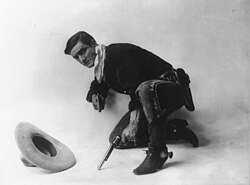
The Fox Era and the Creation of Mixville
At Fox, Mix found the financial stability and wider distribution necessary to move from a prolific actor to a world-famous icon. William Fox, the head of the studio, particularly admired Mix's commitment to performing his own stunts. This era saw a shift in style; while his Selig films were documentary-like, his Fox movies featured action-heavy scripts with clearly defined heroes and villains.
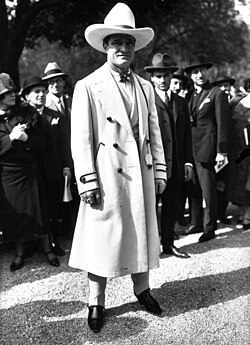
Mix's popularity soared, and so did his earnings. Starting at $350 a week, his salary eventually climbed to a staggering $17,500 per week. He became a household name, and his horse, Tony the Wonder Horse, became a celebrity in his own right.
To facilitate his grand visions, Mix constructed Mixville on the Edendale lot. This 12-acre shooting set was a comprehensive frontier town featuring a saloon, jail, bank, doctor's office, and a simulated desert. The set even included an Indian village with lodges surrounded by miniature plaster mountains and a roofless ranch house designed specifically for interior shots.
Life Outside the Studio
Despite his Hollywood success, Mix remained connected to his roots. In 1913, he purchased the Bar Circle A Ranch in Prescott, Arizona, where he lived and filmed some of his projects. He was also an active competitor in the Prescott Frontier Days rodeo, winning first prize in a bull-riding contest in 1920.
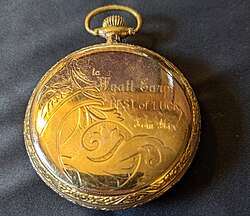
Mix also maintained a personal friendship with the legendary lawman Wyatt Earp. The two were close enough that Mix served as a pallbearer at Earp's funeral in January 1929.
Financial Decline and Legal Troubles
The late 1920s marked a turning point for Mix. By 1927, the market was flooded with low-budget imitations of his work, and Fox began to pivot toward the emerging technology of sound films. Mix left Fox in 1928 and had a brief, contentious stint with FBO under studio head Joseph P. Kennedy, with whom he had significant salary disputes.
His personal life and finances soon spiraled. Between the lavish spending of his fourth wife, Victoria, and his own extravagant lifestyle, Mix's fortune dwindled. This was exacerbated by a tax evasion charge for the years 1925–1927. Although there was no evidence he instigated the faulty filings prepared by his accountant, Mix signed the forms and paid a heavy fine, damaging his "good guy" public image. The 1929 stock market crash served as the final blow, costing him his Hollywood mansion and his Arizona ranch.
The Final Act: The 1930s and Beyond
In the 1930s, Mix sought new avenues for income. He performed with the Sells-Floto Circus and later purchased the Sam B. Dill circus in 1935. He also returned to the screen for a series of sound features with Universal Pictures, though he eventually stopped due to injuries.
His final screen appearance was the 1935 serial The Miracle Rider, where he played a Texas Ranger. The production was a massive success, earning over one million dollars. Many of the action scenes were filmed at the Iverson Movie Ranch in Chatsworth, California, where a specific boulder—now known as "Tom Mix Rock"—still bears the boot holes carved into it to help Mix descend during filming.
In 1935, Mix was named an honorary Texas Ranger by Governor James V. Allred. Despite earning an estimated $6 million over his 26-year career (approximately $141 million in 2025), most of his wealth vanished due to the crash and excessive spending.
Key Facts
- Career Span: 26 years in film, starting in 1909.
- Peak Earnings: Reached a salary of $17,500 per week at Fox Film Corporation.
- Mixville: A custom 12-acre frontier town set built at the Edendale lot.
- Famous Companion: Tony the Wonder Horse.
- Final Role: The Texas Ranger in the 1935 serial The Miracle Rider.
- Total Career Earnings: Approximately $6 million (unadjusted).
| Period/Entity | Key Role/Achievement | Notable Detail |
|---|---|---|
| Selig Polyscope | Early Stardom | Appeared in over 100 films |
| Fox Film Corp | Global Superstardom | Built the 'Mixville' set |
| Universal Pictures | Sound Era Transition | Acted in nine sound features |
| Mascot Pictures | Final Screen Appearance | The Miracle Rider (1935) |
Frequently Asked Questions
What was Mixville?
Mixville was a 12-acre shooting set built by Tom Mix at the Edendale lot. It was a complete frontier town featuring a saloon, jail, bank, doctor's office, and an Indian village with plaster mountains.
Who was Tony the Wonder Horse?
Tony was Tom Mix's horse, who became a celebrity in his own right through appearances in Mix's action-oriented cowboy films during the 1920s.
Why did Tom Mix lose his fortune?
Mix's financial downfall was caused by a combination of the 1929 stock market crash, excessive personal spending, heavy spending by his fourth wife, and alimony payments to multiple former wives.
What is 'Tom Mix Rock'?
Located in the Garden of the Gods park in Chatsworth, California, it is a sandstone boulder used in The Miracle Rider. It still contains boot holes carved into the rock to assist Mix during a descent scene.
How did Tom Mix's film style change over time?
His early work with Selig Polyscope was more documentary-like, whereas his films with Fox Film Corporation were action-oriented scripts with sharply defined heroes and villains.