
Tondero: The Soul of Northern Peruvian Dance and Rhythm
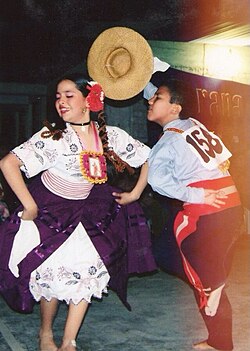
Tondero is a vibrant dance and guitar rhythm originating from the northern coastal regions of Peru, specifically within the departments of Piura and Lambayeque. Born in the areas adjacent to the eastern valleys of the Sierra (known as the yungas), its oldest roots are traced back to the Morropón Province. This art form is more than just a performance; it is a cultural tapestry that weaves together the histories of Romani travelers, African slaves, and native Amerindians.
At its heart, Tondero is a dance of courtship and storytelling, often performed by mestizo or creole farmers who use the music to express the hardships and triumphs of rural life.
Key Facts
- Origin: Northern coast of Peru (Piura and Lambayeque), with the oldest version from Morropón.
- Musical Structure: Composed of three distinct parts: the glosa, the dulce, and the fuga.
- Core Instruments: Criollo-style guitars, the Peruvian cajón (a box drum), and spoons.
- Cultural Roots: A blend of Romani (Spanish horsemen), African, and Amerindian influences.
- Key Themes: Cockfighting, the flight of birds, and romantic pursuit.
The Composition and Rhythm of Tondero
The classical Tondero ensemble features a principal singer and a small chorus. The music is driven by two Criollo-style guitarists—one of whom maintains the tundete (the characteristic bass line)—and the Peruvian cajón. Other accompaniments may include spoon players, hand claps, or the checo, an Afro-Peruvian instrument crafted from dried, flattened pumpkins. In some variations, trumpet and drum bands are also utilized.
The Three Musical Phases
- Glosa: The introductory and lyrical section. It often begins as a tragic melodic ballad known as a triste or cumanana. As the glosa ends, the rhythm accelerates into the Golpe de Tierra, a fast-paced sequence of cajón strikes, spoon clicks, and claps.
- Dulce: The intermediate section where the head singer's melody is reaffirmed, often interspersed with a chorus that cuts in between the lead vocals.
- Fuga: The finale. This section is characterized by a very fast pace and passionate singing.
Ethnic Origins and Influences
Tondero shares significant similarities with the Marinera (Peru's national dance) and the Marinera Norteña. These dances evolved from the traditions brought by Spanish horsemen of Romani origin, which were subsequently modified by African slaves and native Amerindians.
The term "Tondero" likely evolved from Volandero or Volero (referring to the nomadic, "flying" life of Romani caravans). Over time, the name shifted to reflect the "T" sound of the tundete bass rhythm ("Bum Bum Bum"). Musically, the guitar scales and dance movements draw from primitive bulerías and the trumpet-led rhythms of the Csárdás.
Unlike the Zamacueca, which is primarily a Hispano-African blend, Tondero retains a stronger Romani influence, particularly in its tragic lyrical themes.
Themes and Choreography
The choreography of Tondero is heavily inspired by the cockfights popular among Romani and Peruvian cultures. The dance mimics the movements of roosters—the largest and most aggressive of which are found in Peru.
The performance typically revolves around three emotional themes:
- The errant life of birds.
- The aggression and display of cockfighting.
- The ritual of falling in love, where a "macho stallion" attempts to win over a flirting female who resists until the end.
A central symbolic element is the handkerchief, which represents the flight of birds. This element is a Romani inheritance also seen in other coastal dances like the Resbalosa and Canto de Jarana. The movements emphasize a picaresque attitude known as machismo from the man, while the woman employs flirtatious grace.
Cultural Context: Cumananas and Chinganas
Tondero is deeply embedded in the social fabric of the North, spanning La Libertad, Lambayeque, Piura, and Tumbes. It is frequently heard in chinganas (traditional creole music bars), which often fly white flags to invite solitary bohemian farmers, known as Piajenos, to enter and enjoy Chicha de Jora (corn beer).
Before a Tondero begins, performers often sing Cumananas or Tristes. These are satiric yet sad coplas (stanzas) delivered in a contra punto (counterpoint) style. They resemble the Cante Jondo of Andalusia or the Andean yaraví, blending tragic themes with a mestizo flavor, often fueled by drinks like Pisco or Algarrobina.
Summary of Tondero Characteristics
| Element | Description |
|---|---|
| Primary Regions | Piura, Lambayeque, La Libertad, Tumbes |
| Key Instruments | Guitar, Cajón, Spoons, Checo |
| Structure | Glosa $\rightarrow$ Dulce $\rightarrow$ Fuga |
| Core Influences | Romani, African, Amerindian |
| Symbolic Prop | Handkerchief (representing birds) |
Frequently Asked Questions
What is the difference between Tondero and Marinera?
While both share Romani and African roots and use handkerchiefs, Tondero has a stronger Romani influence in its tragic lyrics and a specific rhythmic base called the tundete. It is more closely tied to the rural, farmer culture of northern Peru.
What are Cumananas?
Cumananas are satiric and picaresque coplas (stanzas) sung in a counterpoint style. They are usually rooted in sad themes and are traditionally performed as a prelude to the Tondero dance.
What does the handkerchief symbolize in the dance?
The handkerchief symbolizes the flying of errant birds, a motif inherited from Romani wedding traditions and reflected in several Peruvian coastal dances.
Where did the name "Tondero" come from?
It most likely derives from the terms Volandero or Volero, describing the nomadic life of gypsies. It evolved into "Tondero" to mimic the "Ton-Ton-Tun" sound of the guitar's tundete rhythm.
What are the common themes found in Tondero lyrics?
Lyrics often focus on the tragic and hard lives of farmers, including the loss of crops or cattle due to El Niño phenomena, and the pain of unrequited love.