
Traditional Feasts of Malta
Malta is a nation deeply rooted in its Roman Catholic faith, a heritage that manifests most vibrantly in its calendar of traditional feasts. These celebrations, which honor various saints and biblical events, are woven into the fabric of daily life across the Maltese islands. While many of these days are marked by religious devotion and community gatherings, it is important to note that most are not public holidays; business typically continues as usual unless otherwise specified.
For the Maltese, the months are often identified not just by their names, but by the specific seasonal changes or the primary saints associated with them. This creates a rhythmic cycle of celebration that spans from the cold depths of January to the festive spirit of December.
Key Facts
- Religious Influence: The majority of feasts are Roman Catholic, celebrating saints or biblical milestones.
- Business Operations: Most traditional feasts are not public holidays.
- Regional Focus: Many feasts are specific to certain villages or cities, such as the celebrations in Rabat, Mdina, and Valletta.
- Seasonal Naming: Maltese people traditionally refer to months by descriptive names (e.g., January as the "month of the cold").
The Spring and Winter Cycle: January to April
The year begins with ix-xahar tal-bard (the month of the cold) in January, featuring New Year's Day (L-Ewwel tas-Sena) and the Epiphany. February, known as ix-xahar ta' San Pawl (Saint Paul's month), is highlighted by the commemoration of Saint Paul's Shipwreck on February 10 in Valletta, Marsalforn, and Munxar.
March is a multifaceted month known as ix-xahar ta' San Ġużepp, tal-Lunzjata u tar-roħs, honoring Saint Joseph, the Annunciation, and the season of sales. This period also includes Freedom Day (Jum il-Ħelsien) on March 31. April, the month of blossoms and Saint Gregory (ix-xahar tan-nwhar u ta' San Girgor), features the feast of Saint Publius in Floriana and Saint George in Qormi and Victoria.
A significant portion of the spring calendar consists of moveable feasts tied to the lunar calendar, including Palm Sunday, Good Friday, and Easter (L-Għid).
Summer Celebrations: May to August
May is recognized as the month of harvest and Our Lady of Pompeii (ix-xahar tal-ħsad u tal-Madonna ta' Pompej). Key dates include the feast of Saint Joseph the Worker in Ħamrun and Birkirkara, and the Holy Trinity in Marsa on May 31.
June, the month of reaping and bonfires (ix-xahar tad-dris, tal-ħġejjeġ, tal-Imnarja, u tal-Qalb ta' Ġesù), is one of the most active periods. A major highlight is L-Imnarja on June 29, celebrating Saint Peter and Saint Paul in Mdina and Nadur.
July is dedicated to Our Lady of Mount Carmel (ix-xahar tal-Karmnu). This devotion is widespread, with celebrations occurring in Valletta on July 16, as well as in Fgura, Gżira, Mdina, and Birkirkara throughout the month.
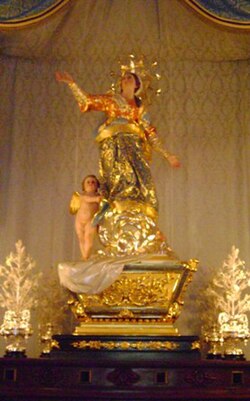
August, known as the month of fruit, Saint Mary, and Saint Lawrence (ix-xahar tal-frott, ta' Santa Marija u ta' San Lawrenz), features the prominent feast of the Seven Saint Marys on August 15, celebrated across multiple towns including Mosta, Attard, and Victoria.
Autumn and Year-End: September to December
September is the month of Victory, the Nativity of Our Lady, and Our Lady of Graces (ix-xahar tal-Vitorja, tal-Bambina, u tal-Grazzja). This month is marked by Independence Day (Jum L-Indipendenza) on September 21.
October is dedicated to the Rosary (ix-xahar tar-Rużarju), with various villages celebrating Our Lady of the Rosary on different dates. November, the month of fallen leaves and souls (ix-xahar tal-inżigħ tal-weraq, tal-erwieħ, u tal-imwiet), focuses on All Souls Day on November 2.
The year concludes with December, the month of Christmas and the Conception (ix-xahar tal-Milied u tal-Kunċizzjoni). Key events include the Immaculate Conception in Cospicua on December 8, Republic Day (Jum ir-Repubblika) on December 13, and the traditional Christmas procession with the statue of the Infant Jesus on December 25.
Summary of Major Annual Feasts
| Month | Key Feast/Event | Primary Location(s) | Significance |
|---|---|---|---|
| February | Saint Paul's Shipwreck | Valletta, Marsalforn, Munxar | Commemoration of St. Paul |
| June | L-Imnarja | Mdina, Nadur | Saints Peter and Paul |
| July | Our Lady of Mount Carmel | Valletta (and others) | Marian Devotion |
| August | The Seven Saint Marys | Mosta, Victoria, etc. | Assumption of Mary |
| September | Independence Day | National | National Sovereignty |
| December | Republic Day | National | National Status |
Frequently Asked Questions
Are all traditional feasts in Malta public holidays?
No. With the exception of specific national dates like Independence Day and Republic Day, most traditional feasts are not public holidays, and businesses continue to operate normally.
What is L-Imnarja?
L-Imnarja is the feast of Saint Peter and Saint Paul, celebrated on June 29, particularly in Mdina and Nadur.
Which month is dedicated to Our Lady of Mount Carmel?
July is known as ix-xahar tal-Karmnu, the month of Our Lady of Mount Carmel, with the primary celebration in Valletta occurring on July 16.
How do the Maltese traditionally name their months?
Months are often named after the weather, agricultural cycles, or the primary saints celebrated during that time. For example, January is the "month of the cold" and April is the "month of blossoms."
What is the significance of August 15 in Malta?
August 15 is the feast of the Seven Saint Marys, celebrated in several towns including Għaxaq, Mqabba, Qrendi, Gudja, Mosta, Attard, and Victoria.