
Trepanation: The Ancient History and Evolution of Cranial Surgery
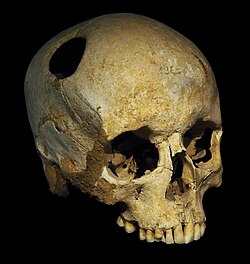
Trepanation—the practice of drilling, cutting, or scraping a hole into the human skull—stands as one of the oldest surgical procedures known to humanity. With archaeological evidence dating back 7,000 to 10,000 years, this global phenomenon transcends continents and eras, evolving from a ritualistic or primitive medical attempt into the sophisticated neurosurgical techniques used in modern hospitals today.
From the Neolithic plains of Europe to the high altitudes of the Andes, early humans sought to penetrate the cranium for a variety of reasons, ranging from the treatment of physical trauma to the expulsion of perceived demons. While the risks were immense, the evidence of bone regeneration in many ancient skulls proves that a surprising number of patients survived these daring operations.
Key Facts
- Ancient Origins: Evidence of trepanation exists from 7,000–10,000 years ago, making it perhaps the oldest documented surgical procedure.
- Global Reach: Practiced across Europe, Siberia, China, Africa, and the Americas.
- Survival Rates: Varied by era and region, ranging from 40% in some Neolithic sites to 80% in the Inca Empire and 90% in 20th-century Africa and Oceania.
- Evolution: Transitioned from ritualistic and folk practices to the modern medical craniotomy.
- Animal Evidence: The earliest known veterinary surgery may be a trepanned cow found in France (3400–3000 BCE).
Prehistoric and Early Global Evidence
During the Neolithic era, trepanation was remarkably common. In one French burial site dated to 6500 BCE, 40 out of 120 skulls showed evidence of the procedure, with a survival rate of approximately 40%. Globally, over 1,500 Neolithic trephined skulls have been recovered, primarily from adult males, though women and children were also treated.
In ancient China, the practice was long overlooked due to the prevalence of non-surgical traditional medicine. However, recent findings have corrected this. A skull from the Fuija site in Shandong, dated to 5,000 years ago, shows a 31 x 25 mm defect with smooth edges, indicating the patient lived long after the surgery. Additionally, a 3,600-year-old female mummy from the Xiaohe tomb in Xinjiang also shows signs of survival through bone spur growth.

Trepanation in the Americas
Andean Civilizations
The Andean region, particularly pre-Incan cultures like the Paracas (700 BCE – AD 300), exhibited highly advanced techniques. In Peru, the prevalence of trepanation was high, appearing in 11% to 40% of skulls in some areas. Surgeons learned to avoid the midline of the skull to prevent damage to the cerebral sagittal sinus (a major blood vessel), which helped increase survival rates to 80%. Some evidence even suggests the use of cranioplasty, or the surgical repair of the skull.
Mesoamerica and the Maya
In Mesoamerica, the record is complicated by the creation of "trophy skulls"—post-mortem mutilations of enemies. However, genuine surgical trepanation did occur. While central Mexican cultures used drilling, the Maya (c. 950–1400 CE) employed an abrasive technique, grinding away the bone at the back of the skull to thin or perforate it.
European and African Traditions
In Europe, Iron Age populations achieved success rates as high as 78%. By the Middle Ages and Renaissance, the procedure was used to treat seizures and skull fractures. In southwestern Germany, seven out of eight skulls from the 6th to 8th centuries showed healing, suggesting low infection rates.
In East Africa, surgeons of the Bunyoro-Kitara used the procedure to elevate depressed skull fractures. The practice persisted into the modern era, with documented cases among the Kisii people of Kenya as late as 1958.

From Folk Practice to Modern Neurosurgery
In the 16th and 17th centuries, survival rates remained around 80%. However, the transition to modern medicine changed the objective and method of the procedure. In the early 20th century, trephine holes were used for prefrontal leucotomies (precursors to the lobotomy) to destroy brain tissue.
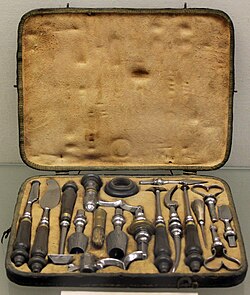
Today, the procedure is known as a craniotomy. Unlike ancient trepanation, a craniotomy is performed only after diagnostic imaging (CT or MRI scans) and involves the temporary removal of a "bone flap," which is replaced after the surgery. Modern cranial drills feature diamond-coated rims and safety mechanisms to prevent the drill from penetrating the dura mater (the outermost membrane enveloping the brain).
Cultural Motivations and the "Headache Myth"
Motivations for trepanation were often a blend of the physical and spiritual. Many cultures believed the holes released evil spirits or balanced qi (vital energy). In Peru, it was thought to allow a lost spirit to re-enter the body to treat paralysis or depression. In other regions, the removed bone discs were kept as talismans to ward off demons.
A persistent myth suggests that ancient trepanation was primarily used to treat migraines. This theory was popularized in 1913 by William Osler, who misinterpreted the work of Paul Broca. Broca had suggested ritualistic purposes or the treatment of infantile seizures, but never mentioned headaches. There is no credible evidence that trepanation was a standard treatment for migraines, especially since the procedure was rarely performed on children, who seldom suffer from the condition.
Summary of Trepanation Across Eras
| Period/Culture | Primary Method | Estimated Survival | Primary Purpose |
|---|---|---|---|
| Neolithic (Global) | Scraping/Drilling | ~40% (some sites) | Ritual/Trauma |
| Inca Empire | Advanced Cutting | Up to 80% | Epilepsy/Medicine |
| Ancient Maya | Abrasive Grinding | Unknown | Ritual/Medical |
| Iron Age Europe | Various | ~78% | Medical/Ritual |
| Modern Medicine | Cranial Drills | Very High | Hematomas/Pressure |
Frequently Asked Questions
Did ancient patients actually survive trepanation?
Yes. Many archaeological specimens show rounded edges and new bony tissue growth around the hole, which is a clear biological indicator that the patient lived for a significant time after the operation.
What is the difference between trepanation and a modern craniotomy?
While both involve opening the skull, a craniotomy is guided by precise imaging (CT/MRI), uses specialized safety drills to protect the brain, and typically involves replacing the removed bone flap so the skull can heal completely.
Was trepanation used to treat migraines?
This is widely considered a myth. While it is a common belief, it stemmed from a 20th-century misinterpretation of 19th-century anthropological data. There is no scientific evidence to support the claim that it was a standard treatment for headaches.
Why did Inca surgeons avoid the midline of the skull?
They avoided the midline to prevent damaging the cerebral sagittal sinus. By avoiding this major venous channel, they significantly reduced the risk of fatal hemorrhage, contributing to their high survival rates.
Was trepanation ever performed on animals?
Yes. There is evidence of a trepanned cow in France dating from 3400–3000 BCE, which may represent one of the earliest examples of veterinary surgery or medical experimentation.