
Ukrainian Literary Studies: A History of Scholarship and Evolution
The academic study of Ukrainian literature has evolved from early systematic collections into a sophisticated field of global scholarship. For centuries, the effort to document the literary output of Ukraine was not merely an academic exercise but a struggle for cultural identity, often clashing with imperial narratives that sought to deny the continuity of a distinct Ukrainian literary tradition.
The Foundations of Literary Documentation
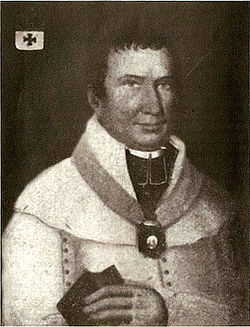
The systematic approach to Ukrainian literary studies began in 1829 with Ivan Mohylnytsky, a Galician Greek Catholic priest. In an appendix to his work on the Ruthenian language (the historical term for the Ukrainian language in its early written forms), Mohylnytsky published the first systematic collection of Ukrainian literary works. His list spanned from the Medieval era to the Early modern period, incorporating a diverse range of texts including the Statutes of Lithuania, biblical translations, and works by Ivan Kotliarevsky.
Following this, the concept of historical continuity was further developed by Ivan Vahylevych in his 1848 Notes on Ruthenian Literature. By January 1849, Yakiv Holovatsky expanded these academic efforts by delivering a series of lectures on the subject at Lviv University. During this period, a stark contrast existed between regions: while scholars in Austrian-ruled Ukraine explored historical depths, those under Russian rule were generally restricted to reviewing contemporary works. A notable exception was Ivan Pryzhov's history of "Little Russian" literature, which Anatole Vakhnianyn translated into Ukrainian in 1869.
Academic Formalization and Imperial Conflict
The transition to formal academic study was led by Nikolai Petrov, a professor at the Kiev Theological Academy. In 1880, Petrov provided an overview of 18th-century Ukrainian Baroque drama (a highly ornamental and emotional style of art and literature), followed by a 1884 study on 19th-century works. However, these efforts faced significant hurdles due to Russian censorship and an imperial ideology that claimed Ukrainian literature could only thrive in union with Russia.
In response, Ivan Franko presented a pivotal work in 1892 focusing on the 16th through 18th centuries. Franko argued that the chronology of Ukrainian literature should begin in the Medieval era rather than in 1798. This debate intensified with Omelian Ohonovsky's History of Ruthenian Literature (1887-1893), which prompted Russian scholars like Alexander Pypin to deny that Ukrainian literature descended from the literary works of the Rus period.
Between 1909 and 1912, Bohdan Lepky published two volumes covering the period from the Medieval era to Ivan Kotliarevsky. Tragically, a third volume was destroyed in 1914 during the Russian invasion of Galicia.
The 20th Century: Modernism and Political Divergence
The early 20th century saw the emergence of highly influential texts. Serhiy Yefremov's History of Ukrainian Writing, first published in 1911, became a cornerstone of the field through numerous editions. Simultaneously, Mykhailo Hrushevsky began his History of Ukrainian Literature in 1923, a monumental project whose final volume was not published until 1995.
As the century progressed, scholarship diversified. Mykola Yevshan provided early analyses of modernist literature (experimental styles breaking from traditional forms) in 1910, and Mykola Zerov focused on 19th-century figures like Gregory Skovoroda and Panteleimon Kulish in 1929. In exile, Dmytro Chyzhevsky produced critical research starting in 1942, culminating in his 1956 work, History of Ukrainian Literature: from the Beginnings to the Age of Realism, published in the United States.
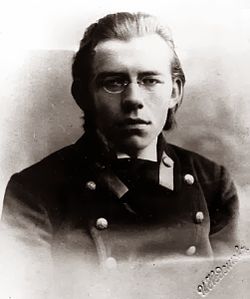
Chyzhevsky's work was viewed with hostility in the Soviet Union. The official Soviet narrative rejected the idea of literary continuity, instead claiming that a "new Ukrainian literature" only emerged after the October Revolution. This ideological stance was reflected in the official 8-volume History of Ukrainian Literature published between 1967 and 1971.
Contemporary Perspectives and Postmodernism
The postmodernist era brought a reevaluation of how literary history is constructed. George Grabowicz addressed this in his 1997 article On the History of Ukrainian Literature. Modern scholarship has since expanded to include specialized studies, such as Solomiia Pavlychko's work on modernism, as well as focused research on regional literature and the contributions of women writers. Most recently, a comprehensive 12-volume academic work on the history of Ukrainian literature was published between 2013 and 2025.
Key Facts
- First Systematic Collection: Published in 1829 by Ivan Mohylnytsky.
- Chronological Debate: Ivan Franko argued for a Medieval starting point rather than 1798.
- Major Works: Key texts include those by Serhiy Yefremov (1911) and Mykhailo Hrushevsky (started 1923).
- Ideological Split: Soviet narratives claimed a "new" literature post-October Revolution, while scholars like Dmytro Chyzhevsky emphasized long-term continuity.
- Recent Scholarship: A new 12-volume academic history was completed between 2013 and 2025.
| Year(s) | Scholar | Key Contribution/Work |
|---|---|---|
| 1829 | Ivan Mohylnytsky | First systematic collection of literary works |
| 1880-1884 | Nikolai Petrov | Studies on Baroque drama and 19th-century works |
| 1892 | Ivan Franko | Argument for Medieval origins of Ukrainian literature |
| 1911 | Serhiy Yefremov | History of Ukrainian Writing |
| 1956 | Dmytro Chyzhevsky | History of Ukrainian Literature: from the Beginnings to the Age of Realism |
| 1967-1971 | Soviet State | Official 8-volume History of Ukrainian Literature |
| 2013-2025 | Various | New 12-volume academic history |
Frequently Asked Questions
Who created the first systematic collection of Ukrainian literary works?
Ivan Mohylnytsky, a Galician Greek Catholic priest, published the first systematic collection in 1829 as an appendix to his work on the Ruthenian language.
How did Russian imperial ideology affect Ukrainian literary studies?
Russian imperial ideology claimed that the only future for literature in Ukrainian lands was through union with Russia, and scholars like Alexander Pypin denied the descent of Ukrainian literature from the Rus period.
What was the conflict between Soviet and Western scholarship?
Soviet narratives denied the continuity of the literary process, claiming a "new Ukrainian literature" began after the October Revolution. In contrast, scholars like Dmytro Chyzhevsky, publishing in the US, emphasized the historical continuity from the beginnings to the age of realism.
When did the study of Ukrainian modernism begin?
An early analysis of Ukrainian modernist literature was presented by Mykola Yevshan in 1910.
What is the most recent major academic achievement in the field?
Between 2013 and 2025, a comprehensive new academic work on the history of Ukrainian literature was published in 12 volumes.