
Universal Declaration of Linguistic Rights: History and Development
While the 1948 Universal Declaration of Human Rights (UDHR) established a foundation for equal rights, it lacked explicit detail regarding linguistic rights—the inherent right of individuals and communities to use their own language. For decades, various rules protected specific languages, but the world lacked a single, binding document that addressed linguistic rights globally. This gap led to a concerted international effort to establish a comprehensive framework for language equality.
Precursors to the Declaration
The movement toward a universal standard was influenced by several key policies and documents that advocated for the respect of linguistic diversity, including:
- The European Convention on Human Rights
- The European Charter for Regional or Minority Languages
- The International Covenant on Civil and Political Rights
- The Framework Convention for the Protection of National Minorities
- The Declaration on the Rights of Persons belonging to National, Ethnic, Religious and Linguistic Minorities
- The Universal Declaration of the Collective Rights of Peoples
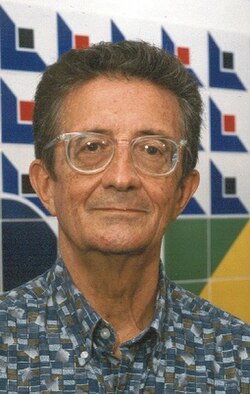
The specific proposal for a dedicated declaration emerged in 1984. Francisco Gomes de Matos, a Brazilian advocate, presented a plea to the International Federation of Modern Language Teachers (FIPLV), outlining principal linguistic rights and their implications for education.
Further momentum was gained during the 12th Seminar of the International Association for the Development of Intercultural Communication in 1987, held in Recife, Brazil. This seminar recommended the creation of a declaration and adopted a preliminary version that indexed fundamental linguistic rights.
The Drafting Process
The primary goal of the Universal Declaration of Linguistic Rights (UDLR) was to define equality in linguistic rights regardless of territorial or political status. The document sought to promote international commitment to linguistic groups, particularly those with deep historicity, as well as individuals living outside their native communities.
A defining characteristic of the UDLR is that it does not distinguish between official and non-official, majority and minority, or local and regional languages. Achieving this level of equality proved complex, as drafting required an international consensus on terminology and definitions. To resolve these complexities, feedback sessions and meetings were conducted in Frankfurt, Portugal, and Paris.
The timeline of the drafting process progressed as follows:
- 1990: The FIPLV produced a working document.
- August 1991: A workshop in Pécs, Hungary, consolidated the agenda on fundamental principles.
- December 1993: The Translations and Linguistic Rights Commission of the International PEN discussed the Declaration.
- 1994: A team of approximately 40 experts from various fields and countries produced 12 successive drafts, refining the text through continuous contributions.
Adoption and Global Reach
The Declaration was officially acknowledged on June 6, 1996, at the World Conference on Linguistic Rights in Barcelona, Spain. This event was organized by the CIEMEN (Escarre International Center for Ethnic Minorities and the Nations) and the Translations and Linguistic Rights Commission of the International PEN Club. The conference brought together 40 experts, 41 PEN Centers, and 61 NGOs.
Although the document was signed and presented to a representative of the UNESCO Director General, it is important to note that this did not constitute official approval by the organization. Despite this, the UDLR was published in 1996 in English, French, Spanish, and Catalan, and was later translated into languages including Russian, Portuguese, Italian, Hungarian, Bulgarian, Basque, Galician, Nynorsk, and Sardinian.
Ongoing Efforts and the Follow-up Committee
Because UNESCO did not officially endorse the UDLR at its 1996 General Conference or in subsequent years—despite providing moral support—the World Conference on Linguistic Rights established the Follow-up Committee of the Universal Declaration of Linguistic Rights (FCUDLR). Represented by the non-profit CIEMEN, the committee focuses on three main goals:
- Garnering support from international bodies to lend weight to the Declaration and secure UNESCO's endorsement.
- Maintaining active communication with UNESCO delegates to integrate diverse viewpoints.
- Spreading awareness of the UDLR and building a global support network.
To ensure the document remains relevant, the committee established a Scientific Council of professionals in Linguistic Law. This council is tasked with updating and improving the Declaration based on suggestions from stakeholders and experts.
Summary of UDLR Development
| Year/Period | Event/Milestone | Key Outcome |
|---|---|---|
| 1984 | Proposal by Francisco Gomes de Matos | Initial plea for a Universal Declaration of Linguistic Rights. |
| 1987 | Recife Seminar | Adoption of a preliminary declaration. |
| 1990-1994 | Drafting Phase | 12 drafts created by 40 international experts. |
| June 6, 1996 | World Conference in Barcelona | Official acknowledgement and signing of the UDLR. |
| Post-1996 | FCUDLR Formation | Ongoing efforts for UNESCO endorsement and document updates. |
Key Facts
- The UDLR treats all languages equally, regardless of whether they are official, minority, or majority languages.
- The drafting process involved 40 experts and resulted in 12 different versions before finalization.
- The document was acknowledged in Barcelona in 1996 by 61 NGOs and 41 PEN Centers.
- While UNESCO provides moral support, it has not officially endorsed the Declaration.
- The FCUDLR and a Scientific Council of Linguistic Law professionals manage the document's updates.
Frequently Asked Questions
Why was the UDLR created if the UDHR already exists?
While the Universal Declaration of Human Rights (UDHR) mentions equal rights, it does not explicitly list or elaborate on linguistic rights. The UDLR was created to fill this gap and provide a specific framework for language equality.
Does the UDLR prioritize official languages over minority languages?
No. One of the core objectives of the UDLR is to avoid distinctions between official, non-official, majority, local, regional, and minority languages, promoting equality for all.
What is the role of the FCUDLR?
The Follow-up Committee of the Universal Declaration of Linguistic Rights (FCUDLR) works to spread awareness, build a support network, and lobby international bodies, specifically UNESCO, for official endorsement of the Declaration.
Who is responsible for updating the Declaration?
The Scientific Council, consisting of professionals specializing in Linguistic Law, is responsible for updating and improving the Declaration based on expert suggestions.
Was the UDLR officially adopted by UNESCO?
No. Although it was presented to a representative of the UNESCO Director General and has received moral support, UNESCO did not officially endorse the UDLR at its General Conference in 1996 or in subsequent years.