
University of Texas of the Permian Basin: A History of Growth and Innovation
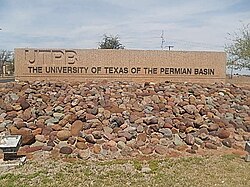
The University of Texas of the Permian Basin (UTPB) has evolved from a specialized upper-level institution into a comprehensive university serving the heart of West Texas. Since its inception, the university has expanded its academic scope and physical infrastructure to meet the growing needs of the region's students and industries.
Established in 1973, UTPB initially focused on providing junior, senior, and graduate-level programs. The creation of the university was championed by several key figures, most notably oil industrialist Bill Noël and his wife, Ellen Witwer Noël, who became major philanthropists for the institution.
Expanding Academic Reach
For nearly two decades, UTPB operated as an upper-division institution. However, in 1991, the university expanded its accessibility by beginning to accept freshmen and sophomore applicants, allowing students to complete their entire undergraduate journey on campus.
The turn of the millennium brought significant upgrades to student resources. In 2000, the university completed the J. Conrad Dunagen Library and Lecture Center, which enhanced campus technology with a twenty-station multimedia lab and dedicated classroom space.
Advancements in Science and Technology
UTPB has consistently invested in STEM (Science, Technology, Engineering, and Mathematics) infrastructure to support its research and teaching goals. On April 17, 2008, the university broke ground on the Science and Technology Complex.
This 70,000-square-foot facility serves as the hub for chemistry, biology, physics, computer science, and information technology programs. The complex is equipped with:
- 41 laboratories, including two large demonstration labs.
- 56 offices and six classrooms.
- Three sunken lecture halls, including one with 200 seats.
- A state-of-the-art Data Communications Teaching Lab.
- Dedicated research labs for computer science and computer networking.
The construction of the complex faced a significant challenge when the contractor failed to identify an underground aquifer—a body of permeable rock which can contain groundwater. Despite warnings from a UTPB Geology professor, the building supports required reinforcement after drilling into the aquifer. Despite these delays, the facility opened for the Fall 2011 semester.
Nuclear Research Ambitions
The university has also pursued cutting-edge energy research. Starting in 2006, UTPB entered discussions with the Nuclear Regulatory Commission regarding a High-Temperature Teaching and Test Reactor (HTGR). If completed, this would be one of the few HTGR-type reactors globally and the first university-based research reactor built in the U.S. in approximately a decade. A major milestone was reached in late November 2016, when the city of Odessa granted site permission, marking the first step toward official authorization.
Arts and Modern Infrastructure
Beyond the sciences, UTPB has contributed to the cultural landscape of the region. The Wagner Noël Performing Arts Center, located on the Midland campus off Hwy 191 and FM 1788, began construction in 2009. The center officially opened on November 1, 2011, with a grand gala featuring Rod Stewart.
Recent years have seen continued investment in specialized facilities. In 2018, the university announced a new kinesiology building costing approximately $37 million, followed by the announcement of a $55 million engineering building in 2019.
Key Facts
- Founded: 1973.
- Major Philanthropists: Bill and Ellen Witwer Noël.
- Science Complex Size: 70,000 square feet with 41 labs.
- Key Facilities: J. Conrad Dunagen Library, Wagner Noël Performing Arts Center.
- Recent Investments: $37 million kinesiology building and $55 million engineering building.
| Facility | Year Opened/Announced | Key Feature/Cost |
|---|---|---|
| J. Conrad Dunagen Library | 2000 | Multimedia lab and classroom |
| Science and Technology Complex | 2011 | 70,000 sq ft; 41 labs |
| Wagner Noël Performing Arts Center | 2011 | Midland campus cultural hub |
| Kinesiology Building | 2018 (Announced) | ~$37 million |
| Engineering Building | 2019 (Announced) | $55 million |
Frequently Asked Questions
When did UTPB start accepting freshmen and sophomores?
The university began accepting freshmen and sophomore applicants in 1991, having previously offered only junior, senior, and graduate programs since its founding in 1973.
Who were the primary philanthropists involved in UTPB's establishment?
Oil industrialist Bill Noël and his wife, Ellen Witwer Noël, were major philanthropists who pushed for the establishment of the institution.
What is the significance of the proposed nuclear reactor at UTPB?
The proposed High-Temperature Teaching and Test Reactor would be one of the few of its type in the world and the first university-based research reactor built in the United States in roughly ten years.
What challenges occurred during the construction of the Science and Technology Complex?
Construction was delayed because the contractor failed to identify an underground aquifer, which required the building supports to be reinforced to prevent the structure from sinking.
Where is the Wagner Noël Performing Arts Center located?
The center is located on the Midland campus, situated off Hwy 191 and FM 1788.