
Ural Franc: The Unusual Scrip of Sverdlovsk
In the volatile economic landscape of the early 1990s, as the Soviet Union collapsed, Russia experienced a period of immense structural transformation. Amidst this uncertainty, an unconventional financial experiment emerged in Sverdlovsk (now Yekaterinburg). Led by businessman and politician Anton Bakov, a team introduced the Ural franc, a form of scrip—a substitute for legal tender typically used within a specific community or company.
While the idea of creating a separate currency was seen by some as a way to stabilize local economics during a time of national instability, the Ural franc never achieved official status as a state currency.
Key Facts
- Creator: Anton Bakov and a team of businessmen and politicians.
- Origin: Sverdlovsk (Yekaterinburg), Russia, 1991.
- Production: Printed by the Goznak factory in Perm, based on sketches by architect Sophia Demidova.
- Denominations: 1, 5, 10, 20, 50, 100, 500, and 1000 francs.
- Dimensions: All banknotes measured 145 × 80 mm.
- Modern Status: Numismatic collectibles and museum exhibits.
Historical Context and Controversy
The timing of the Ural franc's creation coincided with the broader political unrest of the era. In 1993, a short-lived project known as the Ural Republic emerged in the same region. This has led to widespread speculation that the francs were designed specifically for this proposed republic.
However, those involved, including Bakov, have denied this connection. The primary reason cited for this denial is that issuing a currency separate from the Russian Ruble was generally illegal at the time.
Industrial Application in Serov
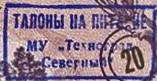
Despite its lack of official state recognition, the banknotes found a practical use years later. Between 1997 and 2000, they served as a money substitute at the Serov Metallurgical Plant, a "city-forming" enterprise in the town of Serov within the northern Sverdlovsk Oblast, where Bakov served as director.
The 30th Anniversary Commemorative Coin
To mark the 30th anniversary of the Ural franc in 2021, Anton Bakov released a commemorative silver coin. These coins were produced for numismatists—collectors of currency—rather than for circulation, as launching a private currency remains illegal in Russia.
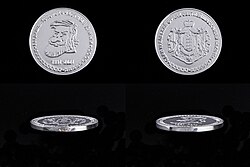
The 2021 release consisted of 500 coins, each weighing 20 grams. The design features a hand-drawn portrait of Bogdashko Toporok, who is believed to be a 17th-century ancestor of Bakov. In a modern twist, Bakov assigned these coins a cryptocurrency status via the Binance blockchain network using the token Uralfranc, suggesting that further coins could be issued if demand persists.
Ural Franc Specifications Summary
| Feature | Banknotes (1991) | Silver Coins (2021) |
|---|---|---|
| Purpose | Local scrip / Money substitute | Numismatic collectible |
| Issuer | Anton Bakov & Team | Anton Bakov |
| Denominations/Quantity | 1 to 1000 francs | 500 coins |
| Material/Size | Paper (145 × 80 mm) | Silver (20 grams) |
| Digital Integration | None | Binance blockchain (Uralfranc token) |
Frequently Asked Questions
Was the Ural franc ever an official national currency?
No, the Ural franc was a scrip and was never implemented as an official state currency. Issuing a separate currency from the Russian Ruble was generally illegal during that period.
Who designed the original banknotes?
The banknotes were designed based on sketches by architect Sophia Demidova and were printed by the Goznak factory in Perm.
Where were the banknotes actually used as money?
They were used as a money substitute between 1997 and 2000 at the Serov Metallurgical Plant in the town of Serov, where Anton Bakov was the director.
What is the connection between the Ural franc and cryptocurrency?
In 2021, Anton Bakov linked the 30th-anniversary silver coins to the Binance blockchain network through a token called Uralfranc.
Who is depicted on the 2021 silver coin?
The coin features a hand-drawn portrait of Bogdashko Toporok, a supposed 17th-century ancestor of Anton Bakov.