
Uria: The Evolution and Diversity of Murres and Guillemots
The genus Uria comprises a group of specialized seabirds known commonly as murres in North America and guillemots in Europe. These birds are members of the Alcini tribe, a lineage of diving birds adapted for life in the harsh environments of the Northern Hemisphere's oceans. From their unique vocalizations to their prehistoric ancestors, the story of the Uria genus reveals a fascinating journey of adaptation and geographic expansion.
Key Facts
- Two Extant Species: The genus currently includes the Common Murre (Uria aalge) and the Thick-billed Murre (Uria lomvia).
- Global Range: They are found across the Northern Atlantic and Pacific Oceans.
- Conservation Status: Both living species are listed as Least Concern (LC) by the IUCN.
- Evolutionary Origin: Fossil evidence suggests the genus may have originated in the Caribbean or near the Isthmus of Panama.
- Onomatopoeic Names: Their common names are derived from the sounds they make: "guillemot" from the begging calls of young birds and "murre" from the growling calls of adults.
Etymology and Naming
The scientific name Uria is derived from the Ancient Greek word ouria, a term for a waterbird mentioned by the writer Athenaeus. The common names used today reflect the distinct sounds these birds produce at different stages of their lives.
The English term "guillemot" has French roots, first recorded by Pierre Belon in 1555. It stems from the 11th-century Old French willelm (a form of the name William). This naming is onomatopoeic, mimicking the loud, high-pitched "will, willem" begging calls made by newly fledged young of the common guillemot. Similar English variants include willock, willick, will, and wilkie.
Conversely, the American name "murre"—also used in Cornwall, England, since the 17th century—is onomatopoeic of the growling calls produced by adult common guillemots. In the regions of Newfoundland and Labrador, these birds are locally referred to as "turrs."
Extant Species of the Uria Genus
There are currently two recognized species within the genus, both of which are widely distributed across the Northern Hemisphere.
Common Murre (Uria aalge)
The Common Murre, or Common Guillemot, is divided into five subspecies: U. a. aalge, U. a. albionis, U. a. hyperborea, U. a. inornata, and U. a. californica. Its range is vast, spanning the North Atlantic from northwestern Spain and Nova Scotia to Svalbard and Greenland, and the North Pacific from California to Alaska and from northern Japan to eastern Siberia.
Thick-billed Murre (Uria lomvia)
Also known as Brünnich's Guillemot, this species is found throughout the Northern Hemisphere and is divided into four subspecies: U. l. lomvia, U. l. eleonorae, U. l. heckeri, and U. l. arra.
| Common Name | Scientific Name | Subspecies | Primary Range | IUCN Status |
|---|---|---|---|---|
| Common Murre / Common Guillemot | Uria aalge | 5 | North Atlantic & North Pacific | Least Concern (LC) |
| Thick-billed Murre / Brünnich's Guillemot | Uria lomvia | 4 | Northern Hemisphere | Least Concern (LC) |
Paleontology and Fossil Record
The fossil record provides critical insights into how the Uria genus evolved and migrated. Several prehistoric species have been identified across the Americas and Asia.
- Uria brodkorbi: Found in the Monterey or Sisquoc formations (Late Miocene) of Lompoc, USA.
- Uria paleohesperis: Located in the Late Miocene of the Western USA.
- Uria affinis: Found in the Late Pleistocene of the Eastern USA; this may be a subspecies of U. lomvia.
- Uria onoi: Identified in the Middle-Late Pleistocene of Japan.
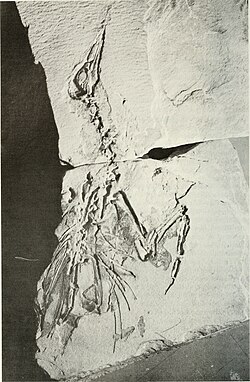
The discovery of Uria brodkorbi is particularly significant. It is the only known occurrence of the Alcini tribe (the group containing murres and their closest relatives) in the temperate to subtropical Pacific, with the exception of the very edge of the modern U. aalge range. This suggests that while most auk lineages evolved in the Pacific, the Uria genus—the sister taxon to all other Alcini—may have actually evolved in the Caribbean or near the Isthmus of Panama. Under this theory, their current Pacific distribution resulted from a later arctic expansion.
Frequently Asked Questions
What is the difference between a murre and a guillemot?
They are the same birds. "Guillemot" is the term primarily used in Europe, while "murre" is the preferred term in North America.
Why are they called guillemots?
The name is onomatopoeic, derived from the high-pitched "will, willem" begging calls made by the young birds.
Where did the Uria genus likely originate?
Based on fossil evidence from Uria brodkorbi, scientists believe the genus may have evolved in the Caribbean or near the Isthmus of Panama before expanding into arctic waters.
How many species of Uria exist today?
There are two extant species: the Common Murre (Uria aalge) and the Thick-billed Murre (Uria lomvia).
What is the conservation status of these birds?
Both the Common Murre and the Thick-billed Murre are currently classified as Least Concern (LC) by the IUCN.