
Valentin Vodnik: The Pioneer of Slovenian Literature and Language
Valentin Vodnik was a transformative figure in the cultural and linguistic landscape of Slovenia. A priest, poet, and educator, he played a pivotal role during the Slovenian Enlightenment—an intellectual movement that sought to modernize society through reason, education, and the promotion of the native tongue. From his early days in the Habsburg monarchy to his influence during the Napoleonic era, Vodnik's life was dedicated to the elevation of the Slovene language.
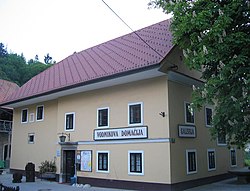
Born in Zgornja Šiška, a suburb of Ljubljana, Vodnik was raised in a prosperous peasant-artisan family. His academic journey began as a Franciscan, leading him to study in Ljubljana, Novo Mesto, and Gorizia, where he completed his education in 1782.
Professional Journey and Intellectual Circles
Vodnik's early career was defined by his service as a priest, with postings in Ljubljana, the village of Sora in Upper Carniola, Bled, and Ribnica. However, his trajectory shifted significantly in 1793 when he returned to Ljubljana and entered the intellectual circle of Sigmund Zois. Zois, a prominent figure of the Enlightenment, became Vodnik's lifelong sponsor, providing the support necessary for his literary and academic pursuits.
By 1797, Vodnik had transitioned into academia, becoming a professor at the lyceum in Ljubljana. This position allowed him to influence the next generation of thinkers while continuing his work in journalism and literature.
Literary Contributions and Journalism
Vodnik focused his creative energy on writing poetry in Slovene, a language he referred to as Carniolan. His early works appeared in folk song collections compiled by Marko Pohlin. Characterized by a patriotic and satirical tone, his poetry aimed to instill national pride. His most famous poem, "Dramilo" (A Pick-me-up), served as a passionate appeal for Slovenes to embrace their heritage, land, and language.
His contributions extended beyond poetry into the realm of mass communication and education:
- Journalism: He edited Lublanske novice, the first Slovenian newspaper, which ran twice weekly from 1797 to 1800.
- Poetry Collections: In 1806, he published Pesme za pokušino (Poems for Sampling).
- Practical Literature: He authored the first Slovene-language cookbook, Kuharske bukve (1799), and translated Johann Matoschek's manual for midwives, Babištvo (1818).
- Education: He wrote various grammars and textbooks to standardize the language.
Political Activism and the French Era
The 1810s marked a period of political fervor for Vodnik. He became a strong supporter of the French annexation of the Slovene Lands. In 1809, he penned the poem "Ilirija oživljena" (Illyria Reborn), praising Napoleon Bonaparte for the creation of the Illyrian Provinces.
During the French administration, Vodnik used his influence to convince authorities to integrate the Slovene language into administration, culture, and education. While the return of Austrian rule in 1813 saw many of these language reforms retained, Vodnik's political ties to the French left him viewed with suspicion. He was subsequently retired and removed from public life.
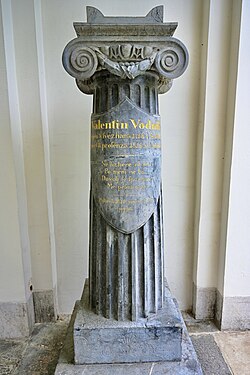
Vodnik passed away in Ljubljana at the age of 60. He is buried in the Navje cemetery.
Key Facts
- First Newspaper: Editor of Lublanske novice (1797–1800).
- First Cookbook: Author of Kuharske bukve (1799).
- Key Poem: "Dramilo," a call for national pride in language and heritage.
- Political Influence: Advocated for the use of Slovene in official administration during the French Illyrian Provinces era.
- Academic Role: Professor at the lyceum in Ljubljana starting in 1797.
Summary of Vodnik's Major Works
| Work Title | Year | Category | Significance |
|---|---|---|---|
| Lublanske novice | 1797–1800 | Journalism | First Slovenian newspaper |
| Kuharske bukve | 1799 | Non-fiction | First Slovene-language cookbook |
| Pesme za pokušino | 1806 | Poetry | First collection of his poems |
| Babištvo | 1818 | Translation | Midwifery manual by Johann Matoschek |
Frequently Asked Questions
What was Valentin Vodnik's primary goal in his poetry?
Vodnik aimed to promote patriotism and national pride. Through works like "Dramilo," he encouraged Slovenes to be proud of their language, heritage, and land.
How did Vodnik contribute to the Slovenian language beyond poetry?
He was a versatile writer who produced the first Slovenian newspaper, wrote textbooks and grammars, authored the first Slovene cookbook, and translated medical manuals.
What was Vodnik's relationship with Napoleon Bonaparte?
Vodnik was a fervent supporter of the French annexation. He praised Napoleon in his poem "Illyria Reborn" and worked with the French administration to promote the Slovene language in official capacities.
Who was Sigmund Zois and why was he important to Vodnik?
Sigmund Zois was a leading figure of the Slovenian Enlightenment. He served as Vodnik's sponsor, integrating him into an intellectual circle that fostered the development of Slovene culture.
What happened to Vodnik after the Austrian rule returned in 1813?
Because of his support for the French, the Austrian authorities viewed him with mistrust. He was retired and removed from public life until his death at age 60.