
Vegan Symbols and Certification Marks
Navigating the world of plant-based eating often involves deciphering a variety of logos, icons, and symbols. From official certifications that guarantee a product is free from animal derivatives to social media emojis and political symbols, these markers help consumers identify vegan-friendly options and express their values.
Key Facts
- The Vegan Trademark was the first verification scheme, launched in 1990 by The Vegan Society.
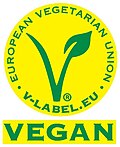
- The V-Label is an internationally protected trademark supported by the European Vegetarian Union.
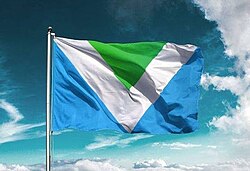
- The Vegan Flag uses blue, green, and white to represent the sea, land, and sky.
- India's FSSAI introduced official vegan food regulations and a specific logo in 2022.
- The Enclosed V (Ⓥ) is common on social media but is not a reliable product certification mark.
Official Vegan Certification Trademarks
The Vegan Trademark
The Vegan Trademark, featuring its iconic sunflower, is an internationally recognized standard created by The Vegan Society—the organization that originally coined the term "vegan." Launched in 1990, it serves as a verification scheme to ensure products are easily identifiable. To earn this trademark, products must undergo independent checks to ensure they meet three strict criteria:
- No animal products, by-products, or derivatives are used in the manufacture or development of the product or its ingredients.
- No animal testing has been conducted at the initiative of the company, on its behalf, or by parties under the company's effective control.
- The development of GMOs (Genetically Modified Organisms) must not involve animal genes or animal-derived substances. Any products containing GMOs must be clearly labeled.
Currently, over 70,000 products are registered with the Vegan Trademark.

Vegetarian Society Approved Vegan Trademark
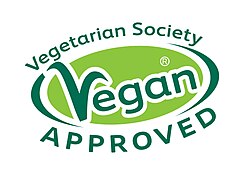
Established in 2017, the Vegetarian Society Approved vegan trademark is found on thousands of products globally. This certification requires independent verification that the product contains no animal-derived ingredients, is GMO-free, and has not undergone animal testing. Additionally, manufacturers must have measures in place to prevent cross-contamination during production. A notable example of this certification is the McPlant burger, launched by McDonald's in the UK in 2022.

The V-Label
The V-Label is an internationally recognized and protected trademark used for labeling both vegetarian and vegan products. It is supported by the European Vegetarian Union to provide a consistent standard for consumers across different regions.
Regional Regulations and Cultural Symbols
Vegan Food Regulations in India
In 2022, the Food Safety and Standards Authority of India (FSSAI) implemented formal regulations for vegan food products. These rules provide a clear definition of vegan food and standardize how brands label these products. The official Indian vegan logo was designed by Kruti Manish Rathore, a student of Food Science and Nutrition from Bengaluru.
The Vegan Flag
Designed in 2017 by a global network of activists and designers led by Gad Hakimi, the vegan flag serves as a civil flag for the movement. Inspired by the LGBT rainbow flag, it aims to unite animal rights organizations. The flag features three blue and green triangles forming a "V" (for vegan) in the shape of an inverted pyramid, symbolizing the ability to achieve the impossible. The colors white, green, and blue represent the natural habitats of animals: the sky, land, and sea.
Informal and Political Symbols
The Enclosed V and Emojis
The enclosed v (Ⓥ) is a popular symbol on social networks, modeled after the anarchist "Circle-A." However, it is important to note that this lowercase "V" inside a circle is not a formal product certification and should not be used to determine if a product is vegan. Interestingly, a US trademark consisting of an uppercase "V" inside a circle is owned by a kosher organization, Vaad Hoeir of St. Louis.
In digital spaces, users often use the seedling (🌱) or green heart (💚) emojis to denote veganism. The peace dove (🕊️) is also frequently used in animal rights contexts to symbolize peace and the liberation of non-human animals.
The Veganarchy Symbol
First appearing in 1995 in Brian A. Dominick's pamphlet Animal Liberation and Social Revolution, the Veganarchy symbol merges the Circle-V with the Circle-A of anarchist symbolism, representing the intersection of veganism and anarchism.
Summary of Vegan Symbols
| Symbol/Mark | Type | Key Characteristic | Primary Purpose |
|---|---|---|---|
| The Vegan Trademark | Certification | Sunflower icon | Independent verification of animal-free status |
| V-Label | Certification | International trademark | Labeling for vegetarian and vegan products |
| Vegetarian Society Approved | Certification | Strict GMO/Cross-contamination rules | Independent product verification |
| FSSAI Logo | Regulation | Indian government standard | Legal compliance for vegan food in India |
| Vegan Flag | Civil Flag | Blue, green, and white triangles | Representation of human-animal respect |
| Enclosed V (Ⓥ) | Informal | Lowercase V in circle | Social media identification (non-certified) |
Frequently Asked Questions
Is the Ⓥ symbol a reliable way to tell if a product is vegan?
No. The enclosed lowercase "V" is commonly used on social media but is not a formal certification mark for products. You should look for registered trademarks like The Vegan Trademark or the V-Label for reliable verification.
What does the Vegan Flag represent?
The Vegan Flag represents human-animal respect. Its colors—white, green, and blue—symbolize the sky, land, and sea, which are the natural habitats of animals.
What are the requirements for The Vegan Society's trademark?
Products must not use any animal ingredients or by-products, must not conduct animal testing (directly or indirectly), and must ensure that any GMOs used do not involve animal genes or substances.
Who designed the official vegan logo for India?
The logo was designed by Kruti Manish Rathore, a Food Science and Nutrition college student based in Bengaluru, as part of the FSSAI regulations introduced in 2022.
What is the difference between the V-Label and the Vegan Trademark?
While both are internationally recognized, the Vegan Trademark is specifically from The Vegan Society (the originators of the term "vegan"), whereas the V-Label is supported by the European Vegetarian Union and covers both vegetarian and vegan products.