
Velcro: The Fascinating History of the Hook-and-Loop Fastener
Few everyday objects are as ubiquitous yet overlooked as the hook-and-loop fastener. Known globally by the brand name Velcro, this simple mechanism has revolutionized everything from children's shoes to aerospace engineering. The story of its creation is a classic example of biomimicry—the practice of designing materials and systems modeled on biological entities and processes.
The Spark of Inspiration
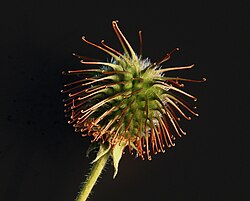
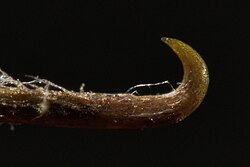
The journey began in 1941 with Swiss engineer George de Mestral. After returning from a hunting trip in the Alps with his dog, de Mestral noticed that burdock burs—small, prickly seed pods—had stubbornly attached themselves to his clothing and his dog's fur. Intrigued, he examined the burs under a microscope and discovered hundreds of tiny hooks that could latch onto any surface with a loop, such as fabric or hair.
De Mestral realized that if he could replicate this natural mechanism, he could create a reversible binding system for two materials. This concept of copying nature's mechanisms is often referred to as bionics.
Engineering the "Zipperless Zipper"
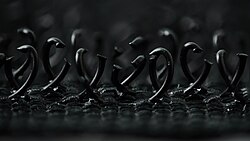
While hook-and-eye closures had existed for centuries, de Mestral's breakthrough was the miniaturization of these components. By shrinking the hooks, he shifted the design from a single-file line to a two-dimensional surface. This was necessary because smaller hooks possess less individual strength, requiring a vast array of them to provide a secure hold. Additionally, this design allowed for indeterminate match-up, meaning any hook could latch onto any available loop, rather than requiring a specific one-to-one pairing.
From Cotton to Nylon
Initial attempts to produce the fastener using cotton strips failed because the material frayed too quickly. De Mestral turned to nylon, a recently invented synthetic fiber. He chose nylon because it is non-biodegradable, resistant to mold, does not fray easily, and can be produced in various thicknesses.
Through a process of trial and error, de Mestral discovered that nylon formed small hooks when sewn under hot infrared light. He also found that heat-treated nylon thread woven into loops remained resilient. The final piece of the puzzle came when he used shears to trim the tops off the loops, creating the hooks that would interlock with the looped pile.
The Path to Commercialization
Bringing the invention to market was a grueling process. It took eight years to mechanize the weaving of the hooks and another year to develop the loom required to trim the loops. In total, it took a decade to perfect the mechanized production process.
De Mestral applied for a Swiss patent in 1951, which was granted in 1955. He subsequently expanded his operations across Europe and into the United States, establishing a presence in Manchester, New Hampshire, in 1957. In 1958, columnist Sylvia Porter famously described the invention as a "zipperless zipper," predicting it would be more revolutionary than the zipper itself.
Adoption and Global Impact
Despite its utility, the fastener was initially slow to be adopted by the fashion industry due to its "cheap" cosmetic appearance. It gained significant traction through the aerospace industry, where NASA used it to help astronauts manage bulky space suits and store food pouches. This high-profile use led to a common misconception that NASA invented the technology.
![Omega Speedmaster with velcro strap (SEB 12100030 CF 55052-5 S/N 120) supplied by American Velcro Inc for Project Mercury NASA space missions.[13]](/images/06/65/06659a02880901592602223e95f4450d3d9f900502e06840308a57b9cc81861c.jpg)
Following the space program's lead, the fastener was adopted by skiers, scuba divers, and eventually children's clothing manufacturers. By the mid-1960s, it appeared on Alpha Industries' M-65 military field coats and in the avant-garde collections of designers like Pierre Cardin, André Courrèges, and Paco Rabanne. Later iterations improved the product's strength by adding polyester to the filament.
Key Facts
- Inventor: George de Mestral, a Swiss engineer.
- Inspiration: Burdock burs found during a trip in the Alps.
- Etymology: "Velcro" is a portmanteau of the French words velours (velvet) and crochet (hook).
- Material: Originally cotton, but perfected using nylon for durability and mold resistance.
- Development Time: 10 years to create a fully mechanized production process.
- Patent: Filed in Switzerland in 1951; granted in 1955.
| Phase | Key Development | Outcome |
|---|---|---|
| Observation | Microscopic study of burdock burs | Discovery of hook-and-loop mechanism |
| Prototyping | Cotton strips | Failed due to fraying |
| Material Shift | Nylon and infrared heat | Durable, non-biodegradable hooks |
| Industrialization | Custom looms and trimming machinery | Mass production capability |
| Market Growth | NASA and aerospace adoption | Widespread public acceptance |
Frequently Asked Questions
Did NASA invent Velcro?
No. While NASA's use of the fastener in space suits and cabins helped popularize the technology, it was invented by George de Mestral in 1941.
What does the name "Velcro" mean?
The name is a combination of two French words: velours, meaning velvet, and crochet, meaning hook.
Why was nylon chosen over cotton?
Nylon was selected because it is more resilient, does not fray as easily as cotton, is non-biodegradable, and does not attract mold.
How does hook-and-loop differ from traditional hook-and-eye fasteners?
Unlike traditional fasteners where each hook has a specific corresponding eye, hook-and-loop fasteners use a two-dimensional surface with indeterminate matching, allowing any hook to attach to any loop.
When did the original patent expire?
George de Mestral's patent expired in 1978, which led to an increase in low-cost imitations from countries such as China, Taiwan, and South Korea.