
Venezuelan Independence: The Struggle for Sovereignty and the Rise of Gran Colombia
The journey toward Venezuelan independence was a tumultuous process marked by shifting alliances, devastating natural disasters, and the visionary leadership of Simón Bolívar. What began as a reaction to the Napoleonic Wars in Europe evolved into a complex social and military struggle to break free from Spanish colonial rule and establish a sovereign identity in South America.
Key Facts
- Declaration of Independence: Formally declared on 5 July 1811 by seven of ten provinces.
- Key Leader: Simón Bolívar, known as the Liberator, led the campaigns for independence.
- Gran Colombia: A short-lived union comprising present-day Venezuela, Colombia, Panama, and Ecuador (1819–1830).
- Decisive Victory: The Battle of Carabobo (1821) was a turning point in securing independence.
- Final Expulsion: The Battle of Lake Maracaibo (1823) effectively ended Spanish presence in Venezuela.
The Roots of Rebellion
By the late 18th century, resentment toward Spanish colonial control grew among the mantuanos—the white Creole elite. While the broader population consisted of a pardo (mixed-race) majority, only the mantuanos possessed the wealth and education to challenge the crown. Early attempts at revolution, such as the 1797 conspiracy by Manuel Gual and José María España, failed because their radical social goals alienated the mantuanos.
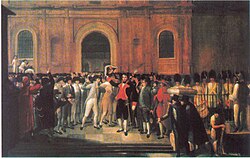
The catalyst for change arrived in 1808 during the Napoleonic Wars. Napoleon Bonaparte forced the abdication of King Ferdinand VII of Spain and installed his brother, Joseph Bonaparte, as King. This crisis of legitimacy in Spain emboldened the colonies. On 19 April 1810, the cabildo (city council) of Caracas decided to establish its own governing junta.
The First Republic (1811–1812)
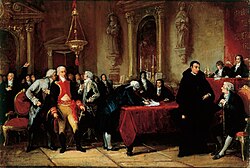
On 5 July 1811, seven provinces officially declared their independence. However, the First Republic was short-lived. A combination of the devastating 1812 Caracas earthquake and military defeats, including the Battle of La Victoria, led to its collapse.
The Second Republic and the War to the Death
Simón Bolívar sought to reclaim the territory, launching the "Admirable Campaign" in 1813. Crossing the Andes from New Granada, Bolívar issued the Decree of War to the Death to force a clear divide between patriots and royalists.
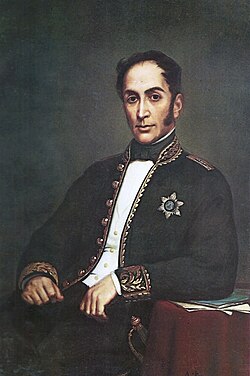
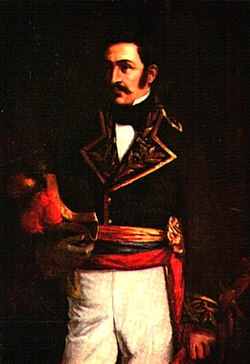
Bolívar and his lieutenant, José Félix Ribas, successfully re-established the Republic in Caracas on 6 August 1813. Despite these gains, the Second Republic struggled to gain the support of the pardo population. Instead, a royalist caudillo named José Tomás Boves led a populist pardo movement against the mantuano-led government. By 1814, the Republicans were defeated and forced to flee.
The Path to Lasting Independence
Bolívar shifted his strategy, focusing on the liberation of New Granada to create a stronger base of operations. This effort culminated in the creation of Gran Colombia, declared an independent country by the Congress of Angostura on 17 December 1819.
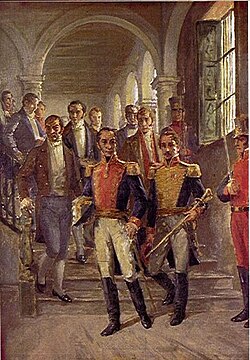
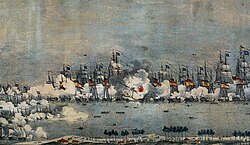
The definitive military victory occurred at the Battle of Carabobo in 1821, where the defeat of Spanish forces secured the heart of Venezuela. The final remnants of Spanish power were eliminated following the naval victory at the Battle of Lake Maracaibo in July 1823 and the occupation of Puerto Cabello by José Antonio Páez in November 1823.
Summary of Key Independence Milestones
| Date | Event | Significance |
|---|---|---|
| 19 April 1810 | Cabildo of Caracas Action | Initial move toward self-governance. |
| 5 July 1811 | Declaration of Independence | Formal break from Spanish rule. |
| 6 August 1813 | Second Republic Established | Bolívar retakes Caracas. |
| 17 December 1819 | Congress of Angostura | Creation of Gran Colombia. |
| 1821 | Battle of Carabobo | Decisive victory over Spanish forces. |
| 24 July 1823 | Battle of Lake Maracaibo | Final expulsion of Spanish forces. |
The Dissolution of Gran Colombia
The union of Gran Colombia was plagued by internal friction. In 1826, a conflict known as La Cosiata erupted when General José Antonio Páez resisted the central government's authority in Bogotá. While Bolívar attempted to mediate and eventually granted Páez amnesty, the political unity of the region had fractured.
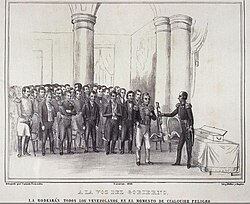
Facing mounting opposition, Bolívar declared himself dictator in 1828. However, the dream of a unified South American state continued to crumble. In 1830, Bolívar resigned the presidency and left the country. By this time, Venezuela had declared its second independence, becoming a separate sovereign nation. A heartbroken and ill Bolívar died near Santa Marta, Colombia, at the age of 47.
Frequently Asked Questions
What was the role of the mantuanos in the independence movement?
The mantuanos were the white Creole elite who led the early political movements for independence. While they sought to end Spanish colonial control to protect their own privileges, their reluctance to implement radical social changes often alienated the pardo majority.
Why did the First and Second Republics fail?
The First Republic fell due to the 1812 Caracas earthquake and military losses. The Second Republic collapsed primarily because of a populist royalist uprising led by José Tomás Boves, who mobilized the pardo population against the Creole elite.
What was Gran Colombia?
Gran Colombia was a large republic created by Simón Bolívar that united present-day Venezuela, Colombia, Panama, and Ecuador. It existed from 1819 until 1830, when internal political conflicts led to its dissolution.
What was the significance of the Battle of Carabobo?
The Battle of Carabobo in 1821 was the decisive military engagement that broke the Spanish hold on Venezuela, paving the way for the final stages of independence.
What was "La Cosiata"?
La Cosiata was a political rebellion led by General José Antonio Páez in 1826. It represented a clash between the regional interests of Venezuela and the centralist government of Gran Colombia in Bogotá, contributing to the eventual split of the union.