
Venezuelan Political Repression: A History of Dictatorships and Human Rights
The history of Venezuela has been marked by recurring cycles of authoritarianism and the systematic suppression of dissent. From the 19th century to the modern era, various regimes have utilized imprisonment, torture, and forced labor to maintain control over the population, leaving a profound impact on the nation's democratic development and freedom of expression.
The Era of Antonio Guzmán Blanco
During the government of Antonio Guzmán Blanco, political repression was constant and overwhelming. The regime created an atmosphere of fear that silenced many citizens. It is estimated that thousands of individuals were persecuted, imprisoned, or forced into exile, with some never returning to their homeland. This period significantly hindered the growth of democratic institutions and the ability of citizens to express their views freely.
The Brutality of Juan Vicente Gómez
Juan Vicente Gómez initially presented a facade of liberty by granting freedom to political prisoners and restoring press freedom. However, he refused popular demands to dissolve the National Congress and call for a constituent assembly. By 1913, as Gómez solidified his grip on power, repression intensified.
Prisoners under the Gómez regime suffered extreme cruelty. Detainees were often immobilized with steel bolts and shackles on their ankles. Torture was widespread, and those under assassination orders were fed poisoned food or drinks containing crushed glass to maximize their suffering. Opponents of the regime were routinely killed, imprisoned, or disappeared.
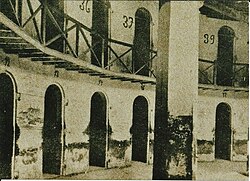
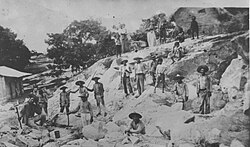
Forced labor became a primary tool of the state, most notably during the construction of the Transandean Highway in the Venezuelan Andes. In the notorious La Rotunda prison, guards utilized a common prisoner named Nereo Pacheco to torture political detainees.
The Marcos Pérez Jiménez Dictatorship
The regime of Marcos Pérez Jiménez institutionalized repression through the creation of the Dirección de Seguridad Nacional (National Security Directorate), a secret police force tasked with the arrest and torture of political opponents.
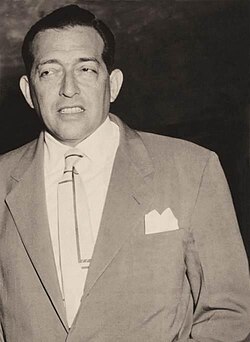
Detainees were subjected to harrowing methods of physical mistreatment, including the use of "ice chambers," being forced to stand barefoot on car rims, electric bands, batons, and blows with steel balls. A prominent example of this brutality occurred in 1951 at Colón Square in Los Caobos, Caracas. Twelve protesters, known as "The Twelve Apostles," were arrested and forced to stand together for three days without access to basic physiological needs, each subjected to personalized torture.
Forced labor also persisted during this era. Despite official claims that the labor camp on Guasina Island in Delta Amacuro state closed on December 17, 1952, records such as Se llamaba SN by José Vicente Abreu document the subhuman conditions and forced labor that occurred there.
The regime also faced violent uprisings, such as the peasant revolt in the Turén Municipality of Portuguesa state on September 29, 1952. The attack on a National Guard outpost was met with severe repression, resulting in over one hundred deaths.
Repression during the Bolivarian Revolution
In more recent history, the United Nations High Commissioner for Human Rights (UNHCHR) reported that thousands of people were arbitrarily detained and subjected to ill-treatment or torture during the 2017 protests. Cases of enforced disappearance, such as that of Hugo Marino, remain unresolved.
Data from NGOs highlight the scale of recent detentions. Between 2013 and 2023, PROVEA reported 53,075 people detained for political reasons or through illegal police and military actions. By October 2022, Foro Penal registered 245 political prisoners, 166 of whom were imprisoned without conviction. By January 2026, an Independent International Fact-Finding Mission reported over 800 political prisoners.
Following a United States intervention in 2026, the government began releasing prisoners, though the Fact-Finding Mission noted that the state still fell short of international human rights obligations. Reports indicate that at least 26 political prisoners died in detention since 2015.
Amnesty and the Closure of El Helicoide
Following the 2026 intervention, acting president Delcy Rodríguez announced the closure of El Helicoide, a notorious detention center, which is to be transformed into a sports and cultural center for security forces. Additionally, a draft general amnesty law was proposed to cover all cases since the arrival of Chavismo in 1999, aiming to release political prisoners and drop charges against exiled leaders.
Key Facts
- Antonio Guzmán Blanco: Persecuted and exiled thousands, hindering early Venezuelan democracy.
- Juan Vicente Gómez: Used steel shackles, poisoned food, and forced labor (Transandean Highway) to suppress dissent.
- Marcos Pérez Jiménez: Established the Dirección de Seguridad Nacional; utilized "ice chambers" and forced labor on Guasina Island.
- The Twelve Apostles: A group of 12 protesters tortured in 1951 after protests in Los Caobos.
- Modern Era: PROVEA reported over 53,000 political detentions between 2013 and 2023.
- Recent Changes: The 2026 US intervention led to the closure of El Helicoide and a proposed general amnesty law.
| Regime/Era | Key Instrument of Repression | Notable Sites/Events | Primary Methods |
|---|---|---|---|
| Guzmán Blanco | Political Persecution | National Exile | Imprisonment and silencing |
| Juan Vicente Gómez | Military Dictatorship | La Rotunda / Transandean Highway | Shackles, poison, forced labor |
| Marcos Pérez Jiménez | Dirección de Seguridad Nacional | Guasina Island / Los Caobos | Ice chambers, electric bands, forced labor |
| Bolivarian Revolution | State Security Forces | El Helicoide | Arbitrary detention, enforced disappearance |
Frequently Asked Questions
Who were the Twelve Apostles?
The Twelve Apostles were a group of twelve Venezuelans arrested during Columbus Day protests in 1951 at Colón Square in Los Caobos. They were forced to stand for three days without basic needs and were subjected to personalized torture.
What was the purpose of the Dirección de Seguridad Nacional?
Created under the dictatorship of Marcos Pérez Jiménez, this secret police force was responsible for arresting, imprisoning, and torturing political opponents to suppress dissidence.
What happened at Guasina Island?
Guasina Island served as a labor camp where prisoners were subjected to forced labor and subhuman conditions, despite official claims by the Pérez Jiménez regime that the camp had closed in 1952.
How many political prisoners were reported recently?
According to Foro Penal, there were 245 political prisoners by October 2022. Later, in January 2026, an Independent International Fact-Finding Mission reported the number had risen to over 800.
What is El Helicoide and what is its current status?
El Helicoide was a prominent detention center used during the Bolivarian Revolution. Following the 2026 United States intervention, acting president Delcy Rodríguez confirmed its closure and its conversion into a sports and cultural center.