
Venezuelan Student Movements: A History of Political Protest
For decades, students in Venezuela have served as a pivotal force in the country's political landscape. From challenging media censorship to fighting for academic autonomy, these movements have often filled the void left by traditional political cadres, organizing massive demonstrations and challenging the executive branch of the government.
The RCTV Closure and the Spark of Activism
The modern era of student-led activism gained significant momentum on May 27, 2007, following the government of Hugo Chávez's decision to shut down RCTV (Radio Caracas Televisión) by refusing to renew its broadcast license. This move sparked widespread protests, as the closure was viewed by many as an attack on freedom of expression.
At the height of these demonstrations, the movement successfully petitioned to intervene in the National Assembly of Venezuela. While a debate was organized between government-aligned students and opposition students, the opposition leaders ultimately withdrew after a brief intervention, refusing to engage in further discussion.
Despite the official shutdown, RCTV continued to produce daily broadcasts via YouTube using a minimal staff. While the government remained firm in its decision, the protests eventually quieted as the administration failed to acknowledge or address the activity.
The Constitutional Referendum Protests
The energy from the RCTV protests transitioned into a campaign against a proposed national referendum. Students argued that the 69 amendments on the ballot would grant President Chávez excessive power over the state. This period saw a surge in political mobilization, with the student movement playing a key role in encouraging voters to abstain from the vote rather than simply voting "No."
In November 2007, Caracas and six other cities became centers of demonstration. While tens of thousands of "Yes" voters marched following the referendum's approval on November 2, opposition crowds were equally large. One opposition politician estimated that 160,000 people marched for the "No" vote. Although most protests were peaceful, an 8 November riot at the Central University of Venezuela led to clashes between students and masked gunmen, resulting in several injuries.
RCTV's alternative broadcasting continued until 2010, when the channel faced legal trouble for failing to air a speech by President Chávez, violating laws that mandated all cable and broadcast channels show the president's addresses.
The University Crisis and Academic Struggle
Beyond national politics, students and faculty have fought for the survival of autonomous universities. Since the end of the first decade of the century, university authorities have claimed a lack of budget increases from the government, while the government conversely demanded that these institutions admit more students.
In early 2013, the Federation of University Teachers' Associations of Venezuela (FAPUV) began pressuring the government for better wages, benefits, and increased public funding. Following student hunger strikes in June, FAPUV called for a national strike. This led to a wave of protests involving the obstruction of major roads and marches toward public agency headquarters.
The government attempted to resolve the conflict with the "One University Sector Collective Bargaining Agreement," which proposed a stepwise wage increase. However, FAPUV rejected the offer, citing the absence of their representatives during negotiations and the inclusion of socialist ideological content that they argued violated the constitution and academic freedom of thought.
The 2014 Protests and Political Bloc Formation
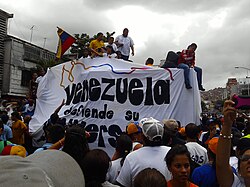
Protests intensified again in 2014, triggered by events in Mérida on January 5 and San Cristóbal on February 4. The unrest was sparked by the death of Hector Moreno (ULA-Mérida) and the attempted rape of a student from ULA-Táchira. These events coincided with calls for street action by political leaders Antonio Ledezma, Maria Corina Machado, and Leopoldo Lopez under the banner of La Salida (The Exit) or 12F.
In response, several student leaders formed a political bloc with civil society called the "Patriotic Meeting Student and Popular," later renamed the "José Félix Ribas" group. Other prominent leaders, such as Juan Requesens (FCU President of the Central University of Venezuela) and Yorman Barillas (President of the University of Zulia), chose to remain independent of this specific group.
Key Facts
- RCTV Closure: Triggered major student protests starting May 27, 2007.
- Referendum Opposition: Students fought 69 constitutional amendments intended to expand presidential power.
- FAPUV: The Federation of University Teachers' Associations of Venezuela led strikes for wages and academic freedom in 2013.
- La Salida: A 2014 movement led by political figures that merged with student unrest following campus violence.
- Political Independence: Student movements gained support partly because they were not officially affiliated with political cadres.
| Event/Movement | Primary Cause | Key Outcome/Action |
|---|---|---|
| RCTV Protests (2007) | Closure of RCTV television channel | Intervention in the National Assembly |
| Referendum Protests (2007) | 69 constitutional amendments | Massive marches; high voter abstention |
| University Crisis (2013) | Budget cuts and low wages | National professor strikes and road blockades |
| 2014 Protests | Campus violence and political leadership | Formation of the "José Félix Ribas" bloc |
Frequently Asked Questions
Why did the closure of RCTV lead to student protests?
Students viewed the government's refusal to renew RCTV's license as a violation of freedom of expression and a move toward state control of the media.
What was the student movement's goal during the 2007 referendum?
The movement aimed to stop 69 constitutional amendments that they believed would give President Hugo Chávez excessive power over the country and government.
What is FAPUV and why did they strike?
FAPUV is the Federation of University Teachers' Associations of Venezuela. They struck to demand increased wages, better benefits, and higher budgets for public universities.
Why did FAPUV reject the government's collective bargaining agreement?
They rejected it because the contract was negotiated without their presence and contained socialist ideological language that they believed violated the constitution and freedom of thought.
What triggered the 2014 student protests?
The protests were sparked by the death of Hector Moreno and the attempted rape of a student, combined with political calls for action (La Salida) by leaders like Leopoldo Lopez.