
Vibration Control in Earthquake Engineering
In the field of earthquake engineering, vibration control refers to a specialized set of technical strategies designed to mitigate the destructive impacts of seismic activity on both buildings and non-building structures. When an earthquake occurs, seismic waves transfer immense energy into a structure, which can lead to catastrophic failure if not properly managed.
When ground seismic waves first encounter the base of a building, a significant portion of their energy flow density—often up to 90%—is reduced due to reflections. Despite this natural reduction, the remaining energy during a major earthquake still possesses devastating potential, necessitating engineered solutions to protect the superstructure.
Types of Seismic Control Systems
Seismic vibration control devices are categorized based on how they interact with the structure and the ground. These systems are divided into three primary classifications:
- Passive Control Devices: These systems operate without any feedback capability between the device, the structural elements, and the ground.
- Active Control Devices: These incorporate real-time recording instrumentation on the ground, integrated with earthquake input processing equipment and actuators within the structure to respond dynamically.
- Hybrid Control Devices: These systems combine the features of both active and passive control mechanisms.
Strategies for Managing Seismic Energy
Once seismic waves penetrate a superstructure, engineers employ several methods to soothe their damaging effects and enhance overall seismic performance.
Energy Dissipation and Dispersion
One approach is to use properly engineered dampers to dissipate wave energy inside the superstructure. Other methods involve dispersing the wave energy across a wider range of frequencies to prevent concentrated stress on specific structural points.
Mass Dampers
To absorb resonant portions of the wave frequency band, engineers utilize mass dampers. These are widely used in high-rise buildings, particularly in Japan, and have been studied for over 25 years. They are categorized as:
- TMD: Tuned Mass Dampers (Passive)
- AMD: Active Mass Dampers (Active)
- HMD: Hybrid Mass Dampers (Hybrid)
Seismic and Base Isolation
While dampers manage energy already inside a building, base isolation (or seismic isolation) focuses on the partial suppression of seismic energy flow before it ever enters the superstructure. This method is frequently used in the retrofit of historical buildings worldwide.
Base isolation involves inserting specialized pads into all major load-carrying elements at the building's base, effectively decoupling the superstructure from the shaking substructure. Implementing this system requires several additional engineering provisions, including the creation of a rigidity diaphragm, a moat around the building, and protections against overturning and the P-delta effect (the secondary effect on a structure caused by the displacement of its load).
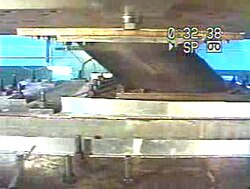
A prominent example of this technology in action is the seismic retrofit of the San Francisco City Hall, which utilizes base isolation to preserve its architectural integrity while ensuring safety.

Industrial Vibration Control: Snubbers
In industrial settings such as plants or refineries, snubbers are employed to control vibrations in piping systems. These devices come in two primary variations:
- Hydraulic Snubbers: Used in piping systems where restrained thermal movement is permitted.
- Mechanical Snubbers: These restrict the acceleration of pipe movements to a specific threshold, typically 0.2 g's, which is the maximum acceleration the snubber allows the piping to experience.
Key Facts
- Up to 90% of seismic energy flow density is typically reduced by reflections at the building base.
- Base isolation decouples the superstructure from the substructure to prevent energy entry.
- Mass dampers (TMD, AMD, HMD) are predominantly used in Japanese high-rise buildings.
- Mechanical snubbers limit piping acceleration to a maximum of 0.2 g's.
- Control systems are classified as passive, active, or hybrid based on their feedback capabilities.
| Technology | Primary Function | Control Type | Common Application |
|---|---|---|---|
| Mass Dampers | Absorb resonant frequencies | Passive, Active, or Hybrid | High-rise buildings |
| Base Isolation | Decouple structure from ground | Passive | Historical buildings |
| Hydraulic Snubbers | Control piping vibration | Passive | Refineries and plants |
| Mechanical Snubbers | Restrict acceleration to 0.2 g's | Passive | Industrial piping |
Frequently Asked Questions
What is the difference between passive and active control devices?
Passive control devices have no feedback capability between the device, the structure, and the ground. Active control devices use real-time recording instrumentation and actuators to respond to seismic input as it happens.
How does base isolation protect a building?
Base isolation uses pads in the load-carrying elements of the base to decouple the superstructure from the substructure, preventing a large portion of the seismic energy from entering the building.
What are the three types of mass dampers?
The three types are Tuned Mass Dampers (TMD), which are passive; Active Mass Dampers (AMD); and Hybrid Mass Dampers (HMD).
What is the purpose of a mechanical snubber?
A mechanical snubber is used in industrial piping to restrict the acceleration of pipe movements to a maximum threshold of 0.2 g's.
Why is a moat required for base-isolated buildings?
A moat is necessary to allow the building to move independently of the ground during a seismic event, as the base isolation system decouples the superstructure from the substructure.