
Vissefjärda Church: A Historic Landmark of the Emmaboda Parish
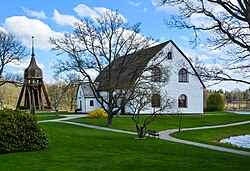
Nestled at the scenic confluence where the Lyckebyån River flows into lake Kyrksjön, Vissefjärda Church (Vissefjärda kyrka) stands as a testament to the religious and social history of the region. Associated with the parish of Emmaboda within the Diocese of Växjö, this stone church has served as a community focal point for over two centuries.
The church was officially established on February 28, 1773, blending architectural stability with artistic treasures that reflect the evolving tastes of the Swedish church over different eras.
Key Facts
- Established: February 28, 1773.
- Location: At the meeting point of the Lyckebyån River and lake Kyrksjön.
- Affiliation: Emmaboda parish, Diocese of Växjö.
- Notable Art: Altarpiece painted by Pehr Hörberg in 1795.
- Museum: Former church stables now house a local museum.
Architectural and Artistic Treasures
The interior of Vissefjärda Church is home to several significant artifacts. Among the most notable are the chandeliers, which vary in age, with the oldest piece dating back to 1691—predating the current stone structure itself.
Art and Music
The church's spiritual atmosphere is enhanced by its curated art and instruments. The altarpiece, a centerpiece of the sanctuary, was painted in 1795 by the renowned artist Pehr Hörberg. Complementing the visual art is the pulpit, which dates to 1842, and the organ, which was acquired from Kalmar Cathedral in 1883.
The Bell Tower
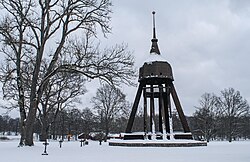
Standing apart from the main stone building is the wooden church bell tower. This structure was erected in 1774, shortly after the completion of the church.
The Surrounding Grounds and Local Heritage
The area surrounding the church is rich with historical sites. On an island located opposite the church is the Minneslunden, a dedicated church memorial park.
The Historic Stables and Museum
Across the Lyckebyån River lie the former church stables. Built in 1855, these facilities once accommodated approximately 200 horses and remained in active use until the late 1930s. Historically, the old county road ran alongside these stables before crossing the river via an arched bridge, which was eventually demolished in 1937.
Since 1948, the stables have been repurposed as a local museum. This site preserves the region's heritage by displaying old household items and tools. Additionally, the museum grounds serve as a traditional venue for Midsummer festivities.
Summary of Vissefjärda Church History
| Year | Feature/Event | Description |
|---|---|---|
| 1691 | Oldest Chandelier | The earliest interior lighting fixture. |
| 1773 | Church Foundation | The stone church was established on February 28. |
| 1774 | Bell Tower | Construction of the wooden bell tower. |
| 1795 | Altarpiece | Painted by artist Pehr Hörberg. |
| 1842 | Pulpit | Installation of the church pulpit. |
| 1855 | Church Stables | Built to house up to 200 horses. |
| 1883 | Organ | Acquired from Kalmar Cathedral. |
| 1948 | Local Museum | Stables converted to house local tools and artifacts. |
Frequently Asked Questions
When was Vissefjärda Church built?
The stone church dates to February 28, 1773.
Who painted the altarpiece in the church?
The altarpiece was painted by Pehr Hörberg in 1795.
What is the history of the church stables?
Built in 1855 to house about 200 horses, the stables were used until the late 1930s and have served as a local museum since 1948.
Where did the church organ come from?
The organ was acquired from Kalmar Cathedral in 1883.
What can be found at the local museum?
The museum, located in the former stables, displays old tools and household items from the local area and hosts Midsummer festivities.