
Vitreous Enamel: The Art and Science of Glass-Fused Metal
Vitreous enamel, frequently referred to as porcelain enamel, is a sophisticated material created by fusing powdered glass to a substrate through high-temperature firing. Typically processed between 750 and 850 °C (1,380 and 1,560 °F), the powder melts and flows before hardening into a smooth, durable, and glassy coating. The term originates from the Latin vitreus, meaning "glassy".
While this process can be applied to glass, ceramics, stone, or any material capable of withstanding extreme heat, the term "enamel" is most commonly associated with metalwork. When applied to glass, it is known as enamelled or "painted" glass; on pottery, it is termed overglaze decoration. This versatile craft is practiced by artists known as enamellers, who produce objects that blend the structural strength of a base material with the aesthetic brilliance of glass.
Historically, enamelling was primarily reserved for jewelry and decorative arts. However, since the 18th century, its application has expanded into consumer goods, including cookware, sinks, bathtubs, and major household appliances like refrigerators and dishwashers, as well as industrial signage and marker boards.
Key Facts
- Composition: Made from frit, which is finely ground glass.
- Firing Temperature: Generally occurs between 750 and 850 °C.
- Durability: Highly resistant to UV rays, corrosion, chemicals, and abrasion.
- Versatility: Used in both high-end fine art (jewelry) and heavy industrial applications (chemical reactors).
- Global Reach: Developed independently or adapted across Egypt, Greece, China, Japan, India, and Europe.
The History of Enamelling
Ancient Origins
The earliest undisputed examples of enamel are Mycenaean rings from Cyprus, dating to the 13th century BC. While some Egyptian pieces from the Tomb of Tutankhamun (c. 1325 BC) are often called enamel, many scholars categorize them as "glass-paste" because the glass may not have been sufficiently melted. True enamel became more apparent in Egypt during the Third Intermediate Period (starting 1070 BC).
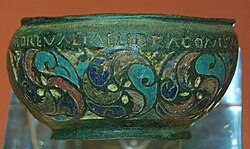
The technique also appeared in the Koban culture of the Caucasus and was likely spread by the Sarmatians to the Celts. A notable example is the Battersea Shield (c. 350–50 BC), which uses red enamel to imitate Mediterranean coral. In Roman Britain, the 2nd-century Staffordshire Moorlands Pan showcases Celtic-style swirling enamel decoration.
Medieval and Renaissance Europe
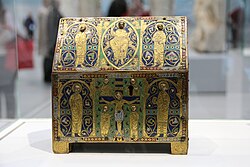
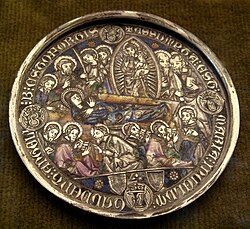
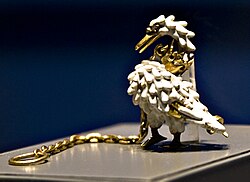
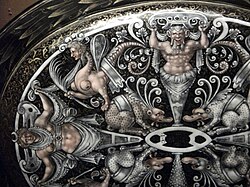
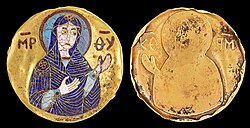
During the Middle Ages and Renaissance, Europe refined various enamelling styles, often for religious artifacts and royal regalia. Techniques like basse-taille (where enamel is applied over low-relief engraving) and ronde bosse (enamelling in the round on three-dimensional objects) became prominent.
Asian Developments: China and Japan
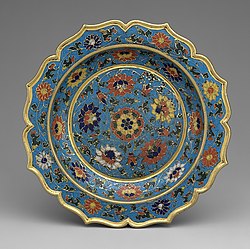
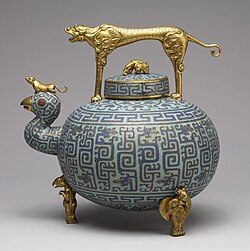
The cloisonné technique—using metal wires to create compartments for the enamel—reached China between the 13th and 14th centuries, possibly via Byzantium or the Islamic world. Early Chinese pieces from the Xuande Emperor's reign (1425–1435) demonstrate a mastery of the style. Cloisonné remained highly valued through the Ming dynasty and continues to be produced today.
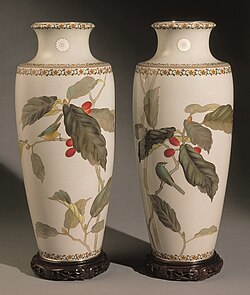
Japan began producing three-dimensional enamelled objects in the 1830s. Known as shippo ("seven treasures"), Japanese cloisonné reached its artistic peak during the Meiji and Taishō eras. The industry grew rapidly after Kaji Tsunekichi reportedly analyzed Chinese objects to unlock the technique, leading to the establishment of companies like the Nagoya cloisonné company to promote Japanese art internationally.
India and the Islamic World
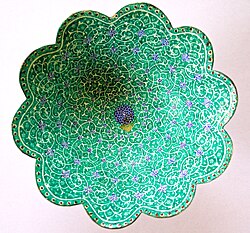
By 1600, the Mughal Empire adopted enamelling for gold and silver jewelry, employing specialized craftsmen called mīnākār. Under Shah Jahan in the mid-17th century, transparent enamels and the champlevé technique (where cells are carved into the metal) reached a peak of sophistication.
Modern Industrial Application
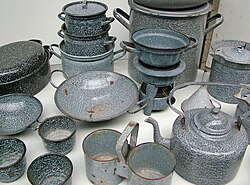
The transition from art to industry began in the 1760s with enamelled cast iron cookware in Europe, notably in Königsbronn, Germany. By the 1850s, the technology reached North America, with companies like The Vollrath Company and Griswold Manufacturing establishing US production.
Industrialization was accelerated by the discovery of using clay to suspend frit in water for wet application. In the 20th century, enamel became essential for heavy-duty applications due to its resilience. David Dunbar Buick used his wealth from improving enamelling processes for sheet steel to found the Buick automobile company.
Industrial Properties and Uses
Enamelled ferrous materials are prized for being non-flammable, dirt-repellent, and resistant to extreme temperatures. This makes them ideal for:
- Interior oven walls and kitchen appliance housings.
- Chemical reactors and pharmaceutical process tanks.
- Farm storage silos and architectural cladding.
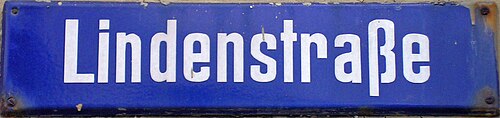
- Vintage advertising signs and street signage.
Artistic Techniques and Materials
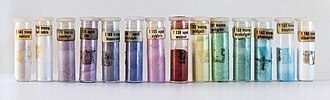
The core ingredient of all vitreous enamel is frit. This is created by smelting raw materials at 1,150 to 1,450 °C (2,100 to 2,650 °F) into liquid glass, which is then thermally shocked with water or rollers to create granules.
Primary Artistic Methods
| Technique | Description | Visual Characteristic |
|---|---|---|
| Cloisonné | Metal wires (cloisons) create cells that are filled with enamel. | Intricate wire outlines. |
| Champlevé | Cells are carved or etched directly into the metal substrate. | Recessed enamel areas. |
| Basse-taille | Translucent enamel is applied over low-relief engraving. | Luminous, depth-filled colors. |
Other specialized methods include serigraph (using silkscreen mesh) and en résille, a 17th-century French technique where enamelled metal is suspended within glass.
Frequently Asked Questions
What is the difference between vitreous enamel and paint?
Unlike paint, which is a surface coating that adheres chemically or mechanically, vitreous enamel is a glass-based material that is fused to the substrate through high-temperature firing, creating an integrated layered composite that is far more durable and heat-resistant.
What is frit in the context of enamelling?
Frit is the essential raw material for enamelling. It is glass that has been melted and then rapidly cooled (thermal shocked) into small granules, which are then ground into a fine powder for application.
Why is enamel used for chemical reactors?
Enamel is used in industrial reactors because it is highly resistant to corrosion, chemicals, and extreme temperatures, providing a protective barrier that prevents the metal substrate from reacting with the chemicals being processed.
Which culture is credited with the earliest undisputed use of enamel?
The earliest undisputed objects using enamel are a group of Mycenaean rings from Cyprus, dating back to the 13th century BC.
What does the Japanese term "shippo" mean?
Shippo literally translates to "seven treasures," a reference to richly coloured substances mentioned in Buddhist texts, reflecting the vibrant nature of Japanese cloisonné.