
Wartime Information Board: Shaping Canada's Second World War Narrative
During the Second World War, the Canadian government recognized a critical need to synchronize how information was shared with the public. To achieve this, the Wartime Information Board was established on September 9, 1942. This agency was designed to coordinate public information services, supervise the release of war news, and facilitate the distribution of Canadian war information both domestically and internationally.
The Evolution of Canadian War Information
At the onset of the war, Canada lacked a centralized system for disseminating information. This gap led to the creation of the Bureau of Public Information on December 8, 1939. Initially working alongside the Chief Censor and later attached to the Department of National War Services, the Bureau coordinated data from various sources, including the Department of Munitions and Supply and the Department of National Defence.
Despite these early efforts, persistent issues with how information reached the public prompted a formal report, which ultimately led to the replacement of the Bureau with the more robust Wartime Information Board.
Leadership and the Influence of the National Film Board
While the Board was led by chairmen such as Thomas Vinning and Norman A.M. Mackenzie, the primary operational power resided with the general managers. Key figures in this role included A. Davidson Dunton and John Grierson, the Commissioner of the National Film Board (NFB).
Grierson's leadership was transformative. By overseeing the graphics department, he integrated a documentary style into government photographs, publications, and posters, bringing a new level of realism and impact to state communications.
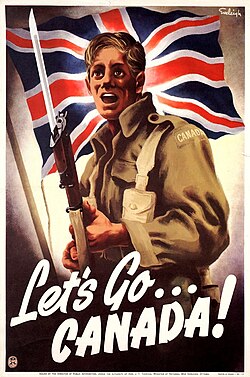
The synergy between the two organizations deepened in January 1943, when all photographic operations were moved under the jurisdiction of the National Film Board. The NFB produced the graphic materials required for the war effort, while funding from the Wartime Information Board supported the production and distribution of films.
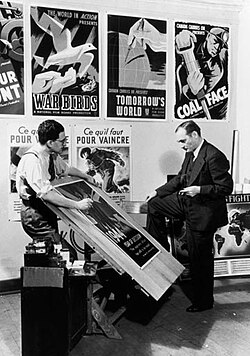
Objectives and Public Engagement
The primary mission of the Wartime Information Board was to foster a unified Canadian identity and a shared perception of the war. By encouraging patriotic fervor and high morale, the agency aimed to make citizens feel they were sharing a common experience and striving toward great causes.
To achieve this, the Board employed a diverse array of strategies:
- Establishing foreign offices to manage international information.
- Conducting surveys and early public opinion polling.
- Organizing guided tours and studying Canadian news trends.
- Developing comprehensive press information.
Canada at War
One of the Board's most visible achievements was the monthly publication "Canada at War." This magazine reached a broad demographic, from housewives to farmers, covering essential wartime topics such as industrial production and the role of women in the war effort.
Key Facts
- Established: September 9, 1942.
- Predecessor: Bureau of Public Information (est. December 8, 1939).
- Key Figures: John Grierson, A. Davidson Dunton, Thomas Vinning, and Norman A.M. Mackenzie.
- Primary Publication: "Canada at War" (monthly).
- Innovation: Early developer of public opinion polling techniques in Canada.
- Collaboration: Integrated photographic and film operations with the National Film Board starting in 1943.
| Agency | Established | Primary Focus | Key Output/Method |
|---|---|---|---|
| Bureau of Public Information | Dec 8, 1939 | Initial coordination of war news | Inter-departmental supply of info |
| Wartime Information Board | Sept 9, 1942 | National identity and morale | "Canada at War" publication |
| National Film Board (Collaboration) | 1943 (Photo ops) | Visual and cinematic documentation | Documentary-style posters and films |
Post-War Transition
As the conflict drew to a close, the Wartime Information Board shifted its focus toward the future. The agency released a series of pamphlets designed to inform Canadians about post-war reconstruction. These materials urged the public to engage in discussions regarding the most positive approaches to solving Canada's outstanding future problems.
Frequently Asked Questions
What was the purpose of the Wartime Information Board?
The Board was created to coordinate the government's public information services, supervise the release of war news, and encourage patriotic fervor and high morale among Canadians during the Second World War.
How did the National Film Board influence the agency?
Under the leadership of John Grierson, the National Film Board introduced a documentary style to government graphics and posters. By 1943, the NFB took over all photographic operations for the Board.
What was "Canada at War"?
It was a monthly publication distributed across Canada to audiences such as farmers and housewives, detailing various aspects of the war effort, including wartime industry and the contributions of women.
Did the Board use any modern research methods?
Yes, the Wartime Information Board was an early developer of public opinion polling techniques within Canada to better understand and shape public perception.
What happened to the Board after the war ended?
The Board transitioned to helping Canadians prepare for the future by releasing pamphlets on post-war reconstruction and encouraging discussions on Canada's future challenges.