
Whanganui Island: A History of Names and Early Settlement
The history of Whanganui Island is a complex tapestry of shifting identities, reflected most clearly in the evolving names given to the land by both Māori and Pākehā (European settlers). Because the geographic naming has changed so frequently, reconstructing the island's timeline requires careful study of historical records to avoid confusion.
The Evolution of Geographic Names
Historian A. V. Piesse conducted a detailed study to clarify the various designations used for the island and its landmarks. The island is separated from the mainland by a narrow passage known as Whenuakura. Over time, the island itself has been known by several different names.
According to James Preece, a catechist for the Church Missionary Society, the ancient name for the island was Poroporo. Early settlers later referred to it as Arapaoa, before it eventually became known as Whanganui Island (originally spelled Wanganui Island). Other historical records show the island was also variously called Beesons Island, Parker Island, and Waiou.
This naming fluidity extended to specific landmarks. For example, the southernmost point of the island, currently called Tawhiti Point, was originally named Poroporo. Meanwhile, the name Tawhiti Point was first applied to the northern end of Tawhiti (Woolshed) Bay, a location now known as Rodney Point.
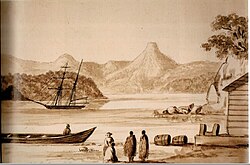
Early Industry and Ownership
In 1836, an American named William Webster established a trading and shipbuilding enterprise on the island. Webster maintained ownership of the land until the signing of the Treaty of Waitangi, a foundational document in New Zealand history. Following the treaty, all land titles passed to the British crown, and Webster lost his legal title to the island.
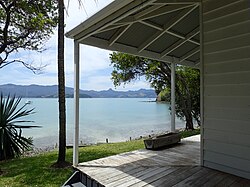
The Presence of John Logan Campbell
During William Webster's tenure, the island hosted John Logan Campbell. However, historians disagree on exactly where Campbell resided. Some accounts suggest he lived at Timber (Woolshed) Bay, while others place him at a home in Arapaoa Bay.
Given that Timber (Woolshed) Bay was a hub of shipbuilding activity—a primary interest of Campbell—it is highly probable he spent time there. Despite this, Piesse includes a sketch of Campbell's "base" in his research, and Campbell himself refers to his "Stay at Herekino" in his book, Poenamo.
Key Facts
- Ancient Name: Originally known as Poroporo.
- Alternative Names: Arapaoa, Beesons Island, Parker Island, and Waiou.
- Separation: Divided from the mainland by the Whenuakura passage.
- Early Enterprise: William Webster started shipbuilding and trading here in 1836.
- Legal Shift: Ownership transferred to the British crown after the Treaty of Waitangi.
- Notable Figure: John Logan Campbell resided on the island, possibly at Timber Bay or Arapaoa Bay.
| Current Name | Former/Alternative Names |
|---|---|
| Whanganui Island | Poroporo, Arapaoa, Beesons Island, Parker Island, Waiou |
| Tawhiti Point (South) | Poroporo |
| Rodney Point | Tawhiti Point (North end of Tawhiti Bay) |
| Whenuakura | (Passage separating island from mainland) |
Frequently Asked Questions
What was the original name of Whanganui Island?
According to James Preece of the Church Missionary Society, the ancient name for the island was Poroporo.
Who was William Webster?
William Webster was an American who established a shipbuilding and trading business on the island in 1836 and owned the land until the Treaty of Waitangi.
Why is the history of the island's naming confusing?
The naming is confusing because both Māori and Pākehā changed the names of the island and its landmarks multiple times over history.
Where did John Logan Campbell stay on the island?
There is historical debate; some sources suggest Timber (Woolshed) Bay due to the shipbuilding activity, while others suggest Arapaoa Bay. Campbell himself mentions a stay at Herekino in his book Poenamo.
What happened to the land titles after the Treaty of Waitangi?
Following the signing of the treaty, all land titles, including those held by William Webster, passed to the British crown.