
William Wirt: The Longest-Serving Attorney General and Legal Pioneer
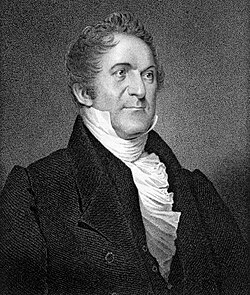
William Wirt was a towering figure in early American jurisprudence, known for his oratorical brilliance and his unprecedented tenure as the United States Attorney General. From his humble beginnings in Maryland to his defense of the Cherokee Nation before the Supreme Court, Wirt's career mirrored the growing pains and legal evolutions of a young republic.
Early Life and Education
Born in Bladensburg, Maryland, to Jacob Wirt, a Swiss German, and Henrietta, a German mother, William Wirt's early childhood was marked by loss. Both of his parents passed away before he reached the age of eight, leaving him under the guardianship of his uncle, Jasper Wirt. Between the ages of seven and eleven, Wirt attended several classical schools, eventually spending four years under the tutelage of the Reverend James Hunt in Montgomery County.
Wirt possessed an insatiable appetite for reading, spending much of his time in Reverend Hunt's library. However, by the time the school disbanded when Wirt was 15, his inheritance was nearly gone. His path to professional success was paved by a former schoolmate, Ninian Edwards. Benjamin Edwards, Ninian's father and a future member of Congress, recognized Wirt's natural ability and invited him to serve as a tutor for Ninian and two nephews. For twenty months, Wirt balanced teaching with his own rigorous studies in history and the classics, preparing himself for the legal profession.
The Rise of a Legal Powerhouse
Wirt was admitted to the Virginia bar in 1792, beginning his practice at Culpeper Courthouse. While he possessed a strong constitution and a commanding presence, he initially struggled with a lack of legal resources, a natural shyness, and a brusque manner of speaking.
In 1795, Wirt married Mildred Gilmer, the daughter of Dr. George Gilmer, a physician and friend of Thomas Jefferson. The couple settled at a plantation Wirt named "Rose Hill" near Charlottesville. During this period, Wirt became a bon vivant—a person who enjoys a sociable and luxurious lifestyle—socializing with figures like James Monroe and other members of the bar, often appearing more as a cheerful companion than an ambitious lawyer.
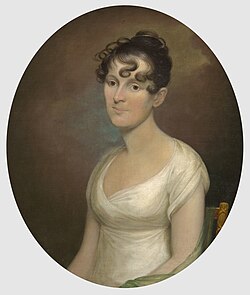
Following the death of his wife in 1799, Wirt moved to Richmond, where he served as the clerk of the Virginia House of Delegates and briefly as the chancellor for the Eastern District of Virginia. He also gained experience as co-counsel in the defense of James Callender, who was prosecuted under the Alien and Sedition Acts of 1798. In 1802, he married Elizabeth Washington Gamble.
The Aaron Burr Trial
Wirt's national reputation was cemented in 1807 when President Thomas Jefferson appointed him as the prosecutor in the treason trial of Aaron Burr. Wirt delivered a four-hour speech that combined logical reasoning with polished wit and eloquent appeals. His vivid descriptions of the home of Harman Blennerhassett became legendary in academic circles, though his flamboyant style earned him the mocking nickname "Whip Syllabub Genius" from his detractors.
Political Ascent and the Attorney Generalship
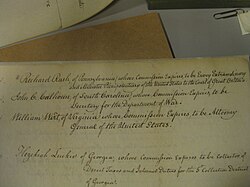
Wirt's legal fame transitioned into political service. He was elected to the Virginia House of Delegates in 1808 and later served as the U.S. Attorney for the District of Virginia starting in 1816. In 1817, President James Monroe appointed him as the ninth Attorney General of the United States.
Wirt held this office for over 11 years, serving through the administration of John Quincy Adams until 1829. This remains the longest tenure of any U.S. Attorney General in history.
Gibbons v. Ogden and Federal Power
In the landmark 1824 case Gibbons v. Ogden, Wirt argued against Daniel Webster. He contended that federal patent laws preempted state-granted monopolies, arguing that the power of Congress to grant exclusive patents was exclusive by nature. While the court did not rule on this specific point at the time, the Supreme Court eventually confirmed Wirt's interpretation 140 years later in Sears, Roebuck & Co. v. Stiffel Co.
Defending the Cherokee Nation
After leaving office, Wirt settled in Baltimore. In 1830, he was selected by a Cherokee delegation led by Chief John Ross to defend their rights before the U.S. Supreme Court. In Cherokee Nation v. Georgia, Wirt argued that the Cherokee were a "foreign nation" and thus not subject to Georgia's jurisdiction.
Although the Court initially declined original jurisdiction, Wirt continued his efforts. He later represented the American Board of Commissioners for Foreign Missions in challenging a Georgia law aimed at evicting missionaries. This led to the 1832 decision in Worcester v. Georgia, where Chief Justice John Marshall ruled that the Cherokee Nation was a distinct community and that Georgia's laws had no force within its boundaries.
The Anti-Masonic Presidential Bid
In 1832, Wirt became the presidential candidate for the Anti-Masonic Party. This party is notable for holding the first national nominating convention in U.S. history in 1830. Wirt, a former fellow craft (second-degree Mason), was a reluctant candidate. He distanced himself from active campaigning and privately expressed skepticism about the party's public rhetoric, though he hoped for an alliance with National Republicans to defeat the Jacksonian Democrats.
Wirt carried the state of Vermont with seven electoral votes, making him the first third-party candidate to carry a state and the only presidential candidate from Maryland to win electoral votes. Following the election, he declined further offers to run for the presidency.
Later Life and Societies
In his later years, Wirt attempted a business venture in Florida to establish a German immigrant colony, though the project failed. He remained active in intellectual and religious circles, serving as president of the Maryland Bible Society and holding membership in the Columbian Institute for the Promotion of Arts and Sciences, alongside figures like Andrew Jackson and John Quincy Adams.
Key Facts
- Longest Tenure: William Wirt holds the record for the longest service as U.S. Attorney General (over 11 years).
- Legal Legacy: He played a pivotal role in Worcester v. Georgia, securing a victory for Cherokee sovereignty.
- Political Milestone: He was the first organized third-party candidate to carry a state in a presidential election.
- Famous Prosecution: He rose to national fame as the prosecutor in the treason trial of Aaron Burr.
- Maryland First: He remains the only presidential candidate from Maryland to win electoral votes.
| Role/Case | Period/Year | Key Outcome/Significance |
|---|---|---|
| Prosecutor (Aaron Burr Trial) | 1807 | Established national fame for his oratory. |
| U.S. Attorney General | 1817–1829 | Longest tenure in U.S. history. |
| Counsel (Gibbons v. Ogden) | 1824 | Argued for federal patent preemption. |
| Counsel (Cherokee Nation) | 1830–1832 | Won landmark ruling in Worcester v. Georgia. |
| Presidential Candidate | 1832 | Carried Vermont (Anti-Masonic Party). |
Frequently Asked Questions
Why was William Wirt nicknamed the "Whip Syllabub Genius"?
The nickname was given by his enemies to mock the frothy and over-the-top nature of his oratorical style, particularly during the Aaron Burr trial.
What was Wirt's contribution to the Cherokee Nation's legal battles?
Wirt argued that the Cherokee Nation was a distinct community and a foreign nation, leading to the Supreme Court ruling in Worcester v. Georgia that Georgia's laws had no force on Cherokee territory.
How did Wirt make history as a presidential candidate?
Nominated by the Anti-Masonic Party in 1832, Wirt became the first candidate of an organized third party to carry a state (Vermont) and is the only Marylander to win electoral votes as a presidential candidate.
What is Wirt's most significant record in the U.S. government?
He holds the record for the longest tenure of any U.S. Attorney General, serving for more than 11 years across the Monroe and Adams administrations.
Was William Wirt actually against Freemasonry?
Wirt was a former second-degree Mason. While he privately criticized some aspects of the organization and was nominated by the Anti-Masonic Party, he publicly stated that he found Freemasonry unobjectionable and respected many of its members.