
Yeshivat Mir: A History of Resilience and Tradition
The story of Yeshivat Mir is one of enduring faith and academic rigor. Founded in the early 19th century, this institution became a cornerstone of Jewish scholarship, navigating the turbulent waters of European geopolitical shifts and the devastation of two World Wars to preserve its intellectual heritage.
The Foundations in Mir
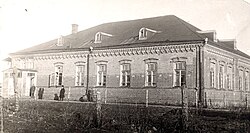
Yeshivat Mir was established in the small town of Mir, located in present-day Belarus. While historical records vary slightly, the institution was founded between 1814 and 1817 by Rabbi Shmuel Tiktinsky. The leadership of the yeshiva—headed by the Rosh Yeshiva (the head of the school)—remained within the family for several generations.
Following the death of the founder, his eldest son, Rabbi Avraham Tiktinsky, took the helm. He was eventually succeeded by his younger brother, Rabbi Chaim Leib Tiktinsky, who led the institution for several decades. The lineage continued with Rabbi Avrohom Tiktinsky, who expanded the yeshiva's intellectual circle by bringing in Rabbi Eliyahu Boruch Kamai.
A pivotal shift in leadership occurred in 1903 when Rabbi Kamai's daughter married Rabbi Eliezer Yehuda Finkel. The son of Rabbi Nosson Tzvi Finkel of Slabodka, Rabbi Eliezer Yehuda Finkel eventually became the Rosh Yeshiva, guiding the institution through its most challenging era.
Displacement and Survival During the World Wars
The stability of the yeshiva was first disrupted by the outbreak of World War I in 1914, forcing the community to relocate to Poltava, in modern-day Ukraine. After seven years of displacement, the yeshiva returned to its original facilities in Mir in 1921.
This period of peace lasted until 1939, when the joint invasion of Poland by Nazi Germany and the Soviet Union triggered a new crisis. As the Soviet army advanced from the east, many foreign-born students departed. Despite these losses, the yeshiva continued to operate on a reduced scale until the imminent arrival of German forces necessitated a full evacuation.
The Flight to Lithuania
To escape the advancing German armies, the leadership moved the entire community to Keidan, Lithuania. On October 15, the yeshiva moved en masse to Vilna. This strategic move was intended to transition the community from Russian rule into the territory of then-free Lithuania, following Russia's announcement that it would return Vilna to Lithuanian control.
Key Facts
- Founded: Between 1814 and 1817 in Mir, Belarus.
- Founder: Rabbi Shmuel Tiktinsky.
- Key Leaders: The Tiktinsky family and later Rabbi Eliezer Yehuda Finkel.
- WWI Relocation: Moved to Poltava, Ukraine (1914–1921).
- WWII Relocation: Moved to Keidan and then Vilna, Lithuania, in 1939.
| Year/Period | Location | Reason for Move |
|---|---|---|
| 1814–1914 | Mir, Belarus | Original Founding Site |
| 1914–1921 | Poltava, Ukraine | Outbreak of World War I |
| 1921–1939 | Mir, Belarus | Return to original facilities |
| 1939 | Keidan & Vilna, Lithuania | Invasion of Poland by Nazi Germany and USSR |
Frequently Asked Questions
Who founded Yeshivat Mir?
Yeshivat Mir was founded by Rabbi Shmuel Tiktinsky in the town of Mir (now in Belarus) around 1814, 1815, or 1817.
Who was the Rosh Yeshiva during the 1939 invasion?
Rabbi Eliezer Yehuda Finkel served as the Rosh Yeshiva during the period when the yeshiva had to flee the invasion of Poland.
Why did the yeshiva move to Poltava?
The yeshiva relocated to Poltava, Ukraine, due to the outbreak of World War I in 1914.
Why did the community move to Vilna in October 1939?
The move to Vilna was an effort to escape Russian rule and enter free Lithuania, following the announcement that Russia was returning Vilna to Lithuania.
How did the yeshiva's leadership change over time?
Leadership began with Rabbi Shmuel Tiktinsky and passed through his sons, Rabbi Avraham and Rabbi Chaim Leib, and grandson Rabbi Avrohom, before eventually transitioning to Rabbi Eliezer Yehuda Finkel.