
Zirka Kropyvnytskyi: A Century of Football History
The story of Zirka Kropyvnytskyi is a reflection of the turbulent and triumphant history of Ukrainian sports. From its early roots in the industrial era of the early 20th century to its modern identity in the professional leagues, the club has survived wars, political shifts, and financial hardships to remain a cornerstone of its community.
The Early Years: From Elvorti to the Soviet Era
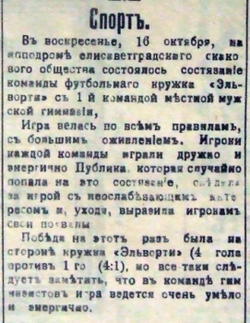
The club's origins date back to 1911 with the founding of the sports club Elvorti Yelizavetgrad. Established at the Elvorti Factory, which was owned by Robert Pearce Elworthy, the club benefited from a dedicated football field that had been in use since 1907.
However, the onset of World War I and the subsequent Ukrainian-Soviet War brought sports in the region to a standstill, leading to the club's dissolution in 1917. While competitions resumed in Lyzavetghrad in 1921, a new era began in 1922. Based on the legacy of Elvorti, two Soviet sports clubs were formed: Chervona Zirka (Red Star) and Chervony Profintern (Red Profintern).
Chervona Zirka evolved into a multi-athletic hub, offering not only football but also volleyball, gymnastics, wrestling, track and field, and fitness. The club's identity was deeply tied to the region, with some shields featuring the star fort design of the fortress of St. Elizabeth.
Evolution and Infrastructure Development
Throughout the 1920s and 30s, the club underwent several name changes to align with Soviet industrial naming conventions. In 1928, it became Metallist Zinovyevsk, and by 1934, it was renamed Selmash Kirovo. To support its growth, the club converted a factory theater into a physical culture center, providing dedicated spaces for boxing, wrestling, and gymnastics.
A major milestone occurred in 1934 when the local athletic cell of the Dynamo sports society and the NKVD organized the construction of the city stadium via subbotnik (voluntary unpaid weekend work). Led by NKVD officer Dmitry Medvedev, the stadium opened in 1935 within a city park established in 1933. This facility was subsequently awarded to the Silmash club.
War, Recovery, and Professional Rise
World War II devastated the club and its infrastructure; the team was dissolved, and the stadium suffered 84% destruction. Although the sports club was reestablished in 1945, the football team did not return until 1948, reorganizing as Traktor Kirovograd and later becoming Torpedo in 1953.
The 1950s and 60s marked a period of significant achievement. In 1953, Torpedo Kirovohrad won the Ukrainian SSR football cup by defeating Lokomotyv Poltava. In 1958, the club adopted the name Zvezda Kirovograd (Zirka Kirovohrad) upon entering the professional B Class of Soviet competitions. By 1961, the club established its own sports school (DYuSSh) and won the Ruby Cup for scoring the most goals.
The club continued its success in the 1970s, winning the Ukrainian SSR football cup for "teams of masters" in 1973 (defeating Spartak Ivano-Frankivsk) and 1975 (defeating Tavriya Simferopol).
Modern Era and Transition to Kropyvnytskyi
In 1992, the football team split from the factory sports club to become the independent FC Zirka Kirovohrad. Between 1993 and 1997, the club was known as Zirka-NIBAS due to title sponsorship. The mid-90s saw the club reach its peak, debuting at the top level for the 1994–95 season and finishing 6th.
The following decade was a volatile period of promotion and relegation. After finishing last in the 1999–2000 season, the club was relegated to the Ukrainian First League, only to be promoted again as champions for the 2003–04 season, before another relegation. Financial instability eventually led to bankruptcy in 2006.
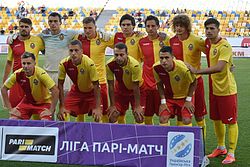
The club was revived in 2007 through amateur regional competitions. In 2008, a name exchange with FC Olimpik Kirovohrad allowed Zirka to regain its place in the Ukrainian Second League. Finally, in July 2016, following the renaming of the city, the club officially became FC Zirka Kropyvnytskyi.
Key Facts
- Founded: 1911 (as Elvorti Yelizavetgrad).
- Major Trophies: Ukrainian SSR football cup (1953, 1973, 1975) and the Ruby Cup (1961).
- Highest Achievement: 6th place in the top division during the 1994–95 season.
- Stadium History: Built in 1934 via subbotnik; 84% destroyed during WWII.
- Name Changes: Has operated under names including Elvorti, Chervona Zirka, Metallist, Selmash, Traktor, Torpedo, and Zvezda.
| Period/Year | Club Name | Key Event |
|---|---|---|
| 1911 | Elvorti Yelizavetgrad | Club founded at Elvorti Factory |
| 1922 | Chervona Zirka | Established as a Soviet multi-athletic club |
| 1935 | Silmash | City stadium begins operations |
| 1953 | Torpedo | Won the Ukrainian SSR football cup |
| 1958 | Zvezda (Zirka) | Advanced to professional B Class |
| 1994-95 | Zirka-NIBAS | Finished 6th in top-level competition |
| 2016 | FC Zirka Kropyvnytskyi | Renamed following city name change |
Frequently Asked Questions
When was the club first founded?
The club traces its origins back to 1911, when it was founded as the sports club Elvorti Yelizavetgrad at the Elvorti Factory.
What is the significance of the name "Zirka"?
Zirka means "Star." The name was adopted as Chervona Zirka (Red Star) in 1922 and later became the primary identity of the club, often associated with the star fort design of the fortress of St. Elizabeth.
How did the club recover from World War II?
After the war, the sports club was reestablished in 1945, and the football team was revived in 1948 as Traktor Kirovograd, eventually evolving into Torpedo and then Zvezda.
What was the club's highest league finish?
The club's highest achievement in the modern era was finishing 6th in the top level of Ukrainian football during the 1994–95 season.
Why did the club change its name in 2016?
The club changed its name to FC Zirka Kropyvnytskyi to align with the official renaming of its hometown from Kirovohrad to Kropyvnytskyi.