
Zongo: A Strategic Border City in the Democratic Republic of the Congo
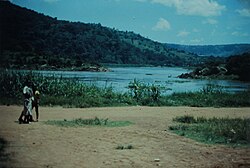
Located in the northwestern reaches of the Democratic Republic of the Congo (DRC), Zongo serves as a critical urban center within the Sud-Ubangi Province. Positioned strategically on the south bank of the Ubangi River, the city shares a direct international border with the Central African Republic, sitting directly across the water from Bangui, the Central African Republic's capital.
Historically, Zongo functioned as a vital transport hub, facilitating movement and trade between the two nations via ferry services. However, its prominence as a logistics center diminished in the late 1980s as a significant portion of regional traffic shifted eastward.
Key Facts
- Location: South bank of the Ubangi River, Sud-Ubangi Province, DR Congo.
- City Status: Officially granted city status on July 23, 1971.
- Administrative Divisions: Comprised of the communes of Nzulu and Wango.
- Population: 53,743 residents (as of 2007).
- Geography: Total area of 495 square kilometers.
- Climate: Classified as Aw (Tropical savanna climate).
Geography and Administration
Zongo is situated at coordinates 4°20′36″N 18°35′34″E. The city is managed by a local government led by Mayor Arthur Nguma. Administratively, the city is divided into two primary communes: Nzulu and Wango.
The city's environment is characterized by a tropical savanna climate (Aw), which typically features a distinct wet and dry season. With a population density of approximately 109 people per square kilometer, Zongo maintains a balance between urban development and the surrounding natural landscape of the Sud-Ubangi region.
| Attribute | Detail |
|---|---|
| Province | Sud-Ubangi |
| Country | Democratic Republic of the Congo |
| Total Area | 495 km² (191 sq mi) |
| Population (2007) | 53,743 |
| Time Zone | UTC+1 (West Africa Time) |
| Communes | Nzulu, Wango |
Political History and Regional Conflict
Due to its proximity to the border, Zongo has often been impacted by regional instability. Toward the conclusion of the First Congo War, the city came under the control of the Movement for the Liberation of Congo.
The city has frequently served as a sanctuary for those fleeing violence in the neighboring Central African Republic. In 2001, Zongo experienced a significant influx of refugees. This period was marked by political tension, as the government of the Central African Republic alleged that former soldiers among the refugee population were involved in an attempted coup in Bangui in 2002.
More recently, during the Central African Republic conflict of 2012-2013, Zongo again became a place of refuge. Following the fall of Bangui to Séléka rebels on March 24, 2013, many displaced persons, including family members of President François Bozizé, sought safety within the city.
Frequently Asked Questions
Where is Zongo located?
Zongo is a city in the Sud-Ubangi Province of the Democratic Republic of the Congo, situated on the south bank of the Ubangi River, directly opposite Bangui in the Central African Republic.
What is the population of Zongo?
According to 2007 data, the total population of Zongo was 53,743 people.
How is Zongo connected to Bangui?
The two cities are linked by a ferry service across the Ubangi River, although Zongo's role as a major transport hub has declined since the late 1980s.
Which communes make up the city of Zongo?
Zongo is divided into two communes: Nzulu and Wango.
What is the climate like in Zongo?
Zongo has an "Aw" climate classification, which refers to a tropical savanna climate.