
Arak: The Traditional Anise Spirit of the Levant
Arak (also spelled araq) is a potent, distilled spirit originating from the Levant. Known for its distinct licorice-like flavor and its dramatic transformation when mixed with water, it stands as a cornerstone of social and culinary traditions across the Eastern Mediterranean. From the vineyards of Lebanon to the distilleries of Palestine and Israel, arak is more than just a beverage; it is a cultural symbol of hospitality and heritage.
The spirit is characterized by its transparent to translucent appearance and a high alcohol content, typically ranging from 50% to 70% alcohol by volume (ABV), with 53% being a common standard.
Key Facts
- Origin: The Levant region of the Middle East.
- Primary Ingredients: Grapes and aniseed.
- Alcohol Content: Typically 53% ABV (range of 50% to 70%).
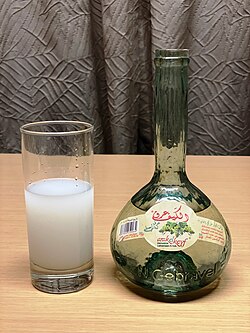
- Visual Characteristic: Turns milky-white when diluted with water (the ouzo effect).
- Common Pairings: Served as an apéritif or alongside meze and grilled meats.
The Science and Composition of Arak
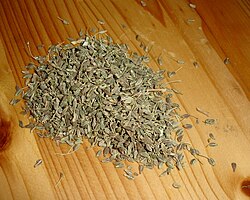
At its core, arak is produced from a base of grapes and aniseed (the seeds of the anise plant). The essential oil found in aniseed provides the signature licorice taste. While grapes are the standard base, some producers may incorporate dates, figs, or other fruits into the mixture.
One of the most fascinating aspects of arak is the ouzo effect. This occurs because anethole, the essential oil in anise, is soluble in alcohol but not in water. When water is added to the clear spirit, the anethole precipitates out, creating an emulsion of fine droplets that scatter light and turn the liquid a translucent milky-white.
History and Etymology
The term arak is derived from the Arabic word ʿaraq, which means "perspiration" or "sweat," referring to the distillate that "sweats" from the still. It is important to distinguish Levantine arak from Asian arrack, which, despite the similar name, is made from different bases such as sugarcane.
The roots of arak lie in the early experiments of Arab, Persian, and Islamic alchemists. Figures such as Jabir Ibn Hayyan developed distillation techniques for medicinal purposes. In the 10th century, Al-Razi recorded the first recipe for a distilled ethanol spirit called arak, which was initially used as a medical solvent and antiseptic. Over time, the practice spread throughout the Islamic world, evolving from a medicinal tool into a recreational spirit.
Production Process
The quality of arak begins in the vineyard. Producers typically use mature, golden-colored grapevines that rely on natural Mediterranean rainfall and sun rather than irrigation. Grapes are harvested in late September or early October, crushed, and fermented in barrels for approximately three weeks.
The distillation process generally involves several stages:
- First Distillation: The fermented grape juice is distilled to create a high-alcohol base.
- Second Distillation: The alcohol is distilled again, this time mixed with aniseed. The specific ratio of aniseed is a key determinant of the final quality.
- Final Distillation: A final pass is conducted at the lowest possible temperature to refine the spirit.
- Aging: High-quality arak is aged in clay amphoras. This allows the "angels' share" (the portion of alcohol that evaporates) to leave the vessel, smoothing the flavor for consumption.
Distillers use either pot stills or column stills, with copper stills of Moorish shape being highly prized for their results.
Regional Varieties and Consumption
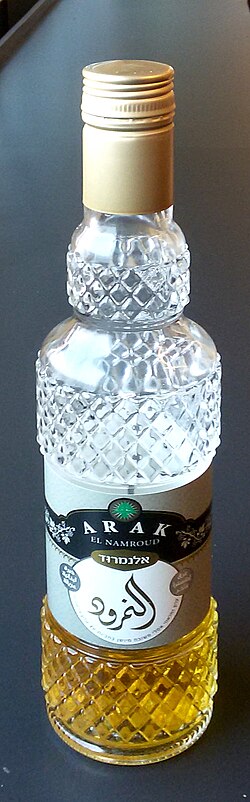
Arak is consumed widely across Lebanon, Syria, Jordan, Egypt, Iraq, Palestine, and Israel, with additional production in Sudan, Morocco, and Greece.
Lebanon
Often regarded as the national drink of Lebanon, arak is primarily produced in the Bekaa Valley using Marawi and Obaideh grape varieties. The city of Zahlé is considered the capital of arak, where the famous Arak Zahlawi is produced using water from the Berdawni River.
Syria and Iraq
In Syria, production was historically dominated by state-run firms like Al-Rayan and Al-Mimas, though the Syrian Civil War has led to a decline in market share and a rise in low-quality counterfeits. In Iraq, production has faced significant challenges; while Yazidi and Christian minorities continue the tradition, the Iraqi parliament passed a ban on the import and sale of alcohol in 2016, which was officially gazetted in 2023 (though not enforced in the autonomous Kurdistan Region).
Israel and Palestine
In Israel, arak has seen a resurgence in popularity among younger generations and remains a staple for Moroccan Jews. Major producers include Joseph Gold & Sons, Barkan Wine Cellars, and Kawar Distillery. In Palestine, arak is locally produced by Palestinian Christians, with Ramallah serving as a primary center for distillation.
Serving Traditions
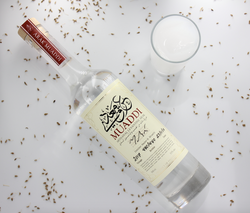
Arak is traditionally mixed in an ibrik (a traditional water vessel) in a ratio of approximately one part arak to two parts water. The mixture is then poured into small cups filled with ice. It is most commonly served as an apéritif or paired with meze—a collection of small traditional appetizers—and grilled meats.
Arak Summary Table
| Feature | Details |
|---|---|
| Base Ingredients | Grapes and Aniseed |
| Typical ABV | 53% (Range: 50% - 70%) |
| Visual Effect | Clear to Milky-White (upon dilution) |
| Primary Regions | Lebanon, Syria, Israel, Palestine, Jordan |
| Aging Vessel | Clay Amphoras |
Frequently Asked Questions
What is the difference between arak and ouzo?
While both are anise-flavored spirits that exhibit the ouzo effect, arak is traditionally distilled from grapes in the Levant, whereas ouzo is a Greek spirit typically distilled from pomace or zibibbo grapes.
Why does arak turn white when water is added?
This is caused by the anethole (anise oil), which is soluble in alcohol but not in water. Adding water creates an emulsion of oil droplets that scatter light, resulting in a milky appearance.
How should arak be served?
The traditional method is to mix one part arak with two parts water in an ibrik, then pour the mixture into small glasses filled with ice.
Is arak the same as arrack?
No. Despite the similar names, arak is a Levantine grape and anise spirit, while arrack refers to spirits from southern and southeastern Asia made from various bases, including sugarcane.
What are the best foods to pair with arak?
Arak is traditionally paired with meze (small appetizers) and grilled meats, as its strong flavor complements savory and salty dishes.