
Bangor International Airport: A Century of Aviation History
From its humble beginnings as a local airfield to its role as a critical transatlantic gateway, Bangor International Airport has served as a cornerstone of Maine's transportation infrastructure for over a century. Its unique geographic position and expansive facilities have made it a sanctuary for diverted flights and a strategic hub for military and commercial aviation alike.
The airport's journey began in 1921 as Godfrey Field, established on land owned by attorney Edward Rawson Godfrey. Early milestones included a 1923 practice mission by the U.S. Army Air Corps under General Billy Mitchell, involving 15 Martin Bombers and 11 DeHaviland Scout Planes.
The Evolution of Commercial and Military Service
Commercial aviation took root in 1931 when Boston-Maine Airways launched passenger services to Portland and Boston. This era saw notable figures like Amelia Earhart, an investor in the airline, travel to Bangor in 1933. By 1937, the airport had implemented floodlights to support night operations. Boston-Maine later became Northeast Airlines in 1940, eventually merging with Delta Air Lines in 1972.
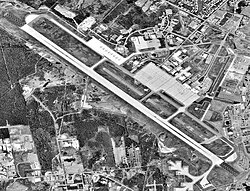
The airport's military significance grew just before World War II when it was transitioned into the Bangor Army Air Field. It later operated as Dow Air Force Base until 1968, and subsequently as the Bangor Air National Guard Base. During its tenure as a military installation, the site saw several tragedies, including the first fatal military aircraft crash in Maine in 1941 involving a Douglas B-18 Bolo bomber.
Infrastructure and Record-Breaking Feats
In 1958, the Air Force constructed a massive 11,440 ft runway to accommodate the B-52 Stratofortress. At the time of its completion, this was the longest runway on the east side of the Mississippi River. The airport also played a role in global aviation milestones, such as the 1948 round-the-world flight of Richarda Morrow-Tait, the first woman to pilot a plane around the globe.
Transition to a Global Refueling Hub
Following the closure of Dow AFB in 1968, the city purchased most of the base, reopening it as Bangor International Airport in 1969. Throughout the 1970s and 1990s, the airport became a vital port of entry for charter jetliners traveling between Europe, the U.S. West Coast, Mexico, and the Caribbean. Between 3,000 and 5,000 commercial flights visited annually for refueling and customs processing.
This international traffic brought a diverse array of visitors, from the Mexican President José López Portillo to members of the Elvis Presley Fan Club. Airlines such as British Airways, Aeroflot, and Pan American became common sights in Bangor's skies.
The airport also became known for human-interest stories, most notably in 1977 when Erwin Kreuz, a German brewery worker, mistakenly disembarked in Bangor believing he had reached San Francisco. His error led to him receiving the key to the city and becoming an honorary member of the Penobscot Indian tribe.
Modern Era and Strategic Importance
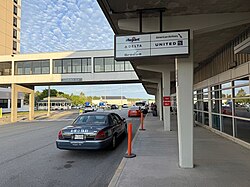
In the 21st century, Bangor has continued to modernize. Significant investments include a $10 million terminal modernization in 2014 and a 2024 announcement of a $45 million runway repair project alongside $14.2 million for post-security terminal upgrades.
Beyond commercial flights, the airport serves as a critical point for military personnel. Over a million servicemen and women returning from the Gulf War, Iraq, Afghanistan, and NATO operations in Bosnia and Herzegovina have passed through Bangor. Since 1991, a dedicated group of civilian troop greeters has ensured these soldiers receive a warm welcome home.
The Role of a Diversion Destination
Due to its long runway and uncluttered airspace, Bangor is a primary diversion destination—an airport where planes land unexpectedly due to emergencies or delays. It is often the first major U.S. airport encountered by flights from the east.
Between 2004 and May 2012, the airport handled 647 unscheduled landings. These diversions occur for various reasons, including fuel shortages, weather, medical emergencies, and security issues. Notable figures who have made unscheduled stops here include George H. W. Bush, Colin Powell, Clint Eastwood, and Harrison Ford.
| Reason for Diversion | Number of Landings |
|---|---|
| Fuel | 388 |
| Weather | 139 |
| Medical Reasons | 50 |
| Maintenance Problems | 49 |
| Security Reasons | 21 |
| Total | 647 |
Key Facts
- Founded: 1921 as Godfrey Field.
- Runway Length: 11,440 ft (constructed in 1958 for the B-52).
- Military History: Formerly Dow Air Force Base; currently hosts the Air National Guard Base.
- Strategic Role: Primary U.S. port of entry and diversion point for transatlantic flights.
- Recent Investment: $45 million runway repair project announced in 2024.
Frequently Asked Questions
Why is Bangor International Airport a common diversion site?
Its location as the first major U.S. airport for flights arriving from the east, combined with a runway over two miles long and uncluttered airspace, makes it an ideal emergency landing site.
What was the airport's original name?
The airport began as Godfrey Field in 1921, named after local attorney Edward Rawson Godfrey.
How does the airport support returning military members?
Bangor serves as a port of entry for military charters. Since 1991, local veterans and citizens have organized a "ceremony of return" to greet troops arriving from various global conflicts.
Which airlines have historically operated out of Bangor?
Major carriers have included Northeast Airlines (later Delta), USAir, United, Continental, and Allegiant Air, as well as various international charter airlines like British Airways and Aeroflot.
What is the significance of the 1958 runway expansion?
The construction of the 11,440 ft runway was designed to accommodate the B-52 Stratofortress and was the longest runway east of the Mississippi River at that time.