
Belgian Government Formation 2014: The Path to the Swedish Coalition
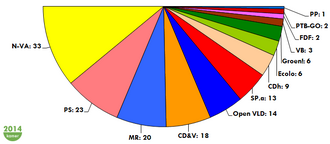
Following the elections in May 2014, Belgium entered a complex period of political negotiation to establish both regional and federal governments. The process was marked by a tension between confederal logic—the desire by the N-VA to prioritize the Flemish Government before the Federal Government—and the preference of the CD&V to negotiate both levels simultaneously.
The road to a stable administration required navigating deep linguistic and ideological divides, eventually leading to a unique political arrangement known as the "Swedish coalition."
Key Facts
- Informateurs: Bart De Wever (N-VA) and later Charles Michel (MR) were tasked with finding coalition agreements.
- The Swedish Coalition: A federal government composed of N-VA, CD&V, Open Vld, and MR.
- Prime Minister: Charles Michel (MR) was ultimately appointed as the head of government.
- Linguistic Balance: The Belgian Constitution requires an equal number of Dutch- and French-speaking ministers.
- Timeline: Negotiations began in May 2014 and concluded with a coalition agreement on October 7, 2014.
The Initial Phase: Bart De Wever as Informateur
On May 27, King Philippe appointed Bart De Wever of the N-VA as informateur—a mediator tasked with identifying common ground for a potential coalition. Several scenarios were considered, including a center-right coalition (N-VA, CD&V, Open Vld, and MR/cdH) or a continuation of the tripartite Di Rupo Government (CD&V, Open Vld, sp.a, PS, MR, and cdH).
While the Di Rupo model had majority support among Flemish parties, a center-right option lacked a majority among Francophone parties, though language-group majorities are politically preferred rather than legally required.
Regional Complications
In early June, the PS and cdH unexpectedly began negotiations for a Walloon Government, while PS, cdH, and FDF targeted the French language group in Brussels. Simultaneously, Open Vld, CD&V, and sp.a sought a coalition for the Dutch language group in Brussels, though tensions arose over the inclusion of the FDF.
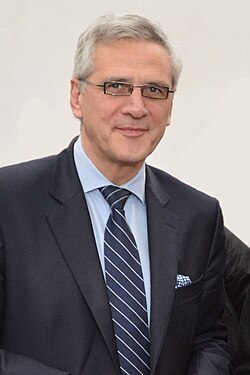
In response, the N-VA and CD&V began negotiations for a Flemish Government, led by Geert Bourgeois and Kris Peeters, while De Wever remained the federal informateur.
The Center-Right Proposal
On June 24, De Wever proposed a basis for a center-right federal government. To ensure acceptability for French-speaking parties, the text omitted institutional changes and far-reaching socio-economic reforms. While CD&V and MR responded positively, the cdH rejected the proposal due to a lack of trust, earning their leader, Benoît Lutgen, the media nickname "Monsieur Non."
The Transition to Charles Michel
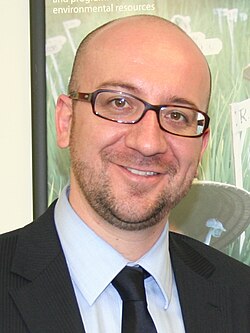
Following the cdH's rejection, King Philippe replaced De Wever with Charles Michel (MR) as informateur on June 27. Michel faced a difficult landscape: the PS favored the Di Rupo model (rejected by most Flemish businesses and citizens), while the alternative was a "kamikaze" or "Swedish coalition," where MR would be the sole French-speaking party alongside N-VA, CD&V, and Open Vld.
While Brussels and Walloon governments were successfully formed by mid-July, the Flemish Government formation stalled due to budgetary disputes and uncertainty regarding federal talks.
The Breakthrough
On July 22, N-VA and CD&V invited Open Vld into the Flemish Government negotiations. This move was pivotal, as Open Vld insisted on being part of both the federal and Flemish governments or neither. This alignment paved the way for the federal Swedish coalition. Consequently, King Philippe appointed both Charles Michel and Kris Peeters as formateurs—those tasked with finalizing the government program and appointing ministers.
Finalizing the Coalition Agreement
The formateurs developed a draft agreement involving dedicated negotiators from each party. The N-VA utilized a rotating system of expert negotiators for specific portfolios, such as Johan Van Overtveldt for economy and Theo Francken for asylum and migration.
The European Commission Dispute
A significant point of contention was the appointment of the Belgian member of the Juncker Commission. CD&V pushed for Marianne Thyssen, while MR advocated for Didier Reynders. To resolve the conflict—and avoid CD&V holding both the Prime Minister's office and the Commission seat—the parties agreed to propose Thyssen, provided the Prime Minister was a liberal from either MR or Open Vld.
Charles Michel was ultimately selected as Prime Minister. His fluency in Dutch helped remove linguistic barriers to his appointment, and his party, MR, received half of the ministerial posts to satisfy the constitutional requirement for linguistic parity.
Despite their ideological alignment, the negotiations were exhaustive, concluding after a final 24-hour session on October 7, 2014.
| Role/Entity | Key Figures/Parties | Outcome/Contribution |
|---|---|---|
| First Informateur | Bart De Wever (N-VA) | Proposed center-right basis; rejected by cdH. |
| Second Informateur | Charles Michel (MR) | Explored "Swedish coalition" options. |
| Formateurs | Charles Michel & Kris Peeters | Drafted final coalition agreement. |
| Coalition Parties | N-VA, CD&V, Open Vld, MR | Formed the "Swedish Coalition." |
| Prime Minister | Charles Michel | Head of government as of October 2014. |
Frequently Asked Questions
What is a "Swedish coalition" in the Belgian context?
In the 2014 formation, a Swedish coalition referred to a federal government where the MR was the only French-speaking party, partnering with the Flemish parties N-VA, CD&V, and Open Vld.
What is the difference between an informateur and a formateur?
An informateur is tasked with exploring possible coalitions and finding points of agreement between parties. A formateur is appointed once a coalition is likely and is responsible for drafting the final agreement and forming the cabinet.
Why was the appointment of the European Commissioner a problem?
CD&V wanted Marianne Thyssen for the Juncker Commission, but other parties felt that if CD&V also provided the Prime Minister, they would hold too much power. The compromise was to appoint Thyssen and select a liberal Prime Minister.
Why is linguistic parity required in the Belgian government?
The Belgian Constitution requires an equal number of Dutch-speaking and French-speaking ministers to ensure balanced representation between the country's two main linguistic communities.
Why did the Flemish Government formation stall initially?
The process was delayed by a difficult budgetary situation, disagreements between the N-VA and CD&V, and uncertainty regarding the progress of the federal negotiations.