
Boron: Properties, Allotropes, and Industrial Applications
Boron is a versatile chemical element with the symbol B and atomic number 5. Positioned in group 13 of the periodic table, it is a metalloid that bridges the gap between metals and non-metals. Known for its extreme hardness and unique bonding capabilities, boron is essential in everything from high-strength ceramics and heat-resistant glassware to advanced cancer treatments.
Historically, boron was discovered on June 30, 1808, by Joseph Louis Gay-Lussac and Louis Jacques Thénard, and first isolated by Humphry Davy shortly after. Its name is derived from borax, the mineral from which it was first isolated, which traces its roots back to the Arabic word bawraq.

Key Facts
- Atomic Number: 5
- Standard Atomic Weight: 10.81 ± 0.02
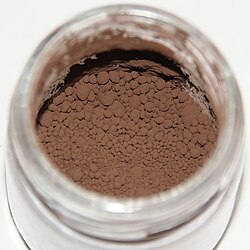
- Appearance: Black-brown solid
- Mohs Hardness: Approximately 9.5
- Melting Point: 2076 °C (2349 K)
- Boiling Point: 3927 °C (4200 K)
- Common Oxidation States: +3, -5, -1, 0, +1, +2
Physical and Atomic Properties
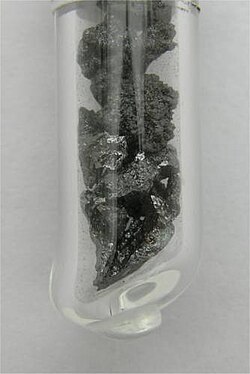
Boron is a p-block element with an electron configuration of [He] 2s 2p. In its elemental form, it is a solid at standard temperature and pressure (STP) and is diamagnetic. One of its most striking physical characteristics is its hardness; with a Mohs hardness of ~9.5, it is one of the hardest known materials.
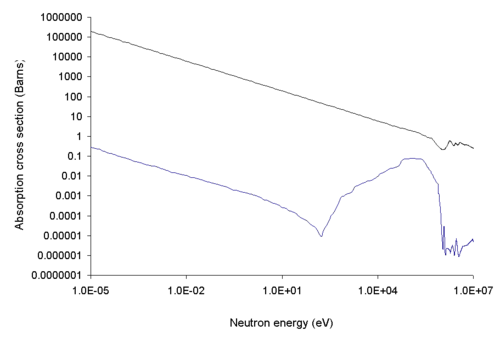
The element exists as two stable isotopes: Boron-10 (approximately 18.9% to 20.4% abundance) and Boron-11 (approximately 79.6% to 81.1% abundance). These isotopes differ significantly in their neutron cross-sections, a property that makes boron invaluable in nuclear applications.
Allotropes and Crystal Structures
![Ball-and-stick model of tetraborate anion, [B4O5(OH)4]2−, as it occurs in crystalline borax, Na2[B4O5(OH)4]·8H2O. Boron atoms are pink, with bridging oxygens in red, and four hydroxyl hydrogens in white. Note two borons are trigonally bonded sp2 with no formal charge, while the other two borons are tetrahedrally bonded sp3, each carrying a formal charge of −1. The oxidation state of all borons is III. This mixture of boron coordination numbers and formal charges is characteristic of natural boron minerals.](/images/b3/33/b333eaed4940b0b471c4b38df293bf2fdc302f14f066e7589b4a1d747cb7211b.png)
Boron is renowned for its complex structural chemistry. It exists in several allotropes—different physical forms of the same element—including α-rhombohedral, β-rhombohedral, and β-tetragonal forms.
The β-rhombohedral form is particularly complex, with a unit cell containing approximately 105 atoms. These structures are characterized by high bulk moduli and varying bandgaps, which influence the element's electrical resistivity (approximately 10 Ω·m at 20 °C) and thermal conductivity (27.4 W/(m·K)).
Chemical Behavior and Compounds
![Ball-and-stick models showing the structures of the boron skeletons of borane clusters. The structures can be rationalised by polyhedral skeletal electron pair theory.[60]](/images/40/d7/40d72dcc17d8a836489aa1bc4fa0b5fdf87cdd94b1e0c010f0d0d996185aac52.png)
Boron's chemistry is defined by its ability to form covalent bonds and its tendency to create clusters. A primary example is diborane (B2H6), a hydride that illustrates the element's unique bonding patterns.
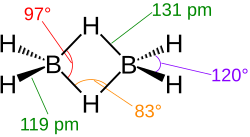
Boron Halides and Oxides
Boron reacts with oxygen to form boron trioxide (B2O3) and can be processed into halides like boron trifluoride (BF3). Boron trifluoride is a key reagent in organic chemistry, often used to convert sodium borohydride into diborane.
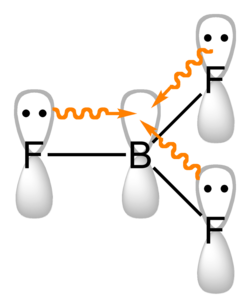
Borides and Carbides
Boron carbide (B4C) is a high-performance ceramic produced via the carbothermal reduction of boron trioxide. It is prized for its extreme hardness, making it ideal for abrasive materials and armor.
![Unit cell of B4C. The green sphere and icosahedra consist of boron atoms, and black spheres are carbon atoms.[73]](/images/5c/33/5c330fd36d604370b45e238abc2353087f929a2d86012f502f9d0314f73039be.png)
Natural Occurrence and Production
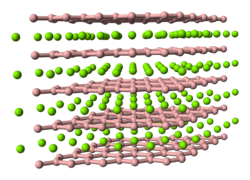
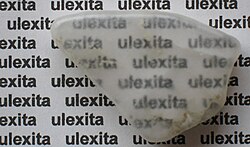
Boron is a primordial element found naturally in various minerals. Common sources include borax (sodium borate decahydrate), sassolite, and ulexite.
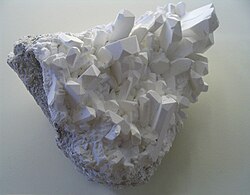
A significant portion of the world's supply is mined from concentrated deposits. For instance, approximately 23% of global boron production originates from the Rio Tinto Borax Mine near Boron, California.
Industrial and Medical Applications
Due to its unique properties, boron is utilized across a wide array of industries:
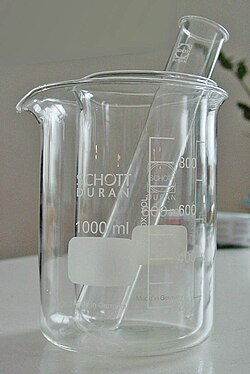
- Glassware: Borosilicate glass is used for laboratory beakers and test tubes because of its low thermal expansion and high resistance to chemical attack.
- Nuclear Energy: Because Boron-10 is an excellent neutron absorber, it is used in control rods for nuclear reactors to manage fission rates.
- Medicine: Boron Neutron Capture Therapy (BNCT) is an experimental cancer treatment that uses boron-10 to target and destroy malignant cells.
- Metallurgy: Boron is used to enhance the properties of various alloys and in the production of superconductors like magnesium diboride (MgB2).
Comparison of Hardness in Boron-Based Materials
| Material | Vickers Hardness (GPa) | Fracture Toughness (MPa·m) |
|---|---|---|
| Diamond | 115 | 5.3 |
| Cubic-BN | 62 | 6.8 |
| B4C (Boron Carbide) | 38 | 22 |
| ReB2 | 3.5 | Not Specified |
Health and Toxicity
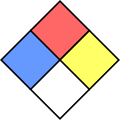
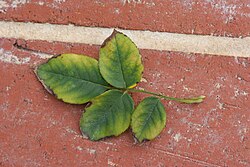
While boron is a micronutrient for plants and may play a role in animal health, excessive exposure can be toxic. In plants, boron toxicity often manifests as chlorosis or necrosis in leaves. In humans, it is handled with caution, as indicated by GHS warning labels for acute toxicity and environmental hazards.
Frequently Asked Questions
What is borosilicate glass?
Borosilicate glass is a type of glass made by adding boron trioxide to the mixture. This results in a material with a very low coefficient of thermal expansion, making it highly resistant to thermal shock (cracking due to temperature changes).
How is boron used in nuclear reactors?
Boron, specifically the isotope Boron-10, has a high cross-section for neutron capture. This means it effectively absorbs neutrons, allowing it to be used in control rods to regulate or shut down the nuclear chain reaction.
What is Boron Neutron Capture Therapy (BNCT)?
BNCT is a targeted radiotherapy where a boron-containing compound is delivered to a tumor. When the tumor is irradiated with low-energy neutrons, the boron-10 atoms capture a neutron and release high-energy particles that destroy the cancer cell from within.
Why is boron carbide used in armor?
Boron carbide is used because of its extreme hardness (38 GPa Vickers hardness) and relatively high fracture toughness, allowing it to dissipate the energy of high-velocity impacts effectively.
Is boron toxic?
In moderate amounts, boron is a necessary micronutrient for plants. However, in high concentrations, it can be toxic to both plants and animals, leading to health issues or plant leaf damage.