
Schott Glass History: From Technical Laboratory to Global Technology Group
The story of Schott is a journey of scientific curiosity evolving into industrial leadership. What began as a focused research effort into glass chemistry—the study of the chemical composition and properties of glass—transformed into a global powerhouse of specialty glass and optical technologies. By bridging the gap between theoretical physics and practical manufacturing, Schott redefined how glass is used in science, medicine, and the home.
Origins and Company Foundation (1884–1919)
In the 1870s, Otto Schott began researching the chemical properties of glass to unlock its potential for technical applications. His scientific breakthroughs caught the attention of physicist Ernst Abbe and precision instrument maker Carl Zeiss. Recognizing that advanced optical technologies required specialized glass, these visionaries collaborated to formalize their efforts.
In 1884, Otto Schott, Ernst Abbe, Carl Zeiss, and Roderich Zeiss founded the Glastechnische Laboratorium Schott & Genossen (Glass Technical Laboratory Schott & Associates) in Jena, Thuringia, Germany. The laboratory initially focused on producing high-quality optical glasses for telescopes and microscopes.
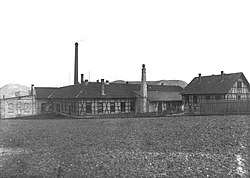
One of the company's most significant early achievements was the development of borosilicate glass. This material is highly valued for its resistance to thermal shock (temperature changes) and chemical corrosion. This innovation expanded the company's reach into laboratory equipment, gas lamps, and thermometers. By 1908, the company entered the pharmaceutical market with glass tubing, and in 1918, it launched the Jenaer Glas brand, bringing heat-resistant borosilicate glassware into households.
By 1919, the company had grown to employ over 1,200 people. That same year, Otto Schott transferred his shares to the Carl Zeiss Foundation, which had been established by Ernst Abbe in 1889. This transition turned the laboratory into a foundation company, renamed Jenaer Glaswerk Schott & Gen.
Expansion and Diversification (1920–1939)
Under the leadership of Erich Schott, who took over management in 1927, the company modernized its operations and introduced early automated manufacturing. This era was marked by a strong intersection of industry and art.
Starting in 1924, Schott collaborated with the Bauhaus movement in nearby Weimar to refine the design of household glassware. Key collaborations included:
- Walter Gropius: Proposed design improvements for household glass in 1924.
- Gerhard Marcks: Designed the Sintrax coffee machine, produced starting in 1930.
- Wilhelm Wagenfeld: Hired in 1931 to create casserole dishes, baking dishes, and a tea service.
- László Moholy-Nagy: A Bauhaus professor who managed marketing for Jenaer Glas until 1937.
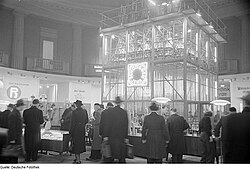
The company also expanded its industrial footprint by acquiring the Vereinigte Zwieseler und Pirnaer Farbenglaswerke AG (glassworks in Zwiesel and Pirna) between 1927 and 1929, followed by the acquisition of Deutsche Spiegelglas AG (DESAG) in 1930.
The Post-War Split and Reunification
The political division of Germany after World War II split the company in two. In 1948, the Jena factory was expropriated and became a Publicly Owned Enterprise (VEB) in East Germany, eventually integrating into the VEB Carl Zeiss Jena collective. Meanwhile, Jenaer Glaswerk Schott & Gen established itself in Mainz, West Germany.
While the East German entity served the Eastern Bloc, the Mainz-based group expanded internationally. They diversified into high-tech components, including:
- Fiber optics for image and light conductors.
- Mirror substrates for massive telescopes.
- Glass tubes for parabolic trough power plants.
- Glass-ceramic cooktop panels, which entered serial production in 1973.
- Components for television tubes.
Following German reunification, the Mainz plant reclaimed the company shares from Jena.
Modern Era and the Solar Venture
The decade following the fall of the Berlin Wall saw rapid growth. By 1998, the company rebranded as Schott Glas. Its scale expanded dramatically: from 40 sites and DM 1.31 billion in sales in 1984 to 80 companies across 32 countries with sales exceeding 3 billion Deutschmark by the late 90s.
In 2004, the company became a legally independent Aktiengesellschaft, Schott AG. The Carl Zeiss Foundation remains the sole shareholder, and per the Foundation Statute, the shares cannot be sold, preventing an initial public offering (IPO).
In 2001, Schott entered the solar industry, eventually forming Schott Solar AG in 2008. The company invested heavily in photovoltaic (PV) cells and modules, including a US$100 million facility in Albuquerque, New Mexico, for concentrated solar thermal power (CSP) receivers and PV modules. However, after facing industry challenges, Schott withdrew from the solar business and dissolved Schott Solar AG in 2012.
Key Facts
- Founded: 1884 in Jena, Germany.
- Founders: Otto Schott, Ernst Abbe, Carl Zeiss, and Roderich Zeiss.
- Core Innovation: Development of borosilicate glass for heat and chemical resistance.
- Ownership: Wholly owned by the Carl Zeiss Foundation.
- Design Legacy: Significant collaborations with the Bauhaus movement (1924–1937).
- Industrial Reach: Produces everything from telescope mirrors to glass-ceramic cooktops.
| Period | Key Milestone | Primary Focus/Outcome |
|---|---|---|
| 1884 | Foundation | Optical glass for microscopes and telescopes. |
| 1918 | Jenaer Glas Launch | Heat-resistant household glassware. |
| 1924–1937 | Bauhaus Collaboration | Modernist design for household glass products. |
| 1948 | Company Split | Division between East (VEB) and West (Mainz) Germany. |
| 1973 | Product Innovation | Serial production of glass-ceramic cooktops. |
| 2004 | Corporate Restructure | Became the independent Schott AG. |
| 2012 | Solar Exit | Dissolution of Schott Solar AG. |
Frequently Asked Questions
What is borosilicate glass and why is it important?
Borosilicate glass is a type of glass that contains boron trioxide, making it highly resistant to chemical corrosion and thermal expansion. This allows it to withstand extreme temperature changes without cracking, making it ideal for laboratory equipment and heat-resistant cookware.
Who owns Schott AG today?
Schott AG is solely owned by the Carl Zeiss Foundation. According to the Foundation's statutes, these shares cannot be sold, which means the company will not undergo an IPO.
How did the Bauhaus movement influence Schott?
Between 1924 and 1937, Schott collaborated with Bauhaus figures like Walter Gropius, Wilhelm Wagenfeld, and László Moholy-Nagy to create functional, modernist designs for household items, including coffee machines and baking dishes.
What happened to Schott's solar business?
Schott entered the solar market in 2001 and invested in photovoltaic cells and concentrated solar power technology, including a major plant in New Mexico. However, the company withdrew from the sector and dissolved Schott Solar AG in 2012.
Why was the company split after World War II?
Due to the political division of Germany, the original factory in Jena (East Germany) was expropriated and turned into a state-owned enterprise (VEB), while a separate branch of the company was established in Mainz (West Germany).