
British Waterways: The Evolution of England and Wales' Canal Network
The story of Britain's inland waterways is one of dramatic transformation. Once the arteries of the Industrial Revolution, the canals transitioned from essential commercial highways to symbols of industrial decline, before finally being reborn as hubs for leisure and conservation. Central to this journey was British Waterways, the organization that managed this transition for decades.
The Decline of Commercial Waterways
During the early 20th century, the canal network faced stiff competition from the rapid rise of road transport and railways. By the 1950s, while freight was still being moved, ownership had largely shifted to railway companies. When the railways were nationalized in 1948, these canals became part of the British Transport Commission.
Despite efforts to encourage commercial traffic, the 1950s brought the construction of motorways and the introduction of the Clean Air Act 1956, which severely impacted coal carriers. The decline became inevitable; the last long-distance narrow-boat contract for coal (running from Atherstone to Southall) ended in October 1970. Other niche trades persisted longer, such as lime juice transport until 1981 and aggregate transport until 1988.
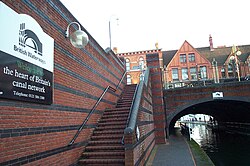
The Formation of the British Waterways Board
The Transport Act 1962 reorganized the British Transport Commission, splitting it into several entities. This led to the creation of the British Waterways Board (BWB), which took over the management of Britain's inland waterways.
The transition was marked by a brutal winter in 1962, where boats were frozen into their moorings for weeks. This event accelerated the BWB's decision to cease most commercial narrow boat traffic. By this era, the network had shrunk to approximately 2,000 miles (3,200 km)—half of its early 19th-century peak—though the core network remained intact.
The Transport Act 1968 and Waterway Classification
To manage the remaining network, the Transport Act 1968 categorized waterways into three distinct types:
- Commercial: Waterways capable of supporting commercial traffic, primarily in North East England.
- Cruising: Waterways with potential for leisure use, including fishing and recreational boating.
- Remainder: Waterways with no perceived commercial or leisure potential.
While the BWB was mandated to maintain commercial and cruising routes economically, it had no obligation to keep "remainder" waterways navigable. This led to many being abandoned or transferred to local authorities, with some being permanently severed by the construction of new roads and motorways.
The Rise of Leisure and Restoration
The late 20th century saw a surprising resurgence. By the early 1980s, leisure boating grew to 20,000 users, supported by dedicated voluntary restoration groups. However, the transition wasn't without friction; English Heritage criticized British Waterways for a lack of professional conservation advice regarding historic structures.
By the late 1990s, the organization was flourishing. In 1998, maintenance revenues hit £100 million for the first time. Significant grants from the Heritage Lottery Fund and additional government funding announced by Deputy Prime Minister John Prescott in 1999 fueled further expansion. By the early 2000s, boating numbers exceeded those of the Industrial Revolution, and the network was officially declared "safe" after all outstanding safety works were completed.
The Transition to the Canal & River Trust
By 2009, British Waterways faced a £30 million budget shortfall and sought a more secure funding model. The goal was to move toward a charitable trust model to better utilize volunteers and potentially acquire other waterways from the Environment Agency.
In March 2010, the government announced plans to turn the organization into a mutual entity. By September 2010, it was confirmed that British Waterways would be abolished as a non-departmental public body. This led to the creation of the Canal & River Trust, which was granted charitable status on April 5, 2012.
On July 2, 2012, the Trust assumed responsibility for the 2,000 miles of canals and rivers in England and Wales. However, the Scottish Government opted out of this arrangement, keeping its waterways state-owned under the name Scottish Canals.
Key Facts
- Peak vs. Decline: The network shrank from its 19th-century peak to 2,000 miles (3,200 km) by the mid-20th century.
- Last Coal Contract: The final regular long-distance narrow-boat coal contract ended in October 1970.
- Financial Milestone: Maintenance revenues first reached £100 million in 1998.
- Organizational Shift: British Waterways transitioned to the charitable Canal & River Trust in July 2012.
- Regional Difference: While England and Wales moved to a trust, Scotland remained state-owned as Scottish Canals.
| Era/Act | Governing Body | Primary Focus |
|---|---|---|
| Post-1948 | British Transport Commission | Commercial freight and nationalization |
| Post-1962 | British Waterways Board (BWB) | Management of declining commercial traffic |
| Post-1968 | British Waterways Board (BWB) | Classification (Commercial, Cruising, Remainder) |
| Post-2012 | Canal & River Trust / Scottish Canals | Charitable management (E&W) and state ownership (Scotland) |
Frequently Asked Questions
Why did the commercial canal network decline?
The decline was primarily driven by competition from railways and road transport, the construction of motorways in the 1950s, and legislation like the Clean Air Act 1956 which affected coal transport.
What happened to the "remainder" waterways after 1968?
Waterways classified as "remainder" had no requirement for maintenance by the BWB. Many were abandoned, transferred to local authorities, or blocked by new road constructions.
When did leisure boating become more popular than industrial boating?
By the early 2000s, the number of people using the canals for boating had officially overtaken the highs seen during the Industrial Revolution.
What is the difference between the Canal & River Trust and Scottish Canals?
The Canal & River Trust is a charity that manages waterways in England and Wales, whereas Scottish Canals remains a state-owned entity managed by the Scottish Government.
How was the canal network funded in the late 1990s?
Funding came from maintenance revenues (which hit £100 million in 1998), large grants from the Heritage Lottery Fund, and government funding announced in 1999.